Quick Answer
The localities closest to the thane borivali tunnel start and end point gain most — Manpada and the Tikuji-ni-Wadi stretch at the Thane portal, and Magathane, Ekta Nagar and Borivali East at the Mumbai portal. On value terms the Thane side has the larger upside, entering at around Rs 15,000 per sq ft against roughly Rs 32,150 in Borivali East.
Infrastructure premiums are not distributed along a corridor. They cluster at access points. A metro line lifts the land around its stations, not the land between them, and a tunnel with no intermediate exits works the same way — everything concentrates at the two portals and decays with distance from them.
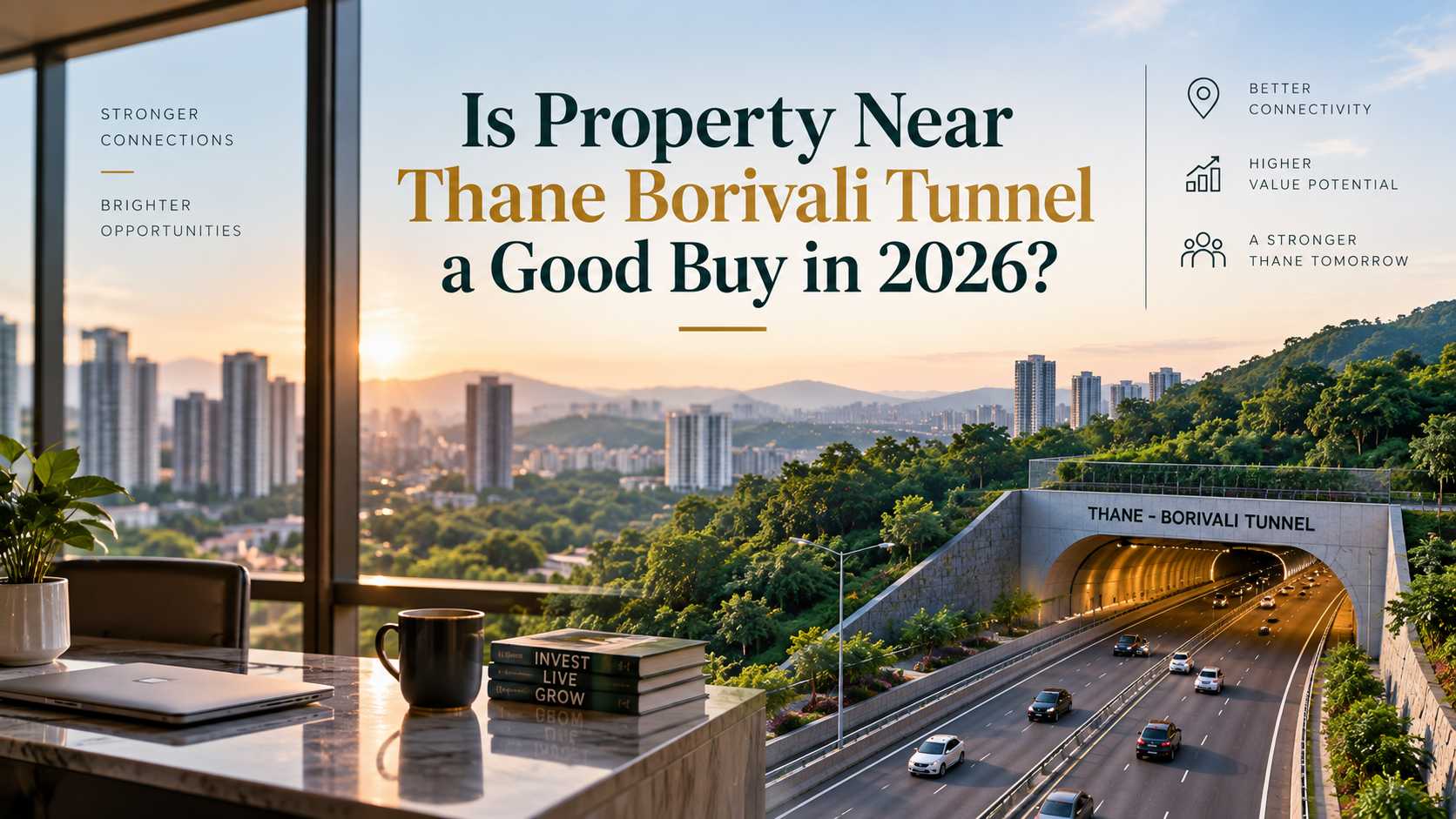
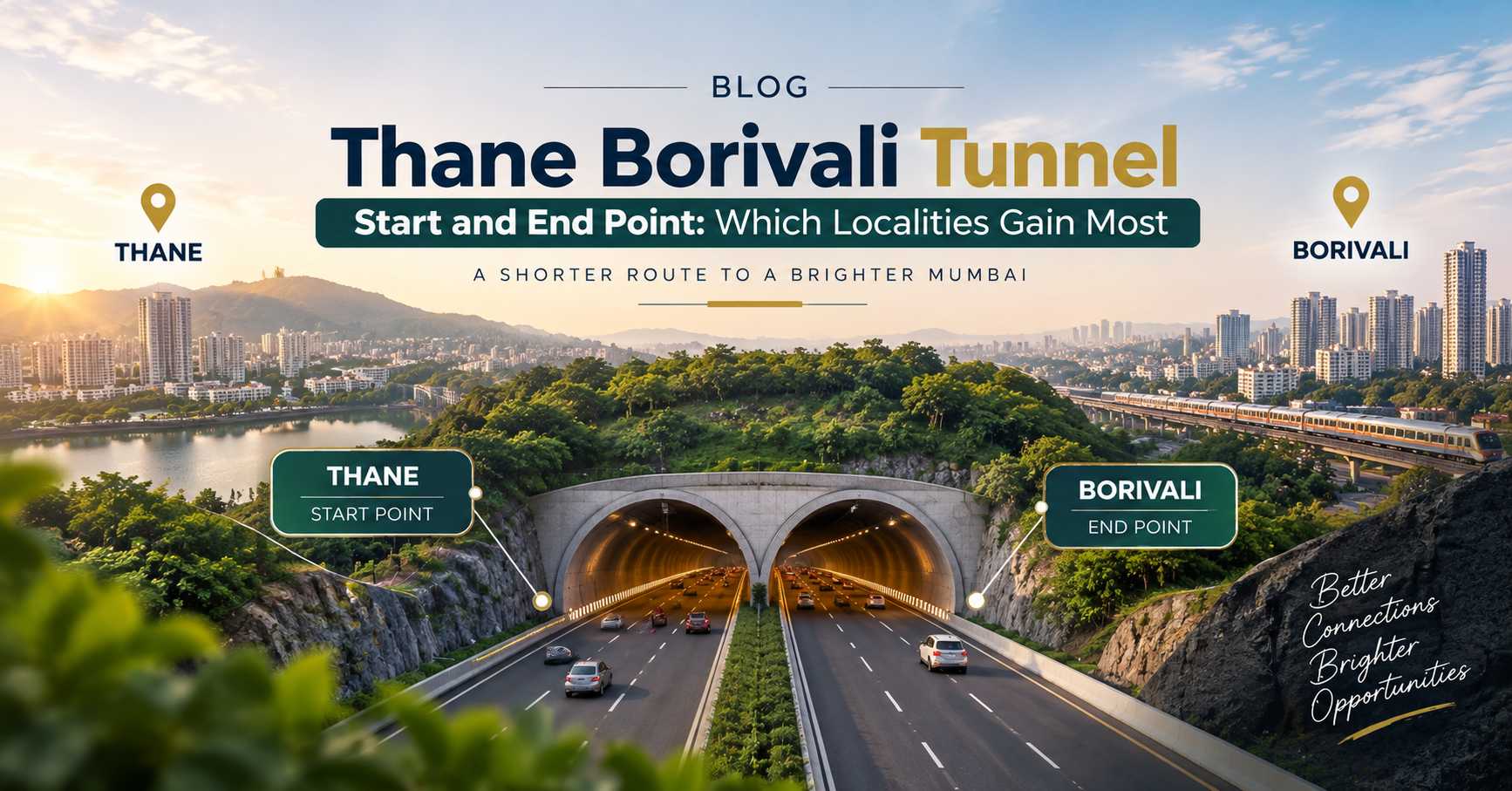
That makes the Thane–Borivali twin tunnel unusually easy to analyse. There are exactly two access points across 11.84 km: Ghodbunder Road near Tikuji-ni-Wadi in Manpada, and the Western Express Highway at Magathane in Borivali East. Everything in between runs 23 to 60 metres under Sanjay Gandhi National Park and touches nothing. With the thane borivali tunnel start and end point now fixed and TBM Nayak boring since April 2026, the catchments can be ranked rather than guessed.
Our team ranked the localities around both portals on access, entry price, supply pressure and construction-phase disruption. Here is the order, and the reasoning behind it.
Ranking the Localities Around the Start and End Point
Access is the first filter, but it is not the only one. A pocket with excellent access, a high entry price and heavy competing supply can easily underperform a slightly further one with a cleaner supply picture.
| Locality | Portal | Rate (2026) | Access | Supply pressure | Our read |
|---|---|---|---|---|---|
| Manpada / Tikuji-ni-Wadi | Thane, at the portal | Within the Rs 11,000–22,100 band | Highest | Moderate | Strongest access, heaviest disruption until 2028 |
| Ghodbunder Road (mid-stretch) | Thane, 1.5–3 km | Around Rs 15,000 per sq ft | Strong | High | Best balance of access, price and liveability |
| Kolshet Road / Balkum | Thane, short run off arterial | Around Rs 15,000–18,000 per sq ft | Good | Moderate | Quieter, established, indirect portal access |
| Kasarvadavali | Thane, 6 km-plus | Lower end of the band | Weak for the tunnel | High | Gains from Metro 4, not really from the tunnel |
| Magathane / Ekta Nagar | Borivali, at the portal | Around Rs 32,150 per sq ft | Highest | Low | Expensive, already connected, modest upside |
| Borivali East (WEH frontage) | Borivali, at the portal | Around Rs 28,794 per sq ft | Highest | Low | Solid, defensive, limited repricing headroom |
| Kandivali East | Borivali, one stop south | Around Rs 30,950 per sq ft | Good | Low | Steady at 1.61% annual growth, ready stock available |
Read the Access and Supply columns together. Manpada has the best access of any locality on the list and a disruption problem that runs until 2028. Kandivali East has good access, low supply pressure and a price that already reflects Mumbai connectivity. Ghodbunder’s mid-stretch is the compromise position, and compromises usually win on this kind of corridor.
Why the Thane Portal Catchment Gains More
The asymmetry is structural rather than sentimental. Borivali East at the end point already has the Western Express Highway, Magathane station on Metro Line 7, and Borivali station about 3 km west. The tunnel gives it faster access to Thane — a genuine improvement, but not one most Borivali households need daily.
Manpada and Ghodbunder Road at the start point have the reverse problem. They are well connected to Thane and effectively disconnected from the western suburbs, because every trip to Borivali or Andheri currently means a 23 to 26 km detour around the national park taking 60 to 90 minutes at peak. The tunnel does not speed that up. It replaces it.
Borivali East is up 11.2% year on year on its own fundamentals. Ghodbunder Road is down about 13.5% over three years. One of those markets has priced in its connectivity and one has not — and the one that has not is the one about to receive a connection it has never had.
The honest caveat, again: Ghodbunder’s discount is partly supply. A large under-construction pipeline is holding rates down independently of connectivity, and the tunnel does nothing about that. The realistic expectation is convergence, not equalisation.
The Distance Decay Curve
Because there are no intermediate exits, benefit falls off with distance from a portal faster here than on a metro corridor. This is the pattern our team applies.
| Band | What you get | What you give up |
|---|---|---|
| 0–1.5 km from portal | Direct access, minimal surface driving | Dust, noise and diversions until completion |
| 1.5–3 km | Genuine catchment, clean living conditions | A few minutes of surface approach |
| 3–6 km | Corridor sentiment, some real benefit | Approach traffic consumes part of the saving |
| 6 km-plus | Headline association only | The approach becomes the bottleneck |
The 225-metre detail worth checking
MMRDA moved the Thane portal about 225 metres towards the Satyashankar wall after residents in Manpada raised dust and noise concerns. Two buildings a few hundred metres apart can now sit on opposite sides of that decision. Before you buy in the portal pocket, establish exactly where your project sits relative to the revised location.
A Six-Step Method to Rank Your Own Shortlist
You do not need our ranking. You need a method you can apply to the three or four projects you are actually considering.
- Pin both portals on a map — Tikuji-ni-Wadi in Manpada and Magathane in Borivali East — using the published MMRDA alignment, then measure straight-line distance from each shortlisted project.
- Drive the approach at 8:30 am and 7 pm. On Ghodbunder Road, a 2 km approach can take 15 minutes. Straight-line distance flatters everything.
- Count launches within 2 km. Heavy competing supply caps resale even where access is excellent. This is the step most buyers skip.
- Check the entry rate against the local band, not the average. Ghodbunder spans roughly Rs 11,000 to Rs 22,100 per sq ft, so the Rs 15,000 average tells you almost nothing about a specific project.
- Read the MahaRERA possession date and position it against mid-2028. Handover near the tunnel’s own timeline is the cleanest structure.
- Score construction-phase liveability honestly. If you will live there before 2028, the portal-adjacent option may be the wrong one even though it ranks best on access.
Where Godrej Projects Sit Against These Catchments
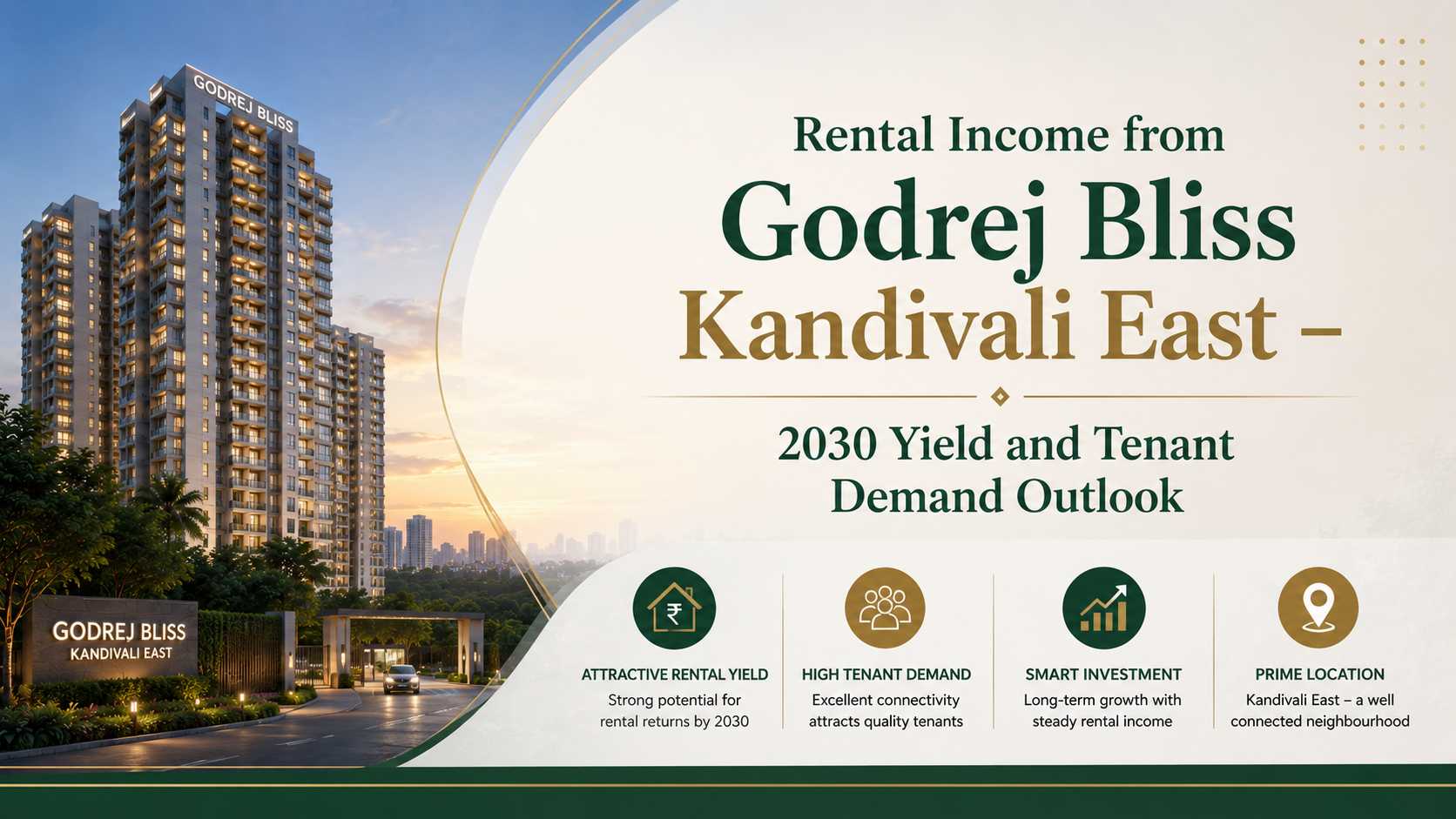
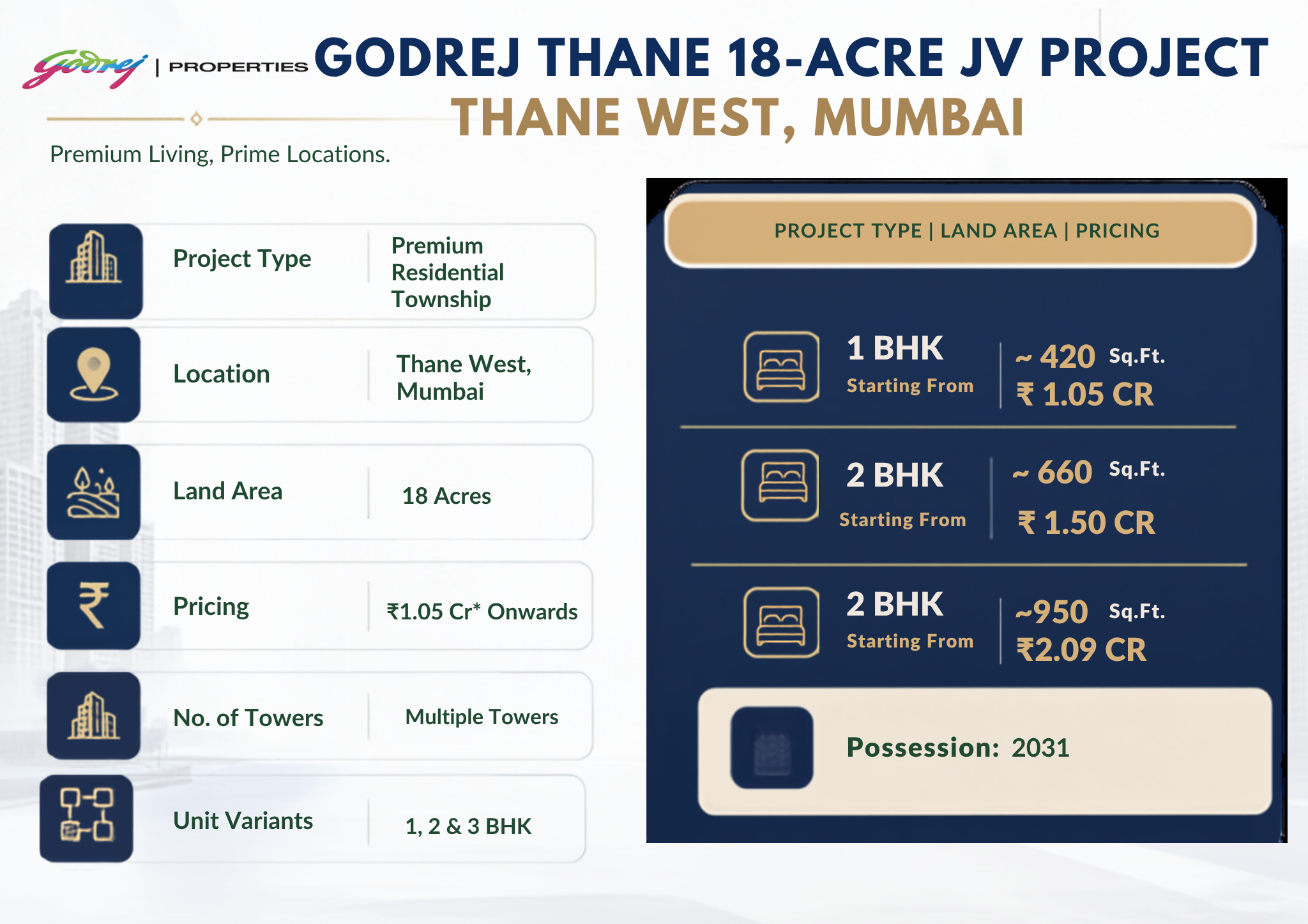
Godrej Properties Limited, the third-party developer whose MMR projects we track, has positions in several of the catchments above — which is part of why this corridor dominates our coverage. On the Thane side, Godrej Ascend on Kolshet Road sits in the quieter belt just off the arterial the start point feeds. On the Mumbai side, Godrej Bliss in Kandivali East sits one stop south of the end point, in a low-supply market growing at about 1.61% a year.
Those two addresses illustrate the choice this corridor presents rather neatly: Thane-side exposure at a lower entry price with a longer wait, or Mumbai-side stability at a higher rate with the connectivity already in place. Developer detail is at Godrej Properties Limited.
Our verdict: rank the Thane portal catchment above the Borivali one for capital growth, and the Borivali catchment above the Thane one for certainty. For how that premium is likely to express itself once the link opens, see our note on the 15-minute city tunnel premium in 2026.
Frequently Asked Questions
Q: Which locality gains most from the thane borivali tunnel start and end point?
On value terms, the Ghodbunder Road mid-stretch near the Thane start point — around Rs 15,000 per sq ft with a connection it has never had. Manpada has the best raw access but carries construction disruption until 2028. Borivali East gains least, being already well connected.
Q: Is Kasarvadavali a good buy because of the tunnel?
Not primarily. At more than 6 km from the Thane portal, the surface approach along Ghodbunder Road consumes much of the time saving. Kasarvadavali’s stronger story is Metro Line 4, which terminates there on the Wadala corridor. Judge it on that basis.
Q: Should I buy at the portal itself or a little further away?
The 1.5 to 3 km band usually reads better on total experience. Portal-adjacent stock gets the best access but absorbs dust, noise and year-long traffic diversions notified from mid-May, right through to completion in 2028 or later.
Q: Does Kandivali East benefit from the Borivali end point?
Yes, moderately. It sits one stop south on the Western Express Highway at around Rs 30,950 per sq ft with low supply pressure and 1.61% annual growth. The benefit is real but incremental, since Kandivali East is already well served by the same highway.
Q: How much appreciation is realistic near the Thane portal?
Ghodbunder Road has fallen about 13.5% over three years, so the first move is recovery rather than premium. Convergence towards the Borivali East level of roughly Rs 32,150 per sq ft is not realistic — supply pressure caps it. Expect the gap to narrow, not close.
Q: What is the biggest mistake buyers make on this corridor?
Treating “near the tunnel” as a locality rather than a measurement. With no intermediate exits, benefit is concentrated at two points and decays quickly. A project 7 km from a portal on a congested arterial gains far less than its marketing suggests.
Q: When should the locality effect start showing in prices?
Partly already, on visible construction milestones — TBM Nayak launched in April 2026 and over 500 structures were cleared in Borivali by February 2026. The larger move typically arrives near commissioning, targeted for mid-2028 with a possible slip to 2029.
The Practical Takeaway
Two access points, a sharp distance decay, and a 2x price gap between the two ends. The localities that gain most are the ones within 3 km of a portal in the market that is currently cheapest — which points squarely at the Ghodbunder Road stretch between Manpada and the mid-arterial, provided you check the supply pipeline around any specific project.
Send us your shortlist and our team will rank it against portal distance, peak-hour approach time, local supply and RERA dates — and tell you which names are in the catchment and which are only in the brochure. Book a site visit on either end of the corridor.