Quick Answer
A Thane Borivali tunnel investment in 2026 buys into 5-6% gross rental yields at roughly Rs 14,950 to Rs 22,500 per sq ft, with market expectations of 20-25% capital growth around the May 2028 commissioning. The main risk is timing, not direction — a slip to 2029 defers the re-rating rather than cancelling it.
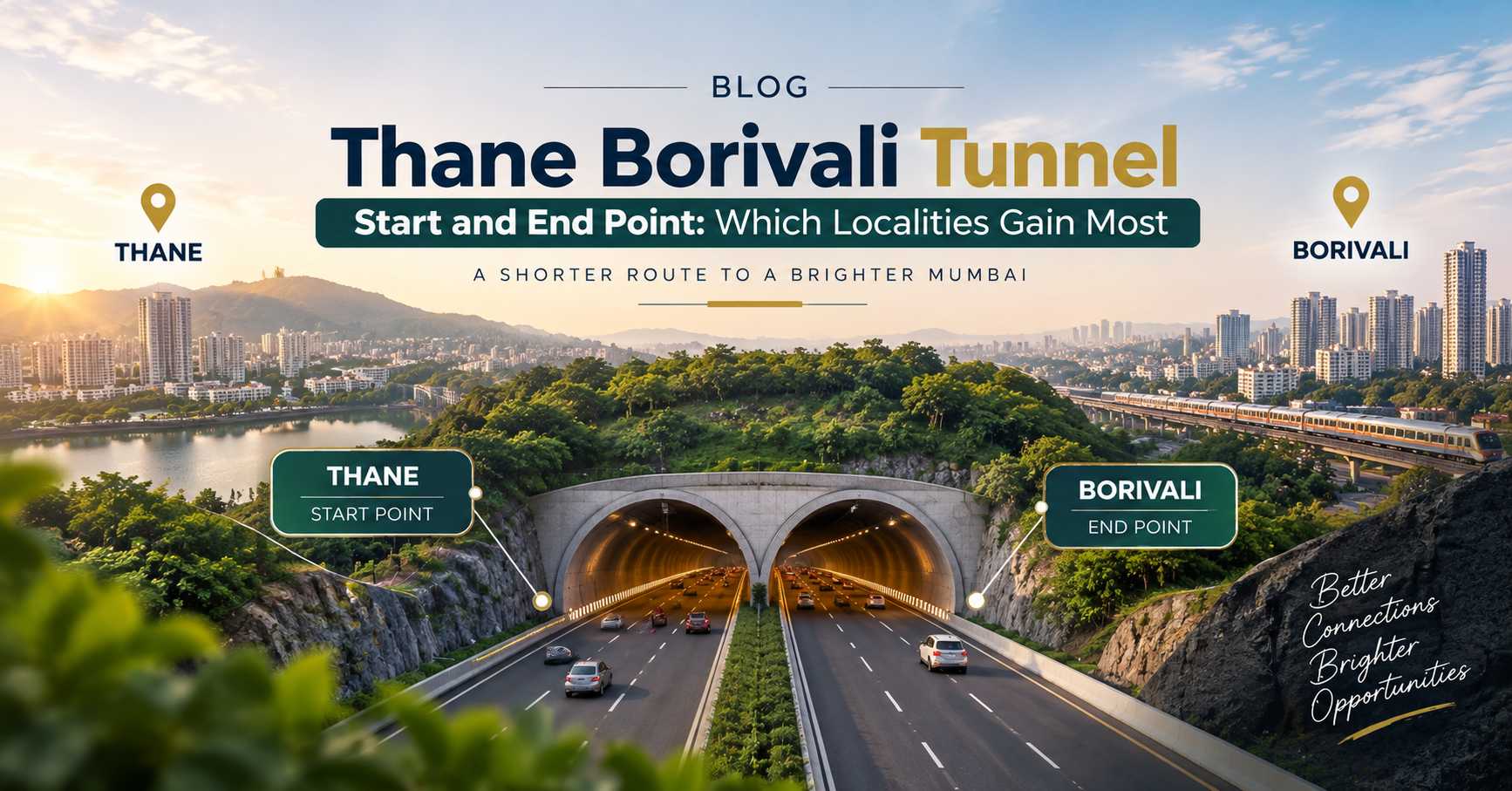
Infrastructure-led property investment follows a well-worn pattern in the Mumbai Metropolitan Region, and the Thane Borivali tunnel investment case is currently sitting at the most interesting point on that curve. Prices bump on announcement, drift through the long construction years while nobody can use the asset, then re-rate sharply in the twelve to eighteen months around commissioning. Thane has banked the first move. The second is still ahead.
What makes this corridor different from the average metro-line story is scale and irreversibility. Rs 16,600.40 crore sanctioned by MMRDA in March 2023. Megha Engineering and Infrastructure Limited contracted for both civil packages. Four Herrenknecht tunnel boring machines, one of them India’s largest single-shield TBM at about 13.34 metres cutterhead diameter. TBM “Nayak” boring under Sanjay Gandhi National Park since 7 April 2026. This is not a project that gets quietly shelved.
Our team analysed the entry prices, the yields, the projected uplift and the downside cases to give you an investment view rather than a brochure.
The Thane Borivali Tunnel Investment Case in Numbers
Every investment argument here rests on one structural fact: the tunnel compresses a 60 to 90 minute peak-hour journey to roughly 15 minutes, which removes the travel-time justification for a price gap that is currently about 2 to 1.
| Metric | Thane side | Borivali side | Investment read |
|---|---|---|---|
| Entry, per sq ft 2026 | Rs 14,950 corridor average; Manpada ~Rs 22,500 | Rs 29,350-32,150 | Thane base is roughly half |
| Gross rental yield | 5-6% | 3-3.5% | Thane carries the holding cost better |
| Trailing 12-month growth | Manpada +4.4% | ~+7% | Borivali leads short term |
| Trailing 5-year growth | Manpada +31.2% | Established base | Thane has re-rated once already |
| Expected uplift to completion | 20-25% commonly projected; 20-30% for lower-base pockets like Balkum over 3-5 years | Modest, already priced | Upside sits on the Thane side |
The yield line deserves more attention than it usually gets. At 5 to 6% gross on a Thane asset against 3 to 3.5% in Borivali, the Thane property funds roughly twice as much of its own carrying cost. Over a seven-year hold, that difference compounds into a materially better total return even before any capital appreciation differential.
Working the Returns: A Seven-Year Hold
Take a Rs 2 crore purchase in the Ghodbunder belt within ten minutes of the Tikuji-ni-Wadi portal, bought in 2026 and held to 2033. Here is how the components stack up under three scenarios. These are illustrative structures, not guarantees.
| Scenario | Tunnel opens | Capital growth to 2033 | Rental contribution |
|---|---|---|---|
| Upside | May 2028 | Commissioning re-rating lands early; full 20-25% uplift plus normal market growth | 5-6% gross from possession |
| Base | 2029 | Same uplift, arriving a year later; total return largely unchanged over seven years | 5-6% gross |
| Downside | 2030 or later | Uplift compressed into the back end of the hold; return depends on Thane fundamentals carrying the middle years | 5-6% gross cushions the wait |
Our verdict on that table: the difference between the upside and base cases is small enough to ignore for a seven-year investor. The downside case is the one to underwrite against, and the reason the yield matters — a 5 to 6% income stream makes waiting tolerable in a way a 3% stream does not.
The strongest argument for a Thane Borivali tunnel investment is not the projected appreciation. It is that you are paid to wait. Thane’s yield covers the holding cost while the corridor gets built; Borivali’s does not.
The Risks We Would Underwrite Against
An honest investment note has to list what can go wrong. Five things, in order of likelihood:
- Schedule slip. Most likely risk. Boring only started in April 2026, leaving roughly 24 months for two 10.25 km drives plus systems fit-out. Assume 2029, treat 2028 as a bonus.
- Supply absorption. Thane West is delivering township-scale inventory. A wave of completions landing together can hold rents and prices flat for a few years regardless of the tunnel.
- Tolling. MMRDA has not published a final toll policy for the corridor. A high user charge would reduce daily-commute adoption and therefore some of the residential uplift. [VERIFY: not sourced]
- North-south congestion. The tunnel fixes east-west movement. Ghodbunder Road’s own saturation is untouched by it, and that remains the locality’s structural weakness.
- Buying the wrong proximity. The corridor has two portals and no intermediate exits. Paying a tunnel premium for a flat 8 km up the arterial is the most common and most avoidable mistake in this market.
The underwriting test
Model the purchase with the tunnel opening in 2030 and no commissioning premium at all. If it still returns acceptably on rent plus baseline Thane growth, it is an investment. If it only works at 20-25% uplift in 2028, it is a bet.
Seven Steps to Execute the Investment
- Fix your portal, then your budget. Decide whether you need the Thane portal at Tikuji-ni-Wadi or the Borivali portal at Ekta Nagar, then look only at stock within ten to fifteen minutes of it.
- Verify real drive times at 9 am on a weekday. Not map estimates, not Sunday runs.
- Pull the MahaRERA registration and check the committed possession date. Align it with a 2029 tunnel base case.
- Get actual society rents, not portal averages. Your yield assumption is the load-bearing number in the whole model.
- Build the full acquisition cost. GST where applicable, stamp duty, registration, floor rise, parking and society formation charges.
- Stress the model at a 2030 opening. If it survives, proceed.
- Choose a developer on local delivery record. In an infrastructure-timed investment, a possession delay costs you the very window you bought for.
Where Godrej Stock Fits the Thesis
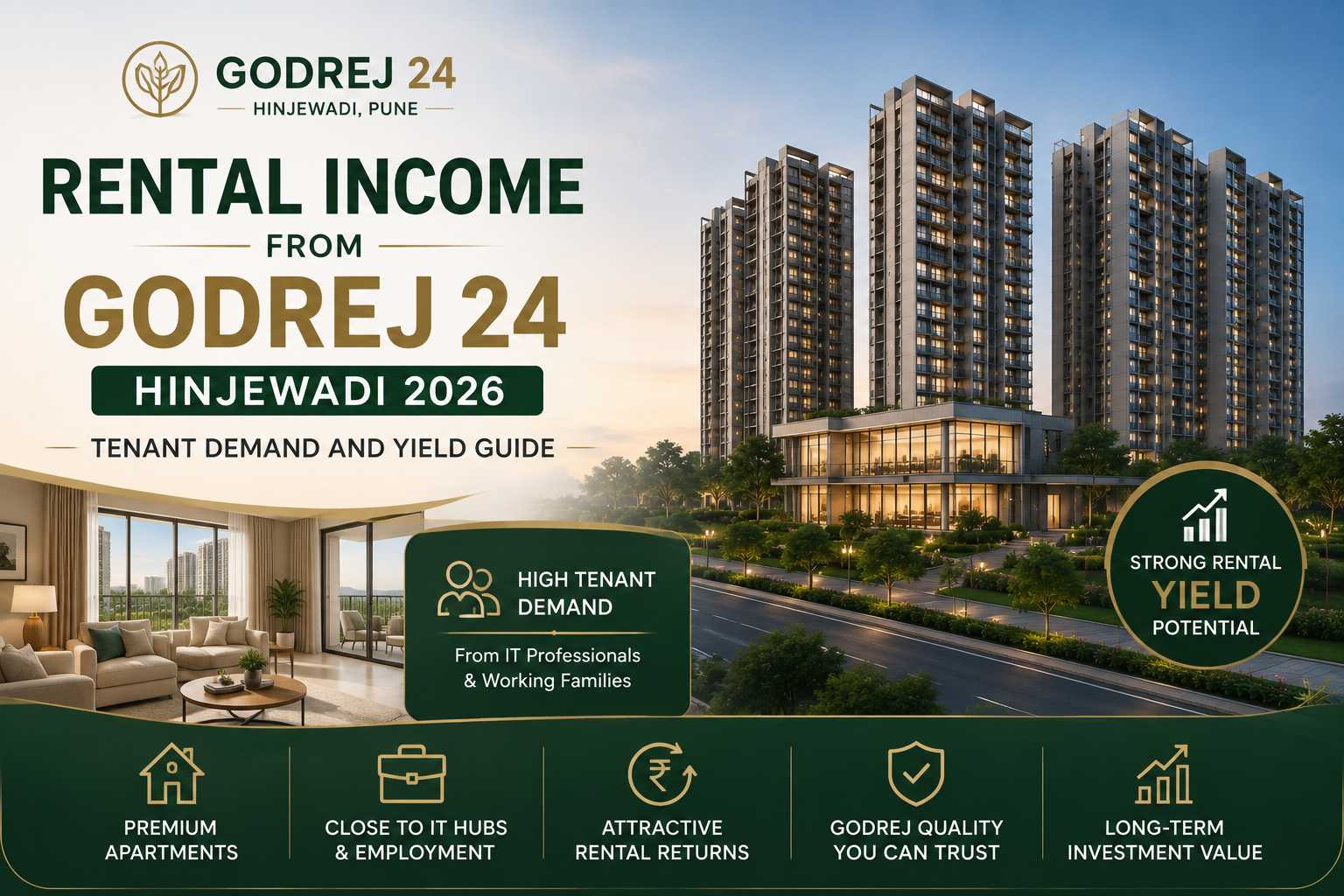
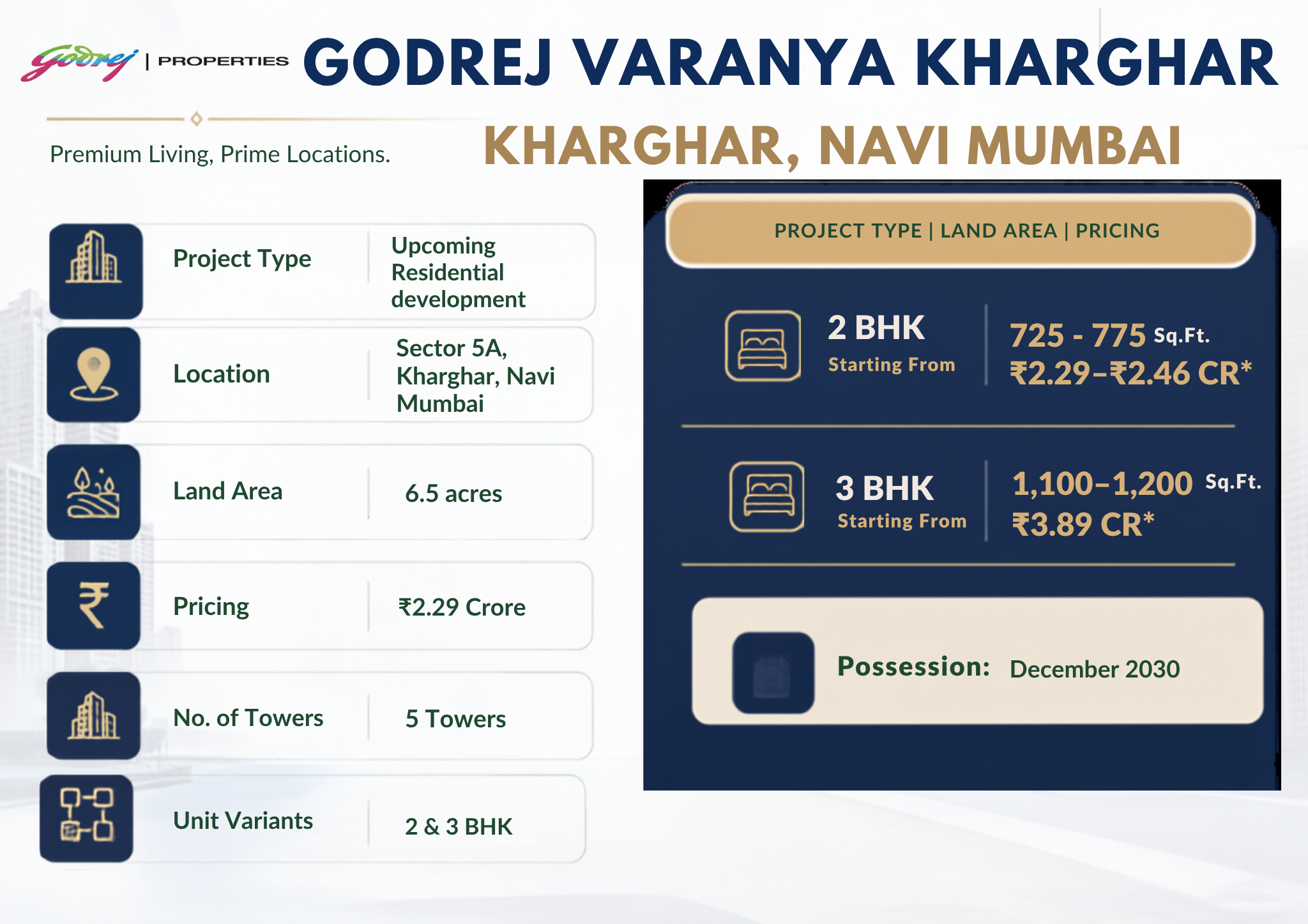
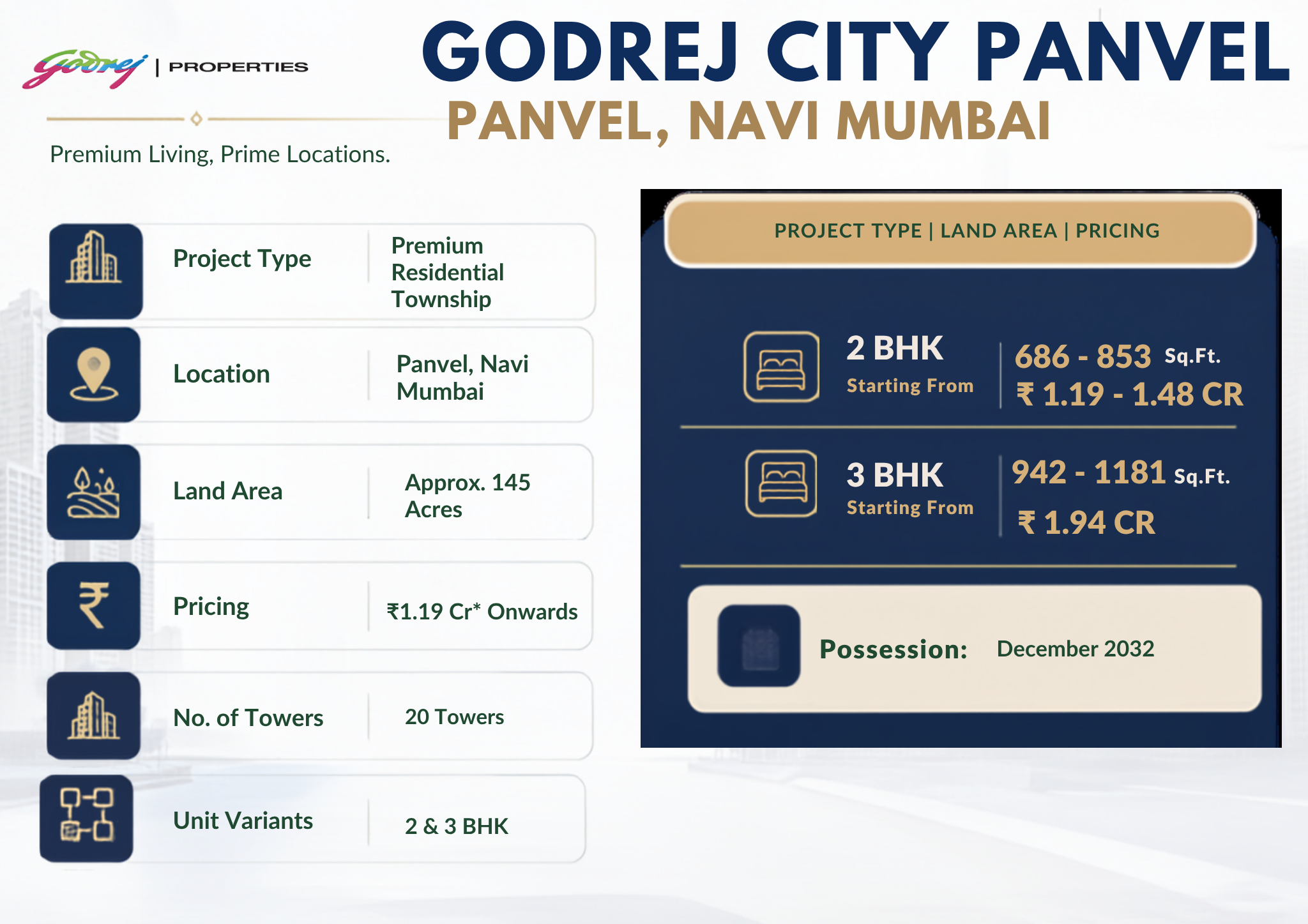
Godrej Properties Limited is a third-party developer with a long Mumbai Metropolitan Region delivery record, and it holds inventory at both the entry and premium ends of this corridor — useful, because the thesis applies differently at different price points.
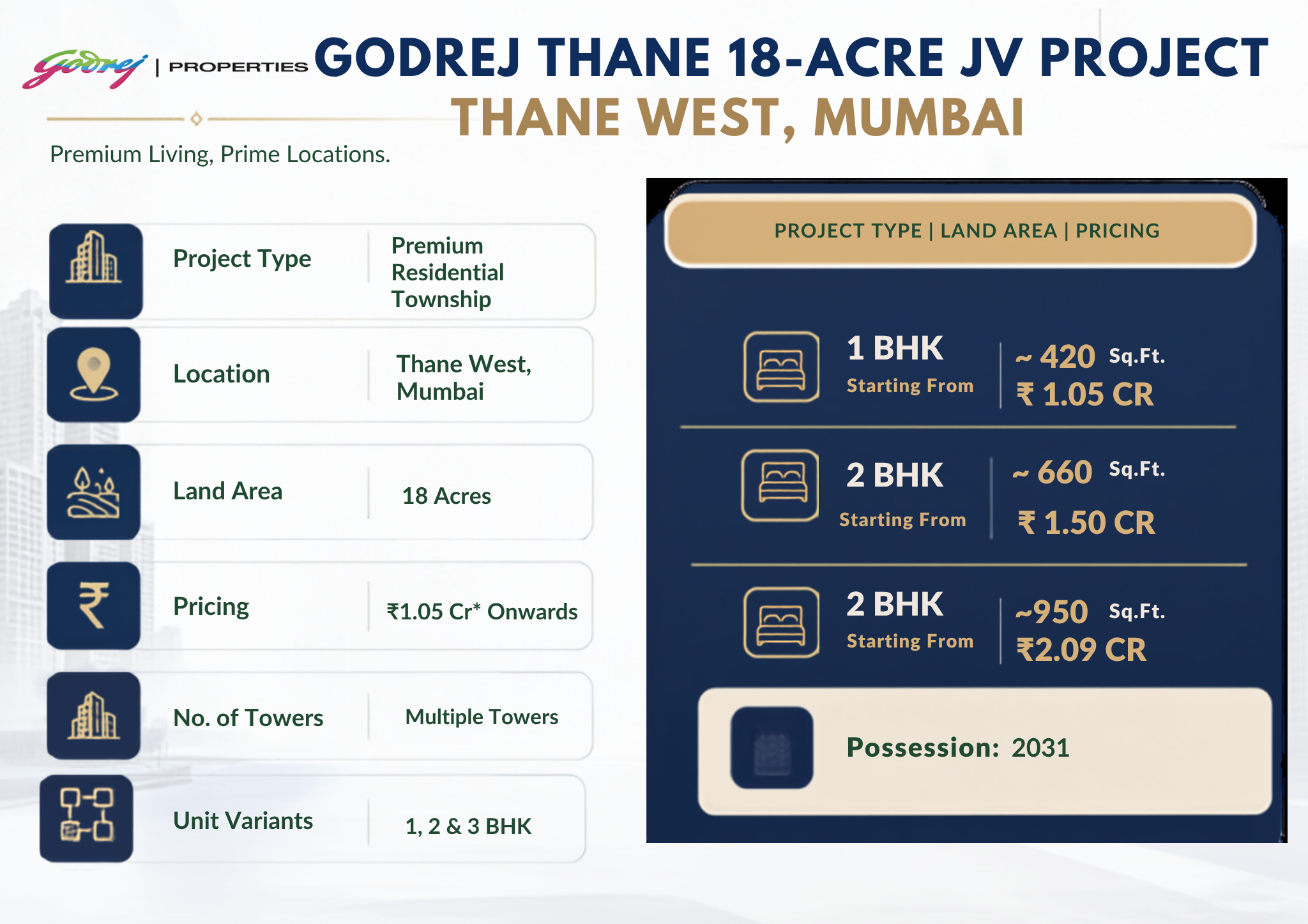
The 18.5-acre township at Manpada on Ghodbunder Road is the closest large scheme to the Thane portal, with 3 and 4 BHK configurations and a protected Yeoor Hills outlook — the premium end of the thesis, where you pay for certainty. Godrej Ascend on Kolshet Road from Rs 99 lakh and the 18-acre Thane West joint venture from Rs 1.05 crore sit at the entry end, where the lower base does more of the work.
For an investor, the entry-end options usually model better, because the yield is computed on a smaller denominator. Godrej Properties Limited publishes its RERA and construction disclosures at godrejproperties.com. Our own return analysis on the Kolshet asset is in this ROI and rental yield breakdown.
Frequently Asked Questions
Q: Is a Thane Borivali tunnel investment worth it in 2026?
For a seven-to-ten year horizon, yes. You enter at roughly Rs 14,950 to Rs 22,500 per sq ft with 5-6% gross yields, against Rs 29,350-32,150 and 3-3.5% across the park. The yield covers the wait and the commissioning re-rating is still ahead.
Q: How much appreciation should I expect?
Market commentary commonly projects 20 to 25% capital growth on tunnel-adjacent Thane stock around completion, with 20-30% cited for lower-base pockets such as Balkum over three to five years. Treat these as directional, not contractual.
Q: What happens to my returns if the tunnel is delayed?
The re-rating defers rather than disappears. On a seven-year hold, a one-year slip barely changes the total return, provided the 5-6% rental yield continues to cover the carrying cost through the extra year.
Q: Is Thane or Borivali the better investment?
Thane, on the numbers. Roughly half the entry price, close to double the yield, and the re-rating room sits on that side. Borivali is the better choice only if resale liquidity or a Mumbai municipal address is a hard requirement.
Q: Should I buy under-construction or ready stock?
Under-construction captures more of the uplift but adds delivery risk to infrastructure-timing risk. If you buy under-construction, pick a developer on Thane delivery record specifically, not national brand reputation.
Q: How far from the portal should an investment property be?
Within ten minutes of Tikuji-ni-Wadi on the Thane side captures most of the benefit. Beyond twenty minutes you are buying general Thane exposure and should not pay a tunnel premium for it. There are no intermediate exits along the 10.25 km alignment.
Q: Will rents rise once the tunnel opens?
Likely, because the tenant pool widens to include people working in the western suburbs who currently cannot consider Thane. That widening is arguably a more reliable effect than the capital uplift, and it starts on day one of operations.
Our Verdict
The Thane Borivali tunnel investment case works because of the yield, not in spite of it. A 5 to 6% income stream on an asset priced at half its cross-park equivalent means you are compensated for the years of waiting, and any commissioning re-rating is upside on top of an already sound position.
Underwrite it at a 2030 opening, buy within ten minutes of a portal, and choose the developer on local delivery record. If you want us to run those numbers against a specific project and your own financing, book a site visit. Our Ghodbunder Road location review is the right background read first.