Quick Answer
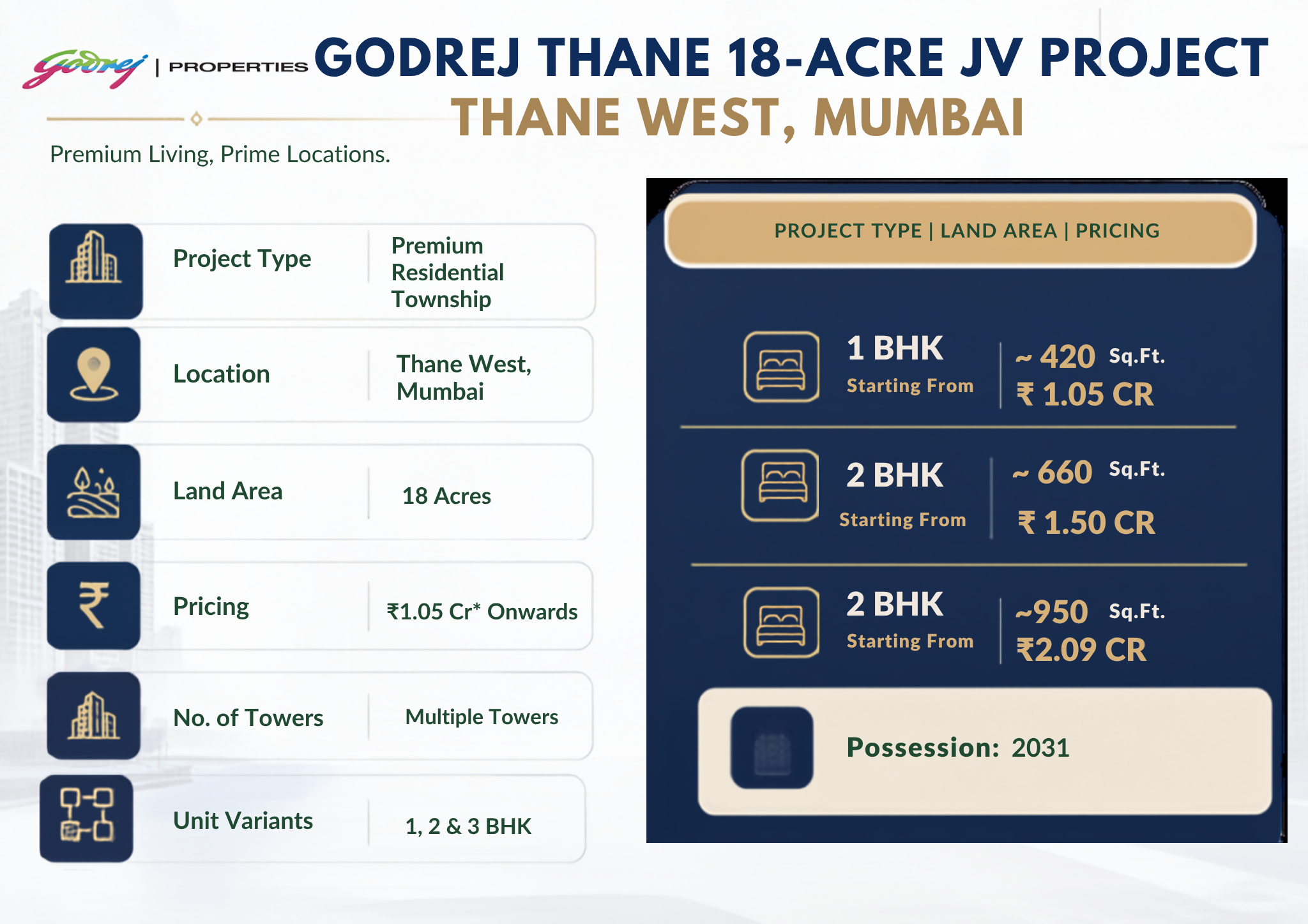
Related Godrej projects nearby:
Godrej Bandra Reclamation — Sea-Facing 4 BHK, Mumbai →Godrej Trilogy – Worli, Mumbai →Godrej Horizon – Wadala Mumbai →
Not fully. Unsold housing inventory across India’s top seven cities rose about 12% to 6.30 lakh units in 2026, but MMR’s stock fell 2% to roughly 1.55 lakh units with 6.4 quarters to sell. MMR is balanced overall, with real negotiation room in specific pockets, large launches and ready inventory.
Every time a national report says unsold homes are piling up, Mumbai buyers ask the same question: does this mean I can drive a harder bargain? In 2026 the answer depends on where you look. Anarock estimates that available inventory across the top seven Indian cities stood at about 6,30,600 units at the end of September 2026, up roughly 12% year on year and 2% over the previous quarter. That sounds like a buyer’s market.
The Mumbai Metropolitan Region tells a different story. Knight Frank puts unsold housing inventory in MMR at about 1,55,473 units in Q3 2026, down 2% from a year earlier. Its quarters-to-sell measure, which estimates how long current stock would take to clear at the recent sales pace, improved to 6.4 quarters from 6.6 a year ago and 7.1 in Q1 2025.
We at Godrej Properties MMR think both statements are true at once. The region as a whole is absorbing supply, but certain segments, locations and project stages carry far more unsold stock than others. Those are the places where buyers hold real leverage. This guide shows where they are and how to use them.
Unsold Housing Inventory in MMR: The 2026 Data
Unsold inventory is simply the number of launched homes not yet booked. On its own, a big number means little. MMR is the country’s largest housing market, so it will always carry the most stock in absolute terms. What matters is how quickly that stock is selling, which is why analysts lean on quarters-to-sell (QTS).
| Indicator | MMR | Top 7 cities |
|---|---|---|
| Unsold units (Q3 2026) | ~1,55,473 | ~6,30,600 |
| YoY change | -2% | about +12% |
| Q3 2026 sales | ~31,750 units (+5%) | ~1,00,220 units (+3%) |
| Q3 2026 launches | ~37,500 units (+27%) | ~1,14,320 units (+18%) |
| Quarters to sell | 6.4 | Not published by Anarock |
Sources: Knight Frank (MMR inventory, QTS) and Anarock (sales, launches, top-7 inventory). The two houses define MMR slightly differently, so treat the figures as directional.
The headline takeaway: MMR’s unsold housing inventory is shrinking while the national pile grows. But note the launch line. MMR developers launched about 37,500 homes in Q3 against 31,750 sold. If launches keep outpacing sales for a few more quarters, MMR’s inventory will start rising again. Our breakdown of MMR housing sales in Q3 2026 covers the demand side in more detail.
Where Inventory Is Piling Up Within MMR
Averages hide the pockets that matter. Within the region, three types of stock tend to linger longest, and that is where negotiation room sits.
Ultra-luxury in South Mumbai. Knight Frank found only about 4,750 unsold homes in South Mumbai at the end of H1 2026, yet the area’s QTS was 15.1 quarters, more than twice the regional figure. Small stock, slow absorption. Luxury prices above Rs 10 crore have also eased about 4% in 2026.
Large-format launches in peripheral corridors. Projects with several hundred units per tower in outer belts take longer to sell through, especially in later phases. Developers often protect the launch price for the first phase and then offer softer terms in later towers.
Completed but unsold units. Ready inventory is a small share of the total, but it is the most expensive stock for a developer to hold because the construction cost is already spent. This is where cash offers and stamp duty waivers appear most often.
A low regional QTS does not mean every project is selling fast. Ask each developer how many units in your tower remain unsold. The answer tells you more than any market report.
Ready vs Under-Construction: Where Is the Leverage?
Your negotiating position changes depending on the project stage. Here is how we see the trade-off in today’s market.
| Factor | Ready-to-move | Under-construction | New launch |
|---|---|---|---|
| Developer holding cost | Highest | Medium | Low |
| Typical flexibility | Price, stamp duty, parking | Payment plan, floor rise | Early-bird price only |
| GST | Nil (after OC) | 5% (1% affordable) | 5% (1% affordable) |
| Delivery risk | None | Moderate | Highest |
| Rent or EMI overlap | None | 2–4 years | 4–6 years |
In our experience, ready and near-ready stock offers the clearest value in a balanced market. The GST saving alone is 5% of the agreement value, and there is no period of paying both rent and EMI. Projects such as Godrej Nest in Kandivali East and Godrej The Trees in Vikhroli fall in this category, which makes them useful benchmarks even if you end up elsewhere.
Under-construction homes still make sense if you need a staggered payment plan or want a specific new micro-market. Just price in the delivery timeline and the interest you will pay before possession.
How to Negotiate When Inventory Is High
Knowing there is unsold stock is only half the work. Turning it into a better deal takes preparation. These are the steps we recommend to our clients in MMR this year.
- Get a loan sanction first. After the RBI raised the repo rate to 5.50% on 7 October 2026, banks lifted lending rates by about 25 basis points. A sanction letter shows you are a serious buyer and fixes your budget.
- Ask for the tower-level availability chart. If 40% of a tower is unsold close to possession, the developer has a reason to deal.
- Negotiate on total cost, not list price. Stamp duty waivers, free parking, waived floor rise and lower maintenance deposits can be worth 3–6% of the deal.
- Compare with registered resale prices. Check recent registered transactions for the building or neighbouring towers on the IGR Maharashtra portal.
- Time your visit around quarter-end. Sales teams often have targets for March, June, September and December.
- Get every concession in writing. Any offer must appear in the allotment letter or agreement for sale, not just a WhatsApp message.
- Verify RERA details. Confirm the registration number, carpet area and possession date on the MahaRERA portal.
Festive months bring the most visible offers. Our Navratri and Diwali 2026 home buying guide explains how to separate genuine discounts from repackaged list prices.
Our verdict: MMR is not a classic buyer’s market in 2026. It is a balanced market with buyer-friendly pockets. Your leverage comes from choosing the right stage and tower, not from the national headline.
What This Means for Godrej Buyers in MMR
Branded projects usually carry less unsold inventory than the market average, because buyers favour developers with delivery records. That cuts both ways. You get lower delivery risk, but fewer deep discounts at launch. The leverage with listed developers such as Godrej Properties Limited tends to show up in later phases, ready towers and payment terms rather than in headline price cuts.
For buyers in MMR, the practical approach is to compare a ready Godrej project with an under-construction one in the same budget. Weigh the GST saving and immediate possession against the payment flexibility. Our team updates price sheets and availability across Kandivali, Vikhroli, Thane and Panvel, so you can see where stock is moving and where it is not. For a wider view on timing, read our analysis of whether 2026 is a good time to buy in Mumbai.
Frequently Asked Questions
Q: How much unsold housing inventory is there in MMR in 2026?
Knight Frank estimates about 1,55,473 unsold homes in MMR at the end of Q3 2026, down 2% year on year. At the current sales pace, that stock would take about 6.4 quarters to clear, an improvement from 6.6 quarters a year earlier and 7.1 in early 2025.
Q: Is it a buyer’s market in Mumbai right now?
Not across the board. MMR’s inventory is falling and prices rose about 5% to Rs 37,064 per sq ft. However, South Mumbai luxury (QTS of 15.1), later phases of large launches and completed unsold units offer real negotiation room.
Q: What does quarters to sell (QTS) mean?
QTS is unsold inventory divided by the average quarterly sales pace, usually over the past eight quarters. A lower number means stock is clearing faster. Below about 8 quarters is generally considered healthy for a large market like MMR.
Q: Do ready-to-move homes get bigger discounts?
Often, yes. Developers carry the full construction cost on completed unsold units, so they are more open to waiving stamp duty, parking charges or floor rise. Ready homes with an occupation certificate also carry no GST, saving 5% on non-affordable homes.
Q: Will rising launches push MMR prices down?
Not immediately. MMR launches rose 27% to about 37,500 units in Q3 2026, outpacing sales. If that continues for several quarters, developers may offer more flexible terms, but sharp price cuts are unlikely while sales remain near multi-year highs.
Q: How much can I realistically negotiate on unsold housing inventory?
Our team’s working range, based on our own deal experience rather than survey data, is 3–6% of total cost through combined concessions such as stamp duty, parking and floor rise. Ready units and slow-selling towers offer the most. New launches rarely move beyond early-bird pricing.
Our Take
Unsold housing inventory is rising nationally, but MMR is not following that trend in 2026. The region is selling its stock steadily, which keeps prices firm. Real negotiation room exists in ready towers, later launch phases and the luxury segment. Buyers who know which tower and which stage to target will get better terms than those who wait for a market-wide correction.
If you would like to compare ready and under-construction options in Kandivali, Vikhroli, Thane or Panvel, our team can share current availability and help you plan a site visit.