
Which are the best areas to buy a flat in Pune in 2026? Six localities ranked on price, yield and growth — with Mahalunge the standout for ready-to-move value at ₹8,500–10,000/sqft.
Rate spread across the six areas: ₹6,500–14,000/sqft | Ready benchmark: Godrej Hillside 1 & 2, Mahalunge (RERA P52100022099 / P52100022153) | Phase 1 handover Oct 2024 | Builder: Godrej Properties Limited
Our take: There is no single best area — there is a best fit for your budget, commute and risk appetite. For most 2026 buyers chasing brand-backed, delivered stock near the western jobs belt, Mahalunge wins, with Godrej Hillside 1 & 2 from ₹51 lakh as the cleanest ready-to-move pick.
Best areas to buy a flat in Pune — the 2026 shortlist
Picking the best areas to buy a flat in Pune in 2026 comes down to three numbers: the rate per square foot, the rental yield, and how close you sit to the jobs that pay for it all. This guide profiles six localities — Mahalunge, Baner, Balewadi, Hinjewadi, Mundhwa/Keshav Nagar and the Mamurdi/Pimpri belt — across a rate spread of roughly ₹6,500 to ₹14,000/sqft. We anchor the comparison with a delivered benchmark, Godrej Hillside 1 & 2 in Mahalunge, where 2 BHK homes start from ₹51 lakh at a ₹8,700–9,400/sqft average. The goal is to match a budget to a locality, not to sell you one pin on the map.
Pune in 2026 is really two property stories running in parallel. The west — Mahalunge, Baner, Balewadi, Hinjewadi — is powered by the Hinjewadi IT belt and trades at ₹7,500–12,000/sqft. The east and the PCMC fringe — Mundhwa at ₹11,000–14,000/sqft and the Mamurdi/Pimpri belt from around ₹6,500/sqft — offer either riverfront maturity or raw affordability. Knowing which engine drives your shortlist is the first filter before you compare a single quote.
Our headline read is simple. If you want delivered, branded stock near the western jobs belt at a sensible entry, Mahalunge at ₹8,500–10,000/sqft is the value seat. For a fuller specification and current ask on our worked example, see the Godrej Hillside 1 & 2 Mahalunge listing, which spans 1, 2 and 3 BHK homes from ₹51 lakh on a ready-to-move basis.
Background — how Pune’s western and eastern belts diverged
Pune’s residential map split along its employment nodes. The west grew around the Hinjewadi IT park, which alone draws a salaried base large enough to keep four adjoining localities — Hinjewadi, Mahalunge, Balewadi and Baner — in continuous demand within a 6–9 km arc. The east, anchored by Magarpatta and Kharadi, built its own walk-to-work corridor that pushed Mundhwa and Keshav Nagar to ₹11,000–14,000/sqft. The PCMC belt around Pimpri and Mamurdi stayed the affordable industrial fringe, entering from roughly ₹6,500/sqft.
Godrej Properties Limited (NSE: GODREJPROP), founded in 1990 and listed in 2010, has a delivery record you can review at godrejproperties.com, and it now has finished or active stock in each of these belts. Its Mahalunge project anchors local pricing precisely because it is delivered: Godrej Hillside 1 & 2 spans 2.71 acres with twin G+31 towers, roughly 493 apartments and about 70% open space, with Phase 1 handover begun in October 2024. A completed scheme of that scale sets a visible floor and ceiling for the whole micro-market.
Why does the builder benchmark matter for an area guide? Because the quality and delivery record of the large projects in a locality sets the floor for everything around them. A delivered, 40-plus-amenity township pulls up the perceived value of its pocket and supports resale rates, while an area dominated by unfinished launches carries a discount for the risk. That dynamic is exactly why Mahalunge has re-rated toward ₹9,000–10,000/sqft rather than stalling under ₹8,000 once branded towers handed over from late 2024.
Key data — the six areas on price, yield and growth driver
The table below is the core of this guide. It ranks the six localities on their 2026 rate band, gross rental yield and the single growth driver that underwrites each. Treat the rate bands as carpet-area guidance, not quotes, and read price alongside the driver — a low rate with no demand engine is a trap, not a bargain.
| Locality | Rate (₹/sqft) | Gross yield | Primary growth driver |
|---|---|---|---|
| Mahalunge | 8,500–10,000 | 3–4% | Mahalunge–Maan TP scheme + metro |
| Baner | 10,000–12,000 | 3–3.5% | Established commercial core, schools |
| Balewadi | 9,500–11,000 | 3–3.5% | Sports complex + High Street retail |
| Hinjewadi | 7,500–9,500 | 3.5–4% | Phase 1 IT park jobs engine |
| Mundhwa / Keshav Nagar | 11,000–14,000 | 3–3.5% | Magarpatta/Kharadi jobs, riverfront |
| Mamurdi / Pimpri belt | 6,500–8,500 | 3.5–4% | PCMC industry + expressway access |
Reading the table top to bottom, a clear value line emerges. Mundhwa and Baner sit at the premium end at ₹10,000–14,000/sqft, paying for maturity and proximity to jobs. The Mamurdi/Pimpri belt at ₹6,500–8,500/sqft and Hinjewadi at ₹7,500–9,500/sqft anchor the affordable floor. Mahalunge and Balewadi occupy the value middle, but Mahalunge alone pairs that ₹8,500–10,000/sqft entry with the Mahalunge–Maan town-planning scheme and an expanding westward metro — the rarest combination of low entry and structural runway on this list.
Market analysis — which buyer each area actually suits
Rate and yield only tell you the price; they do not tell you whether a locality fits your life. The buyer-fit table below maps each of the six areas to the dominant stock you will find there, the typical commute to its anchoring jobs node, and the buyer profile it serves best. Use it to eliminate areas that do not match your non-negotiable before you ever book a site visit.
| Locality | Dominant stock | Jobs commute | Best suited to |
|---|---|---|---|
| Mahalunge | Ready + new launches | 6–9 km (Hinjewadi) | Value-seeking end-users |
| Baner | Established, ready | 4–8 km | Premium, schools-first families |
| Balewadi | Upper-mid, ready | 5–9 km | Lifestyle & sports-belt buyers |
| Hinjewadi | High new supply | 0–3 km (IT park) | IT professionals, rental investors |
| Mundhwa / Keshav Nagar | Ready townships | 4–8 km (East Pune) | East-Pune walk-to-work buyers |
| Mamurdi / Pimpri belt | Affordable, mixed | PCMC + expressway | Budget first-time buyers |
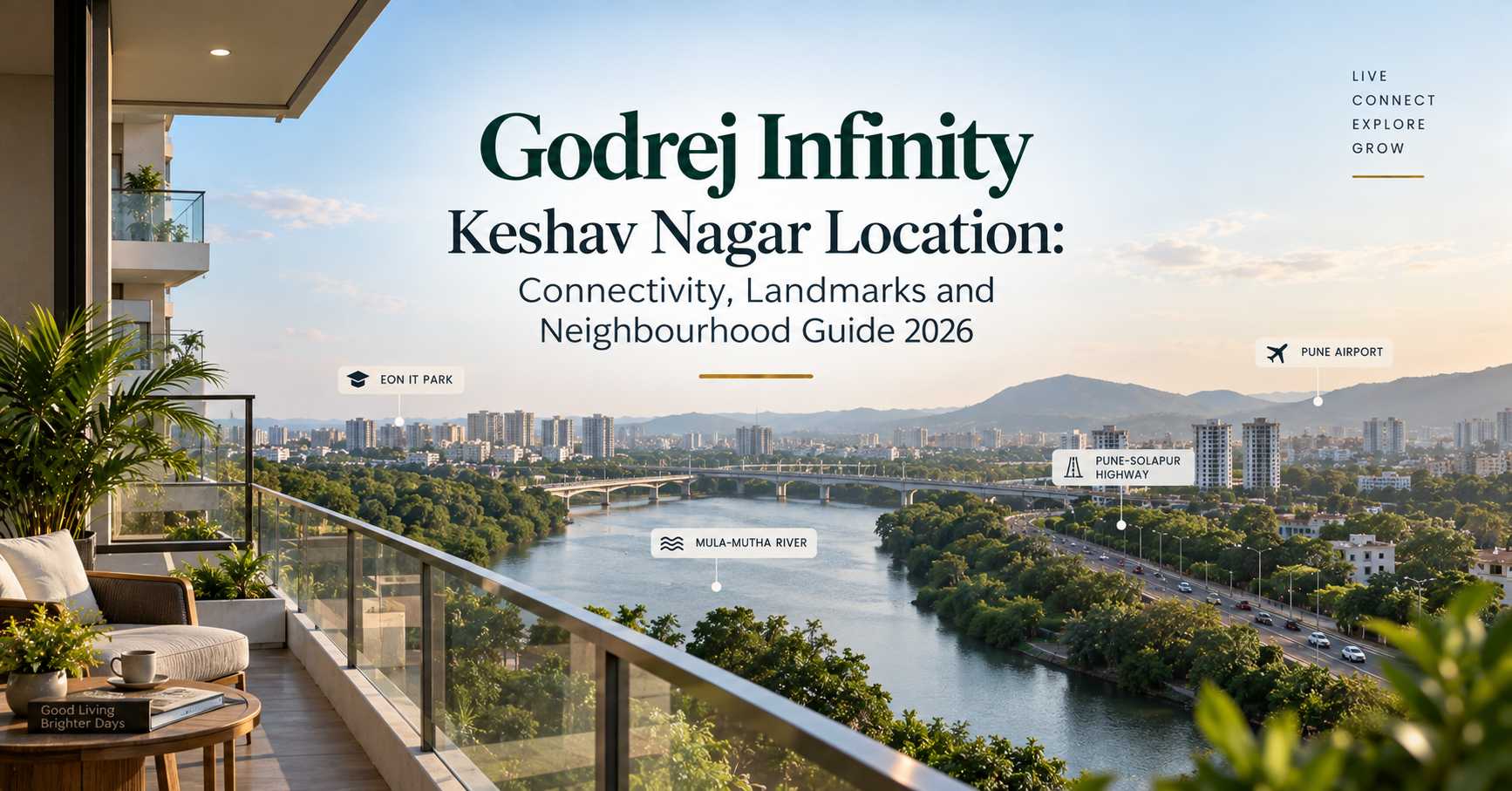
The fits are distinct. Baner at ₹10,000–12,000/sqft suits the family that ranks established schools and a mature commercial core above price. Hinjewadi, sitting 0–3 km from the IT park at ₹7,500–9,500/sqft, is the natural rental-investor and IT-employee pick despite its heavy supply pipeline capping appreciation. Mundhwa/Keshav Nagar serves the East-Pune professional split between Magarpatta and Kharadi, where the ready Godrej Infinity township from ₹80 lakh sets the local quality bar.
Mahalunge is the area that fits the widest cohort. At ₹8,500–10,000/sqft it gives value-seeking end-users brand-backed delivered stock within a 15–25 minute, 6–9 km drive of Hinjewadi and 4–5 km of Balewadi High Street. The Mamurdi/Pimpri belt, by contrast, is unapologetically the budget pick — at ₹6,500–8,500/sqft it buys the most carpet, with the Grande at Godrej Serene in Mamurdi an example of branded stock from ₹52 lakh on the PCMC side.
Deep dive — why Mahalunge leads the value table
Mahalunge earns the top of this guide on three counts. First, connectivity: it sits on the Baner–Mahalunge Road feeding the Mumbai–Bengaluru Expressway, 6–9 km from Hinjewadi Phase 1, 4–5 km from Balewadi High Street, with Pune Railway Station 16–18 km out and the airport 22–25 km away. Second, it trades 10–20% cheaper than neighbouring Baner while drawing on the same jobs belt. Third, the Mahalunge–Maan town-planning scheme is laying organised road grids and serviced parcels that raise the floor on land values.
The delivered-stock argument is where Godrej Hillside 1 & 2 anchors the case. Unlike a render-stage launch, its 40-plus amenities — elevated clubhouse with hill views, swimming pool, gymnasium, tennis and badminton courts, amphitheatre, hill park and nature trail — are operational today across a vehicle-free podium with about 70% open space. Phase 1 handover from October 2024 means buyers inspect a finished home, not a promise, and take a single home-loan disbursement instead of construction-linked tranches.
The pricing also reveals how much vintage moves the number: Hillside I averages around ₹8,700/sqft while the newer Hillside II carries roughly ₹9,400/sqft, an 8% spread inside one address. That sits at the top of the Mahalunge band but remains a modest brand premium over comparable delivered stock — the kind that tends to hold on exit. For the full locality picture, read our living in Mahalunge complete guide for buyers, and for the rate detail our Mahalunge property prices 2026 guide.
Investment — what a ₹75 lakh budget buys across the six areas
The cleanest way to compare areas is to hold the budget constant and let carpet and stock flex. The orange table works a representative ₹75 lakh ticket across the six localities, showing roughly how much carpet it buys and the delivery risk attached. It exposes the real trade-off: space and rate against commute, maturity and execution risk.
| Locality | Rate (₹/sqft) | Approx carpet for ₹75L | Delivery risk |
|---|---|---|---|
| Mahalunge | 8,500–10,000 | ~750–880 sqft | Low (ready stock available) |
| Baner | 10,000–12,000 | ~625–750 sqft | Low (mature) |
| Balewadi | 9,500–11,000 | ~680–790 sqft | Low |
| Hinjewadi | 7,500–9,500 | ~790–1,000 sqft | Medium (high supply) |
| Mundhwa / Keshav Nagar | 11,000–14,000 | ~535–680 sqft | Low–medium |
| Mamurdi / Pimpri belt | 6,500–8,500 | ~880–1,150 sqft | Medium |
The pattern is stark. At ₹75 lakh the Mamurdi/Pimpri belt buys nearly double the carpet of premium Mundhwa — roughly 880–1,150 sqft against 535–680 sqft — but you trade a longer haul to the western jobs belt for that space. Mahalunge lands a ready ~750–880 sqft 2 BHK within the same ₹51–78 lakh band as our benchmark, which is why we rate it the corridor’s value play: it is neither the cheapest nor the most expensive, but it pairs a ready home with a structural growth driver.
On returns, premium west-Pune stock has logged double-digit cumulative appreciation over the past five years, with the Hinjewadi–Mahalunge belt yielding a gross 3–4%. That makes these areas appreciation-plus-stable-rent plays, not flip markets — the 3–4% yield means a let-out flat carries some cost in the early years, and the return case rests on capital growth over a 4–5 year hold backed by a deep, salaried tenant pool.
Buyer guidance — how to choose your Pune locality
Start by fixing your non-negotiable. If it is maximum carpet for the rupee, the Mamurdi/Pimpri belt at ₹6,500–8,500/sqft gives you 880–1,150 sqft for ₹75 lakh. If it is proximity to the IT job, Hinjewadi at 0–3 km wins outright. If it is the balance of a sensible rate, delivered stock and a real growth driver, Mahalunge at ₹8,500–10,000/sqft is where most western-corridor end-users land.
Second, decide ready versus under-construction with eyes open. Ready stock like Godrej Hillside removes delay risk, lets you inspect the actual flat and gives a single disbursement, while under-construction inventory in Hinjewadi or the PCMC fringe is cheaper per sqft but carries execution and timing exposure plus GST. Budget the full acquisition cost too: stamp duty and registration in Pune run about 6–7% including metro cess, so a ₹70 lakh flat carries roughly ₹4.2–4.9 lakh in statutory charges.
Third, verify the paper before you offer. Confirm RERA numbers on the Maharashtra portal — for our benchmark, P52100022099 for Hillside 1 and P52100022153 for Hillside 2, noting Hillside 3 (P52100050939) is a separate under-construction phase. Mainstream lenders including HDFC, ICICI Bank, SBI, Axis Bank and Kotak Mahindra fund these micro-markets. If East Pune fits you better, the ready Godrej Infinity Keshav Nagar listing from ₹80 lakh is the delivered benchmark there.
Conclusion — our verdict on the best areas in Pune
There is no single best area to buy a flat in Pune in 2026 — there is a best fit for your budget, commute and risk appetite across a ₹6,500–14,000/sqft spread. For most end-users chasing the western jobs belt, the answer is Mahalunge, where ₹8,500–10,000/sqft buys brand-backed, delivered stock 6–9 km from Hinjewadi, with the Mahalunge–Maan TP scheme and the westward metro giving it an appreciation runway the more built-out suburbs no longer have.
If you can pay up, Baner at ₹10,000–12,000/sqft and Mundhwa at ₹11,000–14,000/sqft buy maturity and proximity; if budget is the hard constraint, Hinjewadi and the Mamurdi/Pimpri belt at ₹6,500–9,500/sqft deliver the most carpet. Whatever you choose, the discipline is the same: compare all-in costs not sticker rates, weigh delivery risk explicitly, and use delivered stock as your benchmark. Our verdict is that Godrej Hillside 1 & 2 from ₹51 lakh, RERA P52100022099 / P52100022153, is the clearest worked example of where Pune’s best value-and-delivery combination lands in 2026.
Frequently Asked Questions
Q. Which is the best area to buy a flat in Pune in 2026?
For most western-corridor end-users, Mahalunge offers the best balance at ₹8,500–10,000/sqft — ready, brand-backed stock 6–9 km from the Hinjewadi IT belt. Baner at ₹10,000–12,000/sqft and Mundhwa at ₹11,000–14,000/sqft are the premium picks, while Hinjewadi and the Mamurdi/Pimpri belt at ₹6,500–9,500/sqft suit budget-first buyers.
Q. Where in Pune can I buy a flat on a tight budget?
The Mamurdi/Pimpri belt is the affordable floor at ₹6,500–8,500/sqft, where a ₹75 lakh ticket buys roughly 880–1,150 sqft of carpet — nearly double what the same money buys in premium Mundhwa. Branded options like Grande at Godrej Serene in Mamurdi start from ₹52 lakh on the PCMC side.
Q. Is Mahalunge cheaper than Baner and Balewadi?
Yes. Baner runs ₹10,000–12,000/sqft and Balewadi ₹9,500–11,000/sqft, so Mahalunge at ₹8,500–10,000/sqft is typically 10–20% cheaper than Baner for broadly similar access to the Hinjewadi IT belt, which is 6–9 km away via the Baner–Mahalunge Road.
Q. What rental yield can I expect across Pune’s best areas?
Gross rental yields run about 3–4% across the Hinjewadi–Mahalunge belt and 3–3.5% in East Pune around Mundhwa. That makes these areas appreciation plays with a stabilising rental floor rather than positive-cash-flow assets, best held over a 4–5 year horizon.
Q. Should I buy ready or under-construction in Pune?
Ready stock like Godrej Hillside in Mahalunge removes delay risk, lets you inspect the flat and gives a single home-loan disbursement, pricing at the top of its local band. Under-construction inventory in Hinjewadi or the PCMC fringe is cheaper per sqft but carries execution risk, GST and full EMI during the wait. Budget 6–7% extra for stamp duty and registration either way.