Quick Answer
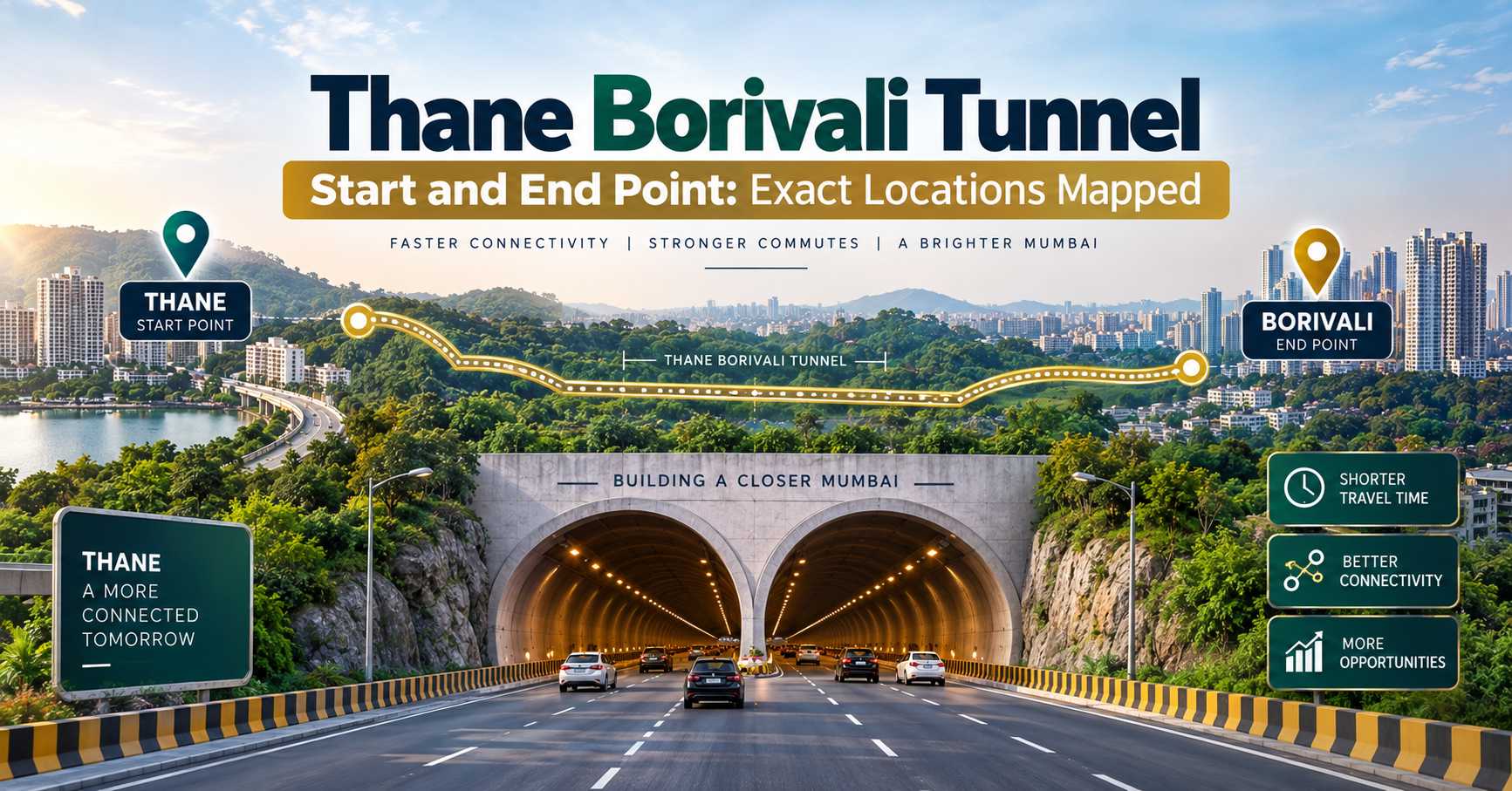
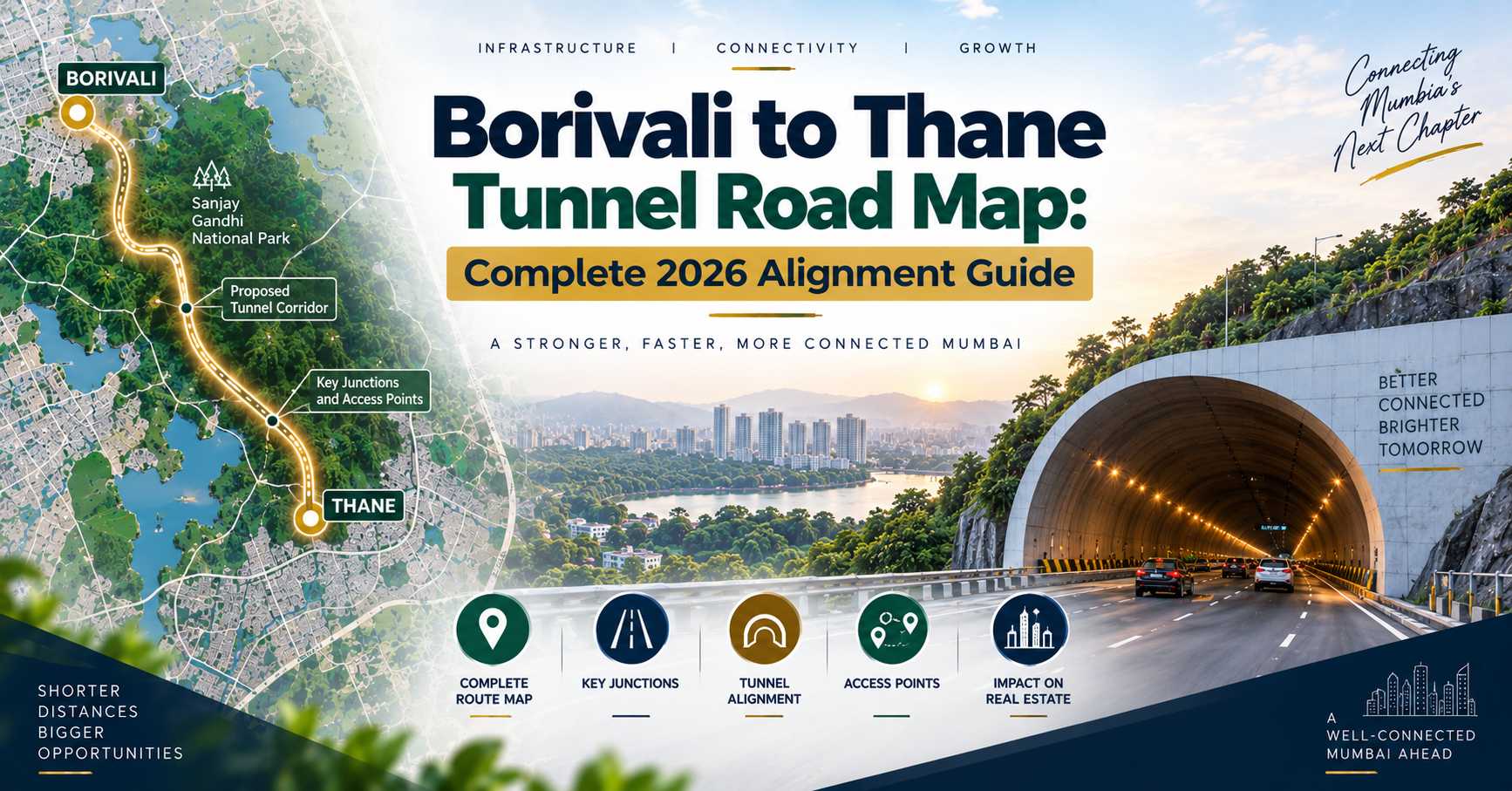
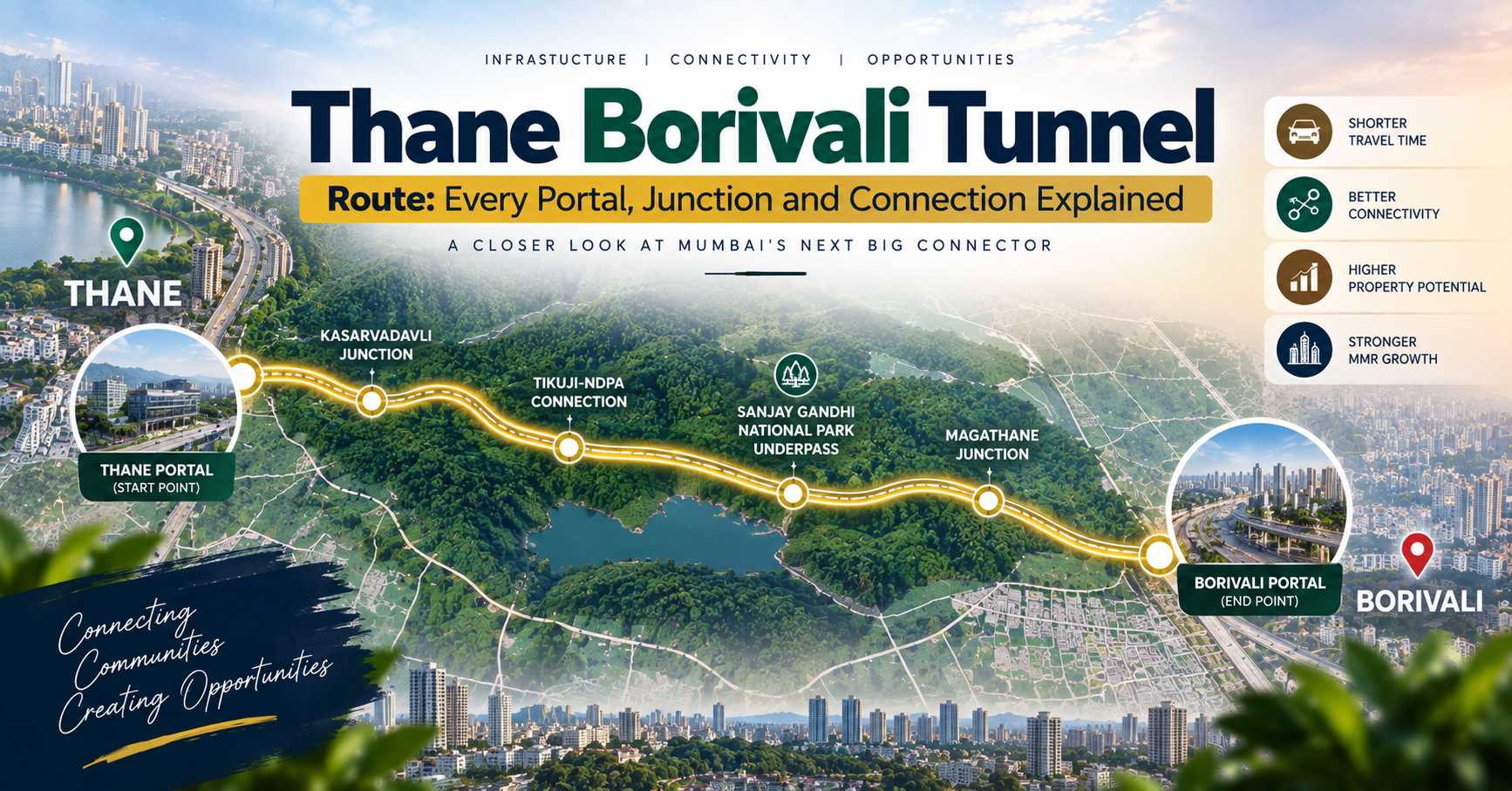
The thane borivali tunnel route runs 11.84 km from Ghodbunder Road near Tikuji-ni-Wadi in Thane to the Western Express Highway at Magathane in Borivali East. It has no intermediate exits — the two portals are the only surface connections, tying Thane’s arterial spine directly into Mumbai’s western highway network.
A tunnel is only as useful as what it connects to at either end. That is the part of the Thane–Borivali project that gets least attention and matters most. The 11.84 km link itself is a sealed run under Sanjay Gandhi National Park with no slip roads, no intermediate junctions and no exits. Everything that determines whether it eases your commute or simply relocates your traffic jam happens in the first and last kilometre.
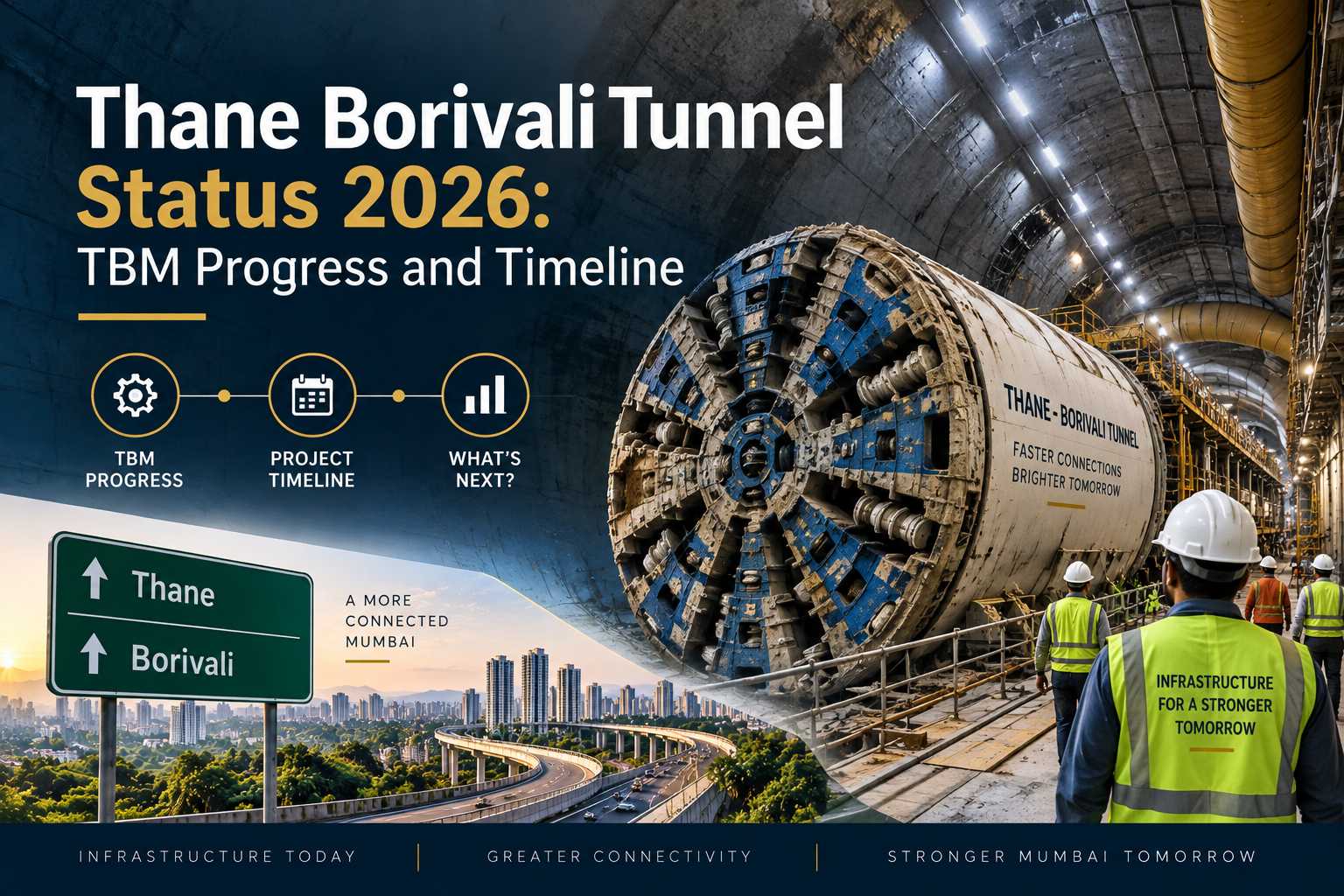
By September 2026 the picture is firm enough to analyse properly. TBM Nayak, described as India’s largest single-shield hard rock tunnel boring machine for an urban project, was launched in April 2026 and is cutting from the Thane end. A second machine, Arjuna, was under assembly through the year for the parallel tube. Over 500 structures had been cleared on the Borivali side by February 2026 to make room for the approach corridor. The thane borivali tunnel route is no longer a proposal — it is a construction site with fixed geometry.
Our team analysed the route end to end, focusing on the network each portal plugs into rather than on the tunnel bore itself. Here is what connects to what.
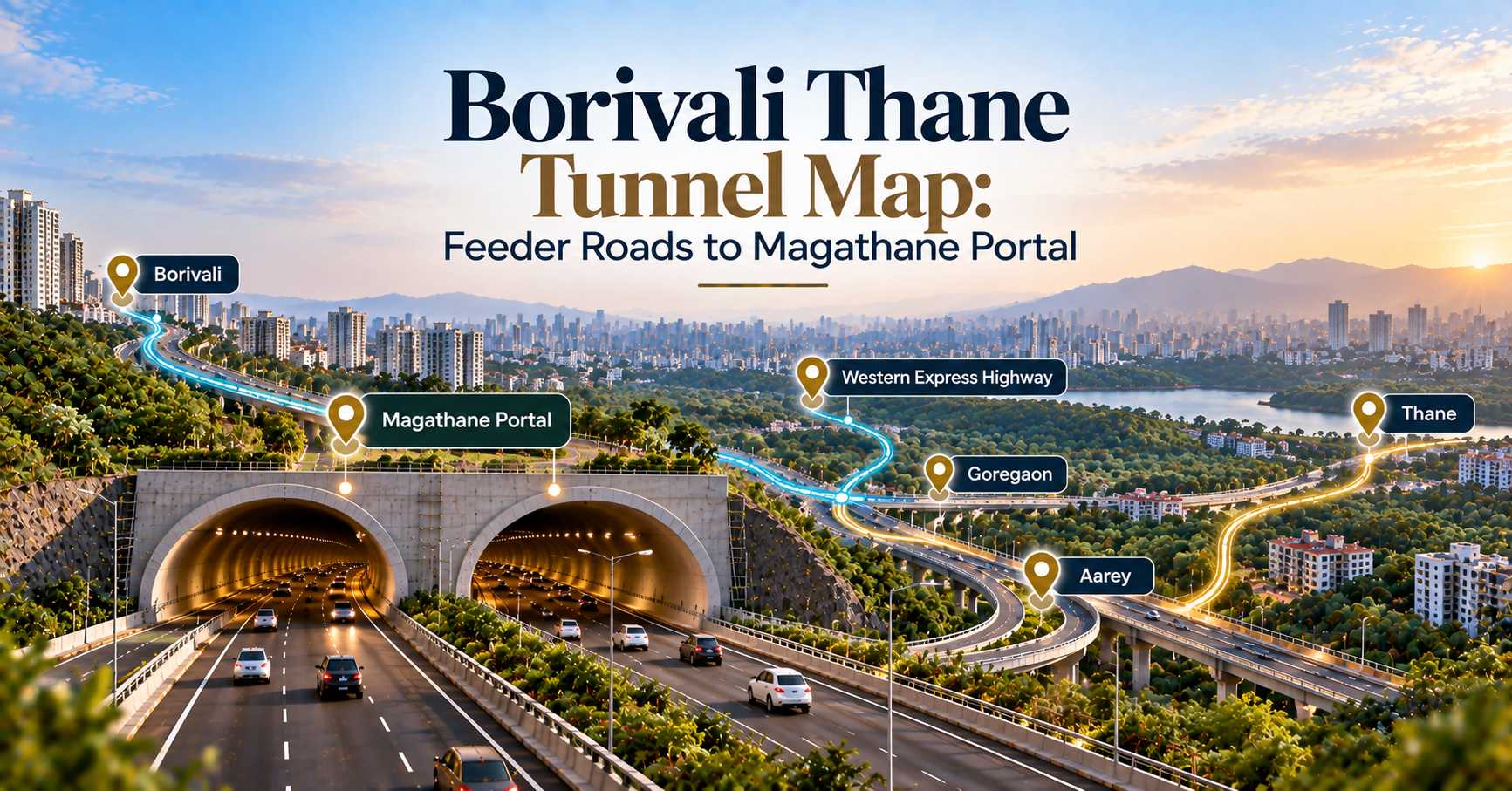
The Thane Borivali Tunnel Route, Portal to Portal
Think of the route as three segments: a Thane approach, a sealed bore, and a Borivali approach. Only the two approaches interact with the surface road network.
| Segment | Location | Length | Connects to |
|---|---|---|---|
| Thane approach | Ghodbunder Road near Tikuji-ni-Wadi, Manpada | Part of ~1 km combined approach | Ghodbunder Road arterial, Kapurbawdi and Manpada junctions |
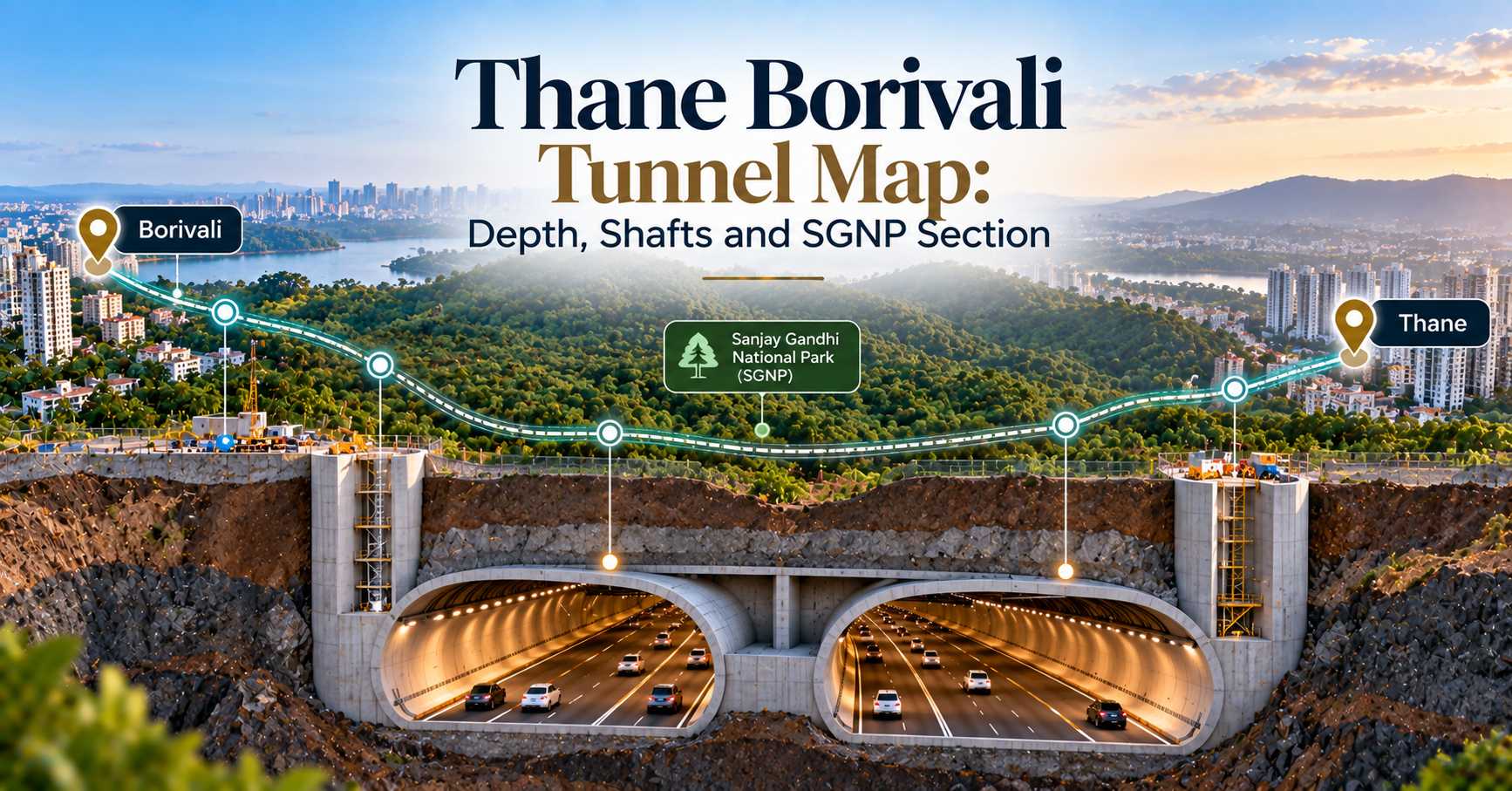
| Bored tunnel | Beneath Sanjay Gandhi National Park | About 10.25 km per tube | Nothing — sealed run, no exits |
| Borivali approach | Magathane / Ekta Nagar, Borivali East | Part of ~1 km combined approach | Western Express Highway, both carriageways |
Each tube is 12.2 metres in internal diameter, carrying three running lanes plus a dedicated emergency lane. Cross passages every 300 metres link the two tubes for emergency evacuation. The alignment sits between 23 and 60 metres below the surface, deliberately kept below the eco-sensitive zone of the national park, which is the basis on which the project cleared its environmental review.
What the Thane Portal Plugs Into
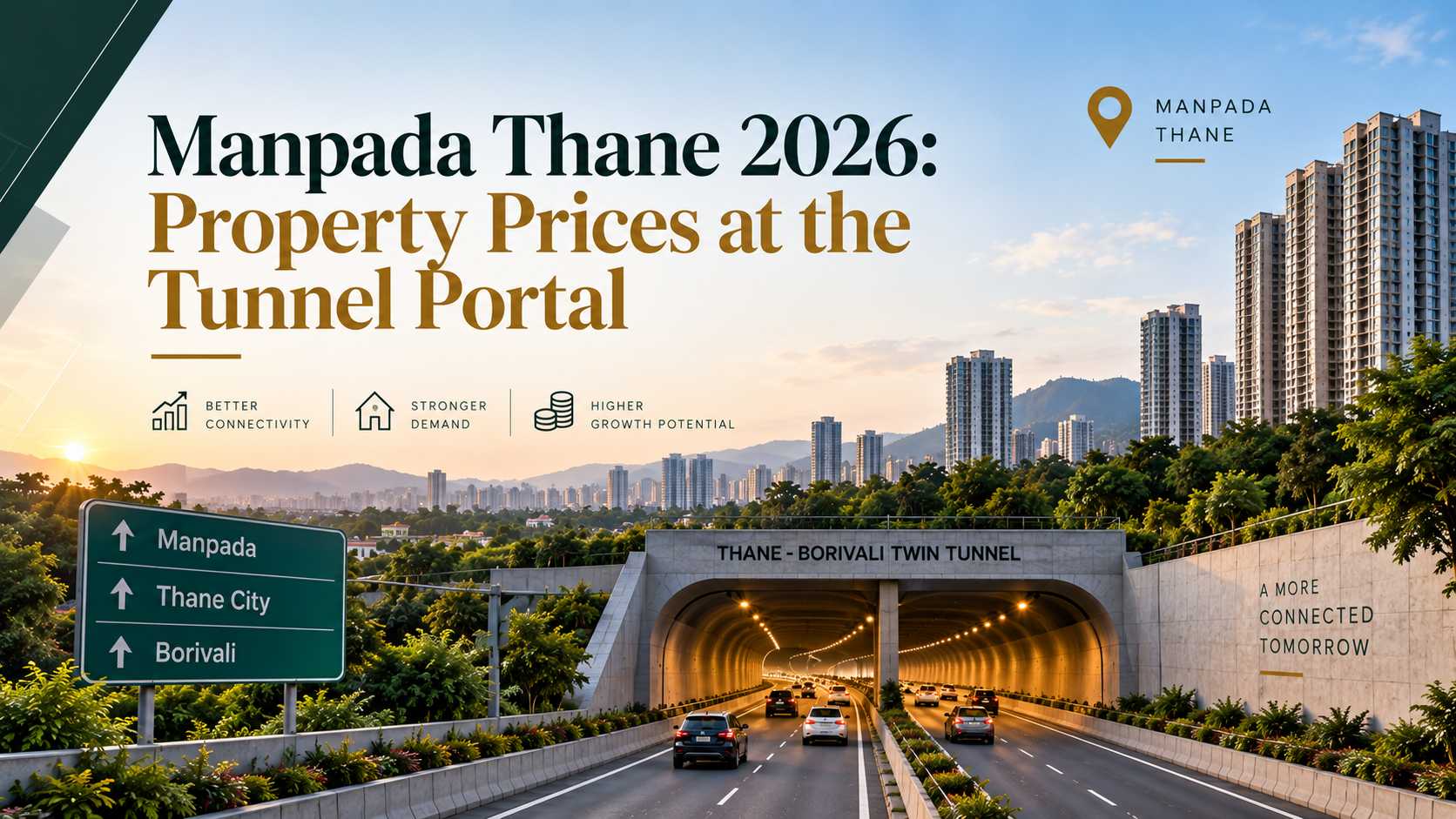
Ghodbunder Road is the receiving network on the Thane side, and it is already the busiest arterial in Thane West. It runs from the Kapurbawdi junction north-west to Fountain Hotel, where it meets the Mumbai–Ahmedabad corridor. The tunnel approach joins this spine near Tikuji-ni-Wadi in the Manpada belt.
One detail on the portal location is worth knowing, because it changed after the original drawings. Following resident representations about dust, noise and construction traffic in a dense residential pocket, MMRDA moved the portal roughly 225 metres further along the alignment, towards the Satyashankar wall boundary. Small on a map; significant if you own a flat in the cluster that was originally at the tunnel mouth.
From that portal, a driver emerging from Borivali can reach:
- Thane West core — Kapurbawdi, Majiwada and Thane station side, via Ghodbunder Road southbound
- Kolshet Road and the Balkum belt — the Ascend and Kolshet cluster, a short run off the same spine
- Kasarvadavali and the northern Ghodbunder stretch — continuing north-west on the arterial
- The Mumbai–Ahmedabad corridor — at Fountain Hotel junction, for Vasai, Virar and Gujarat traffic
- Navi Mumbai and the Eastern Express Highway — via Thane’s internal network from Kapurbawdi
- Metro Line 4 — the Wadala to Kasarvadavali corridor runs along Ghodbunder Road, so the portal lands near a future metro-served stretch
The strategic consequence is that Ghodbunder Road stops being a Thane-only arterial and becomes a national-park bypass feeding Mumbai’s western suburbs. That is a fundamental change of role for a road that has spent two decades as a local spine.
What the Borivali Portal Plugs Into
On the Mumbai side the route ties into the Western Express Highway near Magathane, in the Ekta Nagar area of Borivali East. The WEH is the western suburbs’ primary north–south artery, which means the tunnel effectively hands Thane traffic a direct on-ramp to the entire Andheri–Bandra–Dahisar corridor.
| From the Borivali portal | Connects toward | Why it matters |
|---|---|---|
| WEH southbound | Kandivali, Malad, Goregaon, Andheri, BKC | Opens Mumbai’s main office belt to Thane residents |
| WEH northbound | Dahisar, Mira Road, Bhayandar | Links the far western suburbs to Thane without the Ghodbunder detour |
| Magathane metro station | Mumbai Metro Line 7 | Road-to-metro interchange within the portal catchment |
| Borivali station | Western Line, about 3 km west | Rail access for onward travel to Churchgate |
| SV Road and Link Road | Western suburbs local network | Secondary distribution away from the WEH |
Borivali East currently averages around Rs 32,150 per sq ft with an 11.2% year-on-year gain, while the WEH frontage specifically sits nearer Rs 28,794 per sq ft as of August 2026. Kandivali East, one stop south on the same highway, is around Rs 30,950 per sq ft — a catchment that includes addresses such as Godrej Nest in Kandivali East, already inside the portal’s realistic drive-time radius.
The pinch point to watch
Three lanes of tunnel traffic have to merge into the Western Express Highway at Magathane. The WEH is already heavily loaded through Borivali. If the merge design underperforms, the tunnel’s 15-minute run could end in a 15-minute queue at the portal — a pattern seen on other Indian urban links. Watch the approach-road detailing as it is built out.
How the Route Fits the Wider MMR Network
The tunnel is not a standalone project. It lands in the middle of a cluster of MMR infrastructure arriving on overlapping timelines, and the combined effect is what will actually reprice the corridor.
- Metro Line 4 (Wadala to Kasarvadavali) — runs along Ghodbunder Road, giving the Thane portal area rail access to central Mumbai on a north–south axis while the tunnel handles east–west road traffic.
- Mumbai Metro Line 7 — already serving Magathane station beside the Borivali portal, creating a road-to-metro interchange at the Mumbai end.
- The Western Express Highway upgrades — the receiving carriageway at Borivali, whose capacity determines how much of the tunnel’s time saving survives the merge.
- Thane’s internal ring network — Kapurbawdi, Majiwada and Kolshet Road distribute tunnel traffic into Thane West rather than concentrating it on one junction.
For a fuller view of how these pieces interact, our analysis of Thane infrastructure in 2026 — tunnel, Metro 4 and coastal road maps the timelines side by side.
What the Route Means for Thane’s Western Spine
Ghodbunder Road averages around Rs 15,000 per sq ft, across a wide band from roughly Rs 11,000 to Rs 22,100 depending on the pocket. Prices are down about 2% over one year and 13.5% over three — a genuinely soft run, driven partly by heavy under-construction supply.
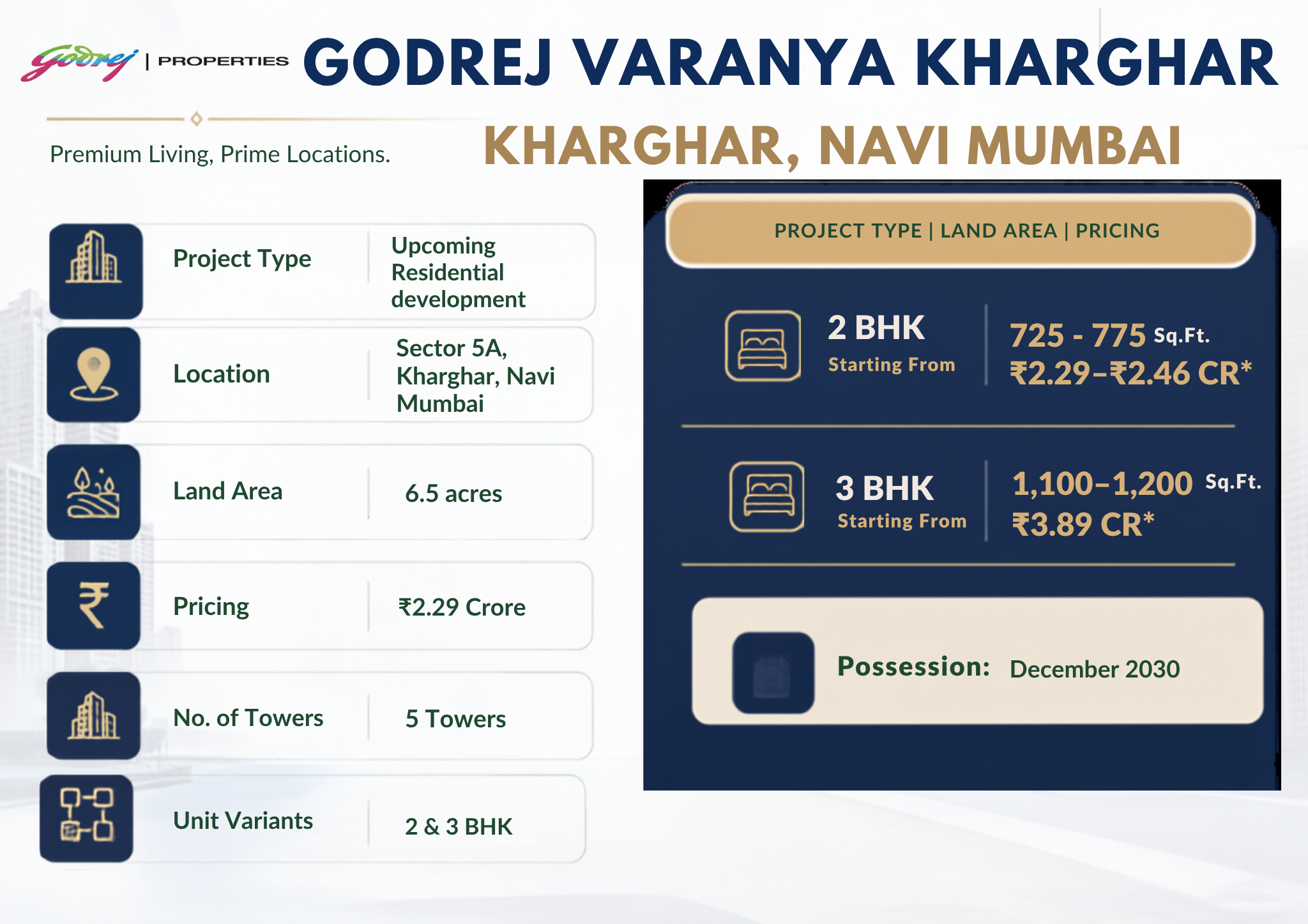
Godrej Properties Limited, the third-party developer behind the projects we cover, has concentrated significant MMR land on exactly this spine, including an 18.5-acre Ghodbunder Road township positioned on the arterial the Thane portal feeds. That placement predates the tunnel’s July 2024 foundation stone, which tells you the corridor logic was identified well before the machines arrived. Portfolio detail sits at Godrej Properties Limited.
Our verdict: the route’s value is asymmetric. Borivali gains a faster version of access it already had. Ghodbunder Road gains access it has never had, from a price base that has been falling for three years. That asymmetry is the investment case, and it is legible directly from the alignment.
Frequently Asked Questions
Q: Does the thane borivali tunnel route have any exits inside the tunnel?
No. It is a sealed point-to-point run with no intermediate entry or exit. The only surface connections are the two portals — Ghodbunder Road near Tikuji-ni-Wadi in Thane and the Western Express Highway at Magathane in Borivali East.
Q: Which roads does the route connect at each end?
Ghodbunder Road on the Thane side, feeding Kapurbawdi, Majiwada, Kolshet Road and the Mumbai–Ahmedabad corridor at Fountain Hotel. The Western Express Highway on the Borivali side, feeding the whole Dahisar to Bandra western suburban belt in both directions.
Q: How wide is the tunnel and how many lanes does it carry?
Each of the two tubes is 12.2 metres in internal diameter and carries three running lanes plus one dedicated emergency lane. The tubes are one-way, so there is no bi-directional traffic mixing and no head-on collision risk.
Q: Is the route safe given it runs under a national park?
The alignment runs 23 to 60 metres below the surface and does not enter the eco-sensitive zone of Sanjay Gandhi National Park. Cross passages every 300 metres connect the two tubes so occupants can escape from one tube into the other in an emergency.
Q: Will the route relieve traffic on Ghodbunder Road?
It should ease through-traffic heading to the western suburbs, particularly on the Kapurbawdi to Fountain stretch. Local Thane movement and northbound traffic to Vasai, Virar and Gujarat will continue to use Ghodbunder Road at similar volumes.
Q: Where does the route connect to metro lines?
At the Borivali end the portal sits near Magathane station on Mumbai Metro Line 7. At the Thane end, Metro Line 4 from Wadala to Kasarvadavali runs along the Ghodbunder Road corridor the portal feeds, giving road-to-rail interchange potential at both ends.
Q: When will the route open to traffic?
The target is mid-2028, with TBM Nayak expected to reach Borivali by 2028. Physical progress stood at 8.19% as of 31 August 2025. Independent observers note a possible slip into 2029 depending on monsoon interruptions and rock conditions.
The Practical Takeaway
The bore is the engineering story; the portals are the property story. Ghodbunder Road’s transformation from local arterial to national-park bypass is the single biggest network change in Thane West in two decades, and it lands on a micro-market that has spent three years going sideways or down.
If you are evaluating a project on either approach, our team will measure it against the published alignment and tell you plainly whether it is in the catchment or in the marketing radius. Book a site visit on the Ghodbunder corridor and we will drive the portal approach with you.