Quick Answer
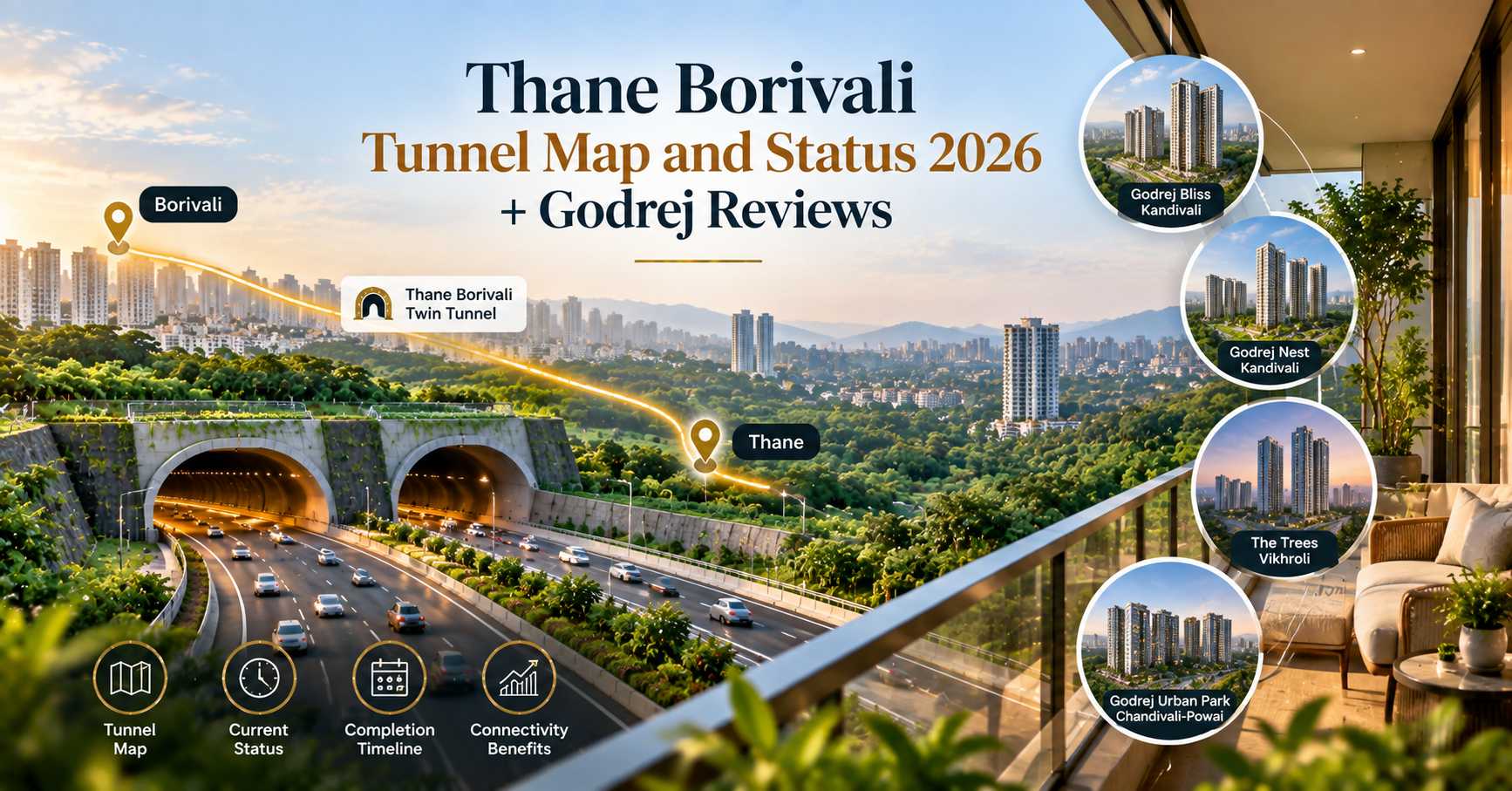
On the Thane Borivali tunnel map, the alignment sits up to 23 metres below the surface, runs as two tubes of roughly 12.2 m diameter with cross passages every 300 metres, and passes under 40.46 hectares of Sanjay Gandhi National Park land plus 16.54 hectares of private land.
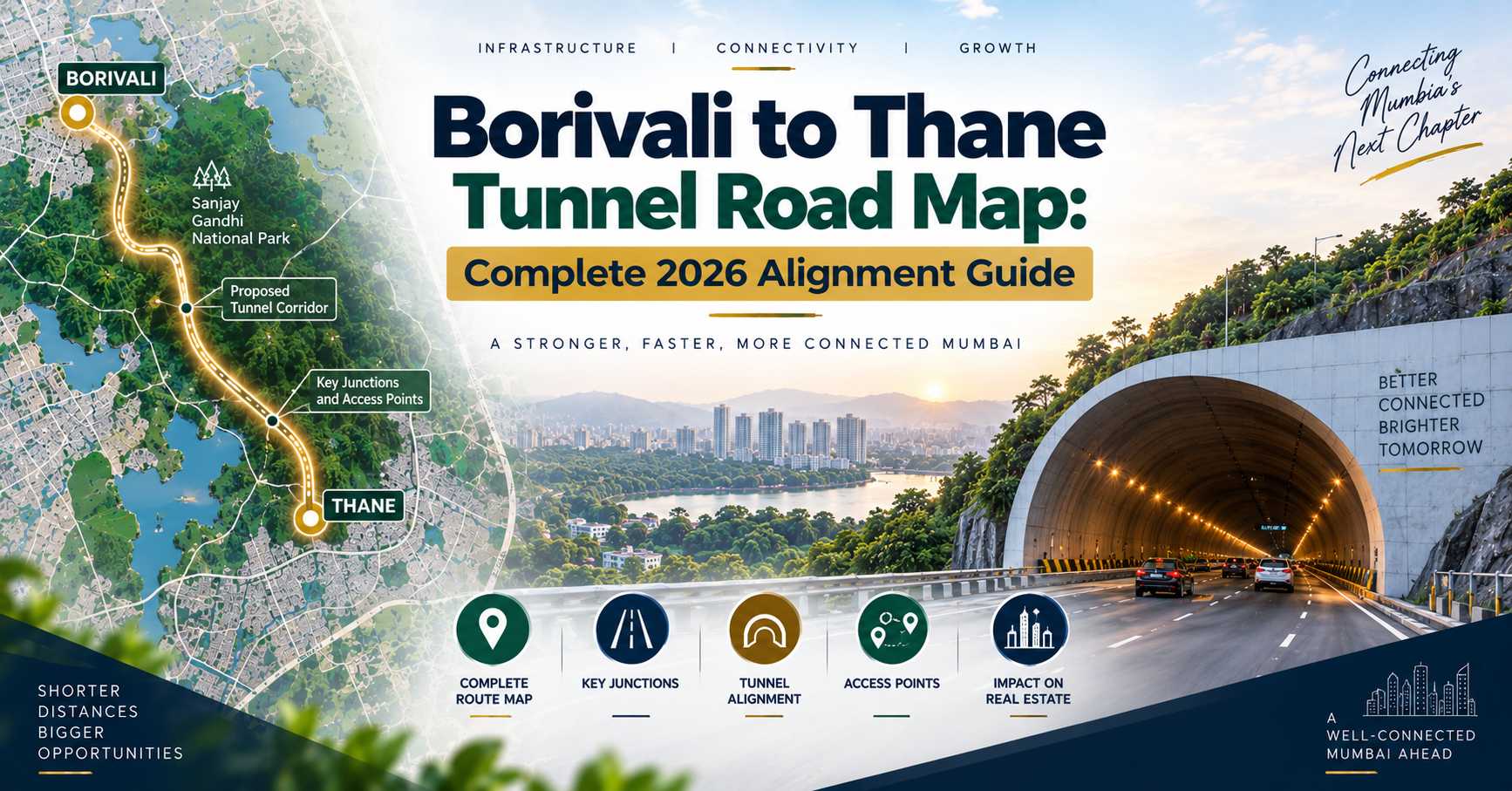
Most coverage of this project treats the Thane Borivali tunnel map as a line drawn between two dots. That is useful for working out travel time and almost useless for working out risk. The parts of the alignment that will decide whether the 2028 date holds are vertical, not horizontal: how deep the tubes sit, where the shafts and cross passages go, and what the Sanjay Gandhi National Park section imposes on the contractor.
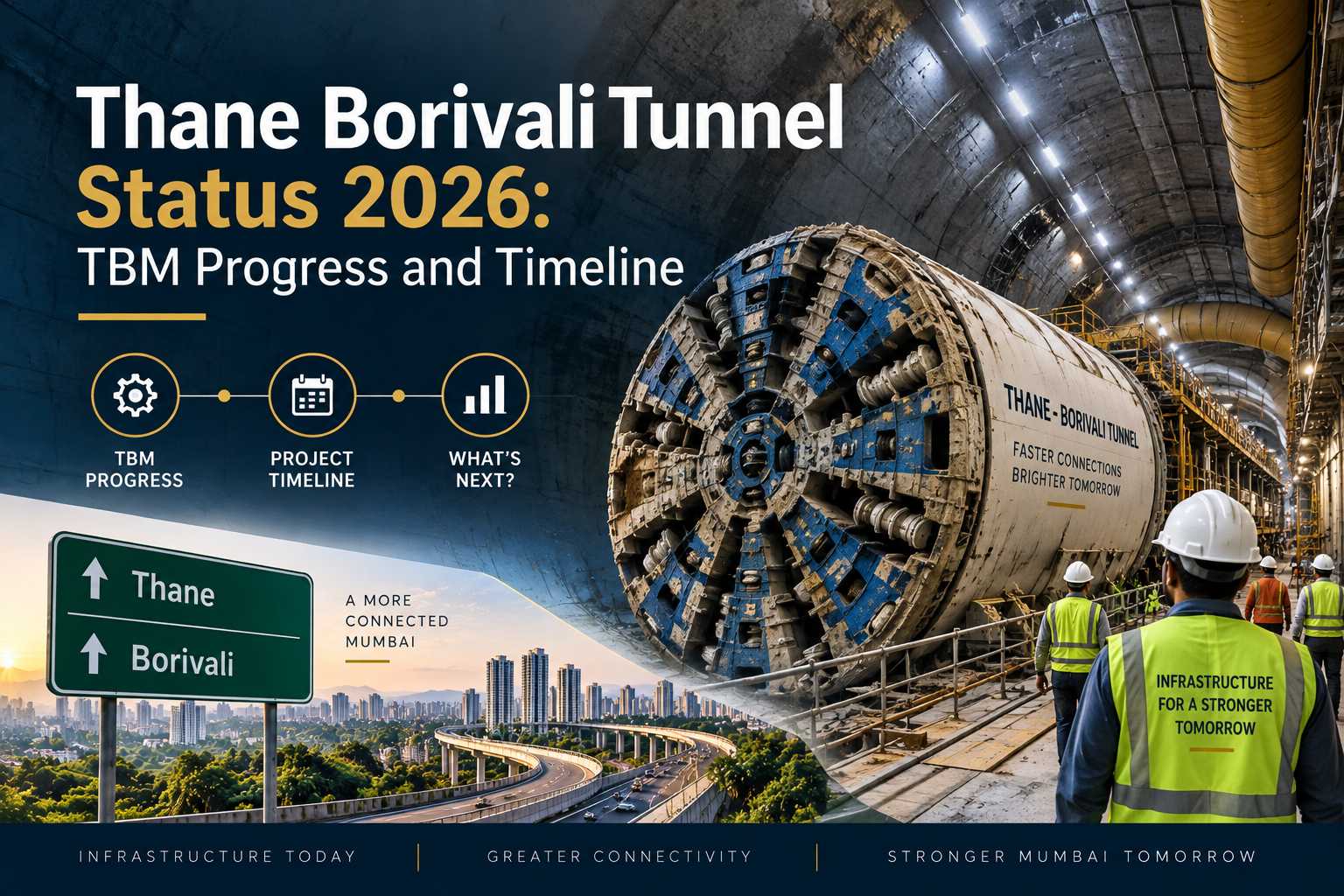
MMRDA’s own numbers frame it. Physical progress stood at 13.13% as of July 2026. The project needs 40.46 hectares inside SGNP and 16.54 hectares of private land, and the bulk of the drive runs beneath a protected national park that required clearance from both the Maharashtra State Board for Wildlife in October 2023 and the National Board for Wildlife in February 2024. Our team analysed the design documents and the clearance conditions to work out which constraints actually bind.
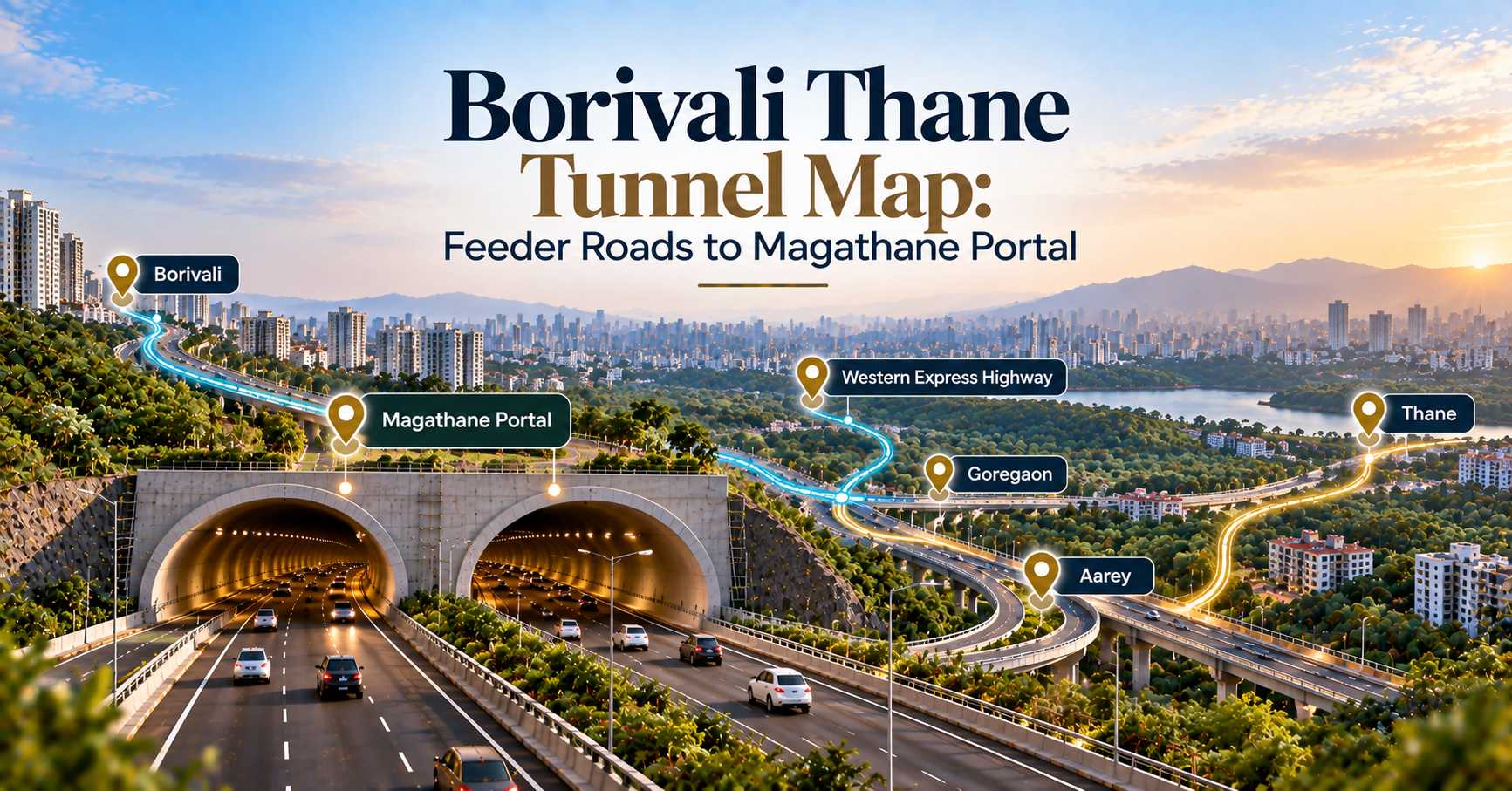
If you only need the surface geography — which junction, which road, which locality — that is already mapped in our Thane Borivali tunnel start and end point locations guide. This piece goes underneath it.
The Thane Borivali Tunnel Map in Section, Not Plan
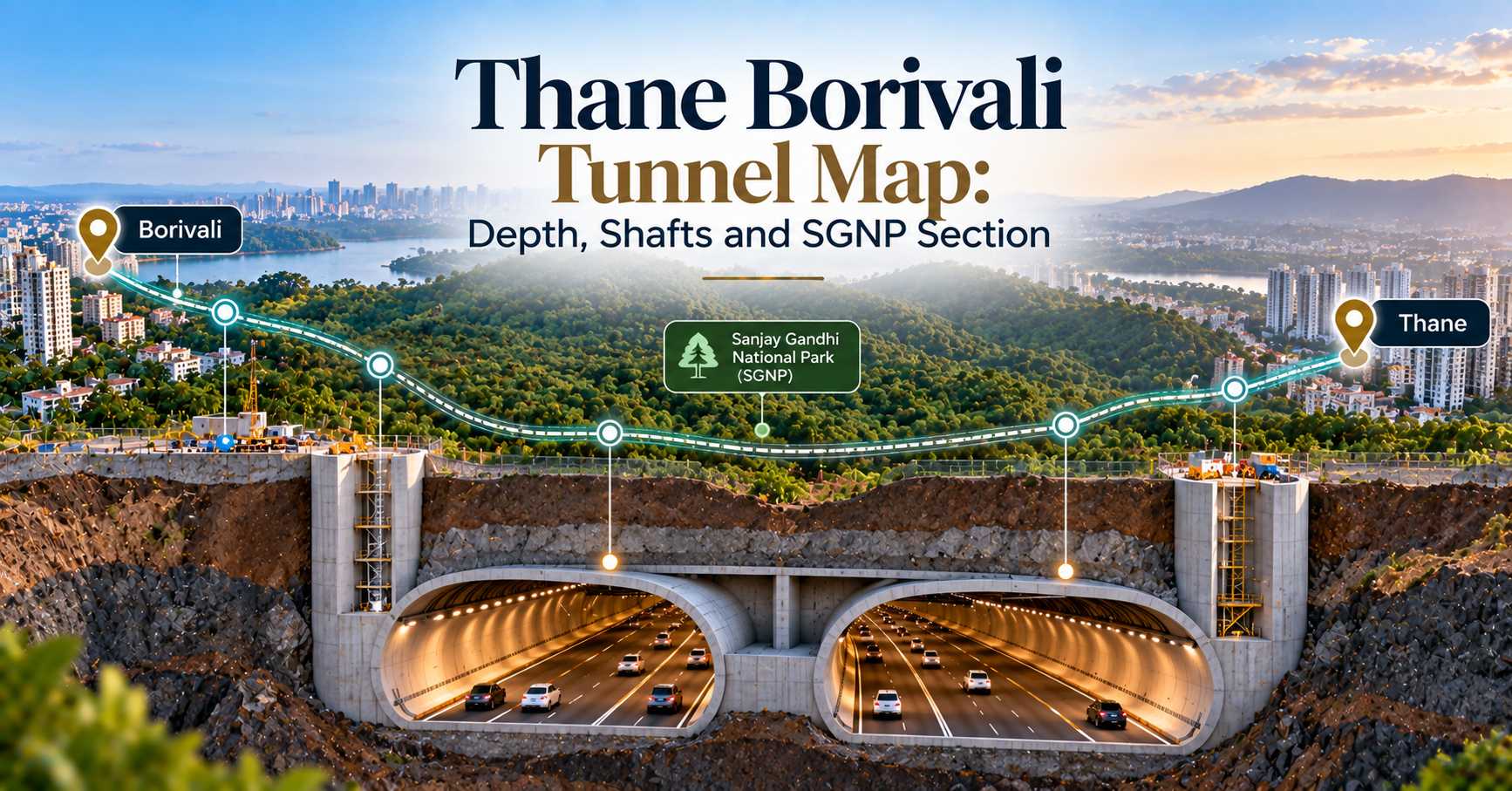
Read the alignment as a cross-section and the engineering choices become obvious. Two independent tubes, each around 12.2 metres in bored diameter, carrying two traffic lanes plus a dedicated emergency lane in one direction. Tube length is about 10.25 km of bored section, with approach roads taking the project to its 11.84 km headline figure. Maximum cover between the crown of the tunnel and the surface is 23 metres.
That 23-metre figure is the single most important number on the map, and it cuts two ways. It is shallow enough that surface conditions in SGNP matter — vibration transmits, and the Wildlife Institute of India monitors levels continuously so that the park’s fauna is not disturbed by the drive. It is also deep enough that the tubes clear everything at the surface without a single property demolition along the middle of the route, which is precisely why a bored tunnel was chosen over widening Ghodbunder Road.
A surface road through SGNP was never going to clear. The tunnel exists because 23 metres of rock is easier to get permission for than one kilometre of national park.
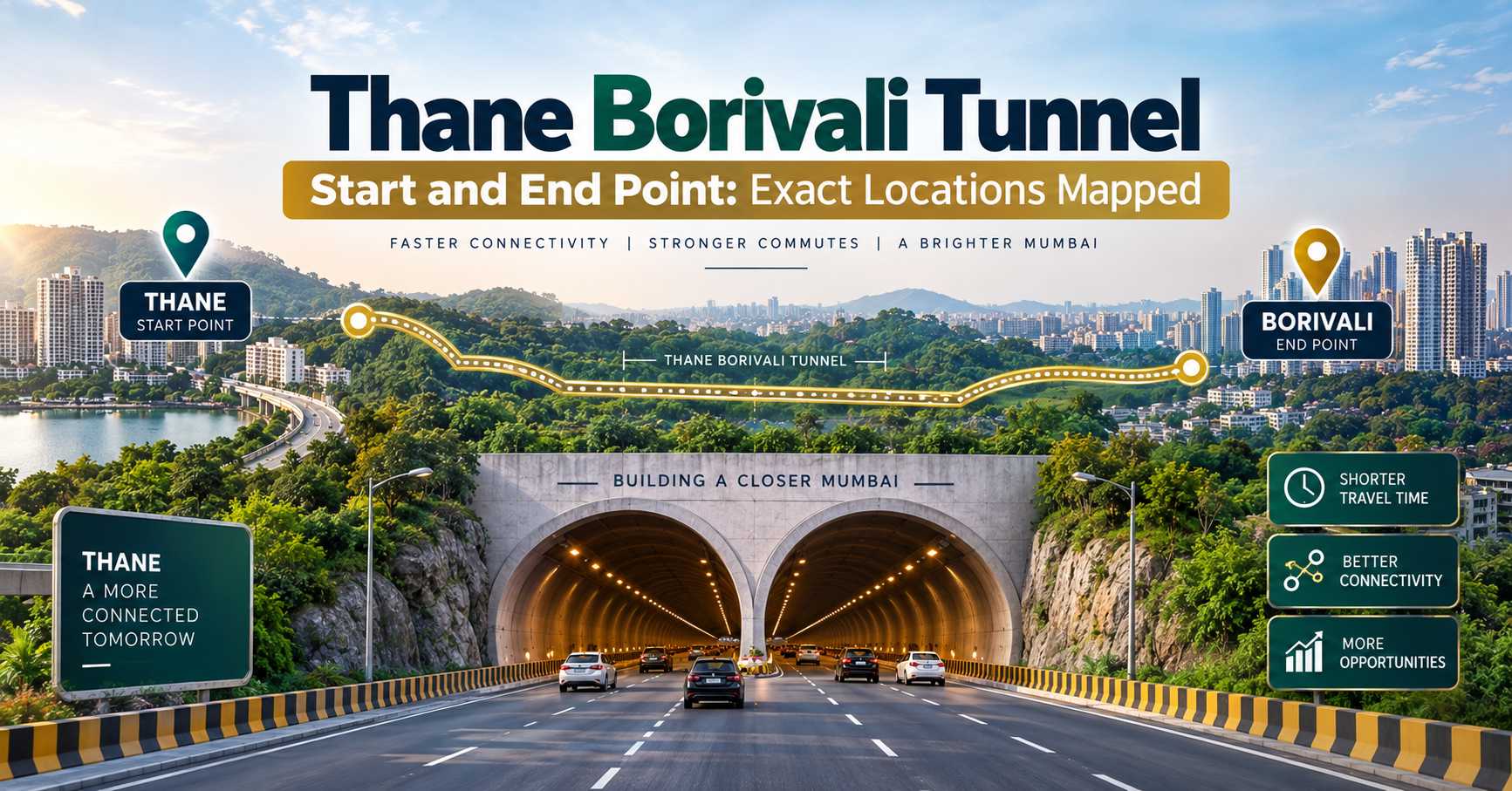
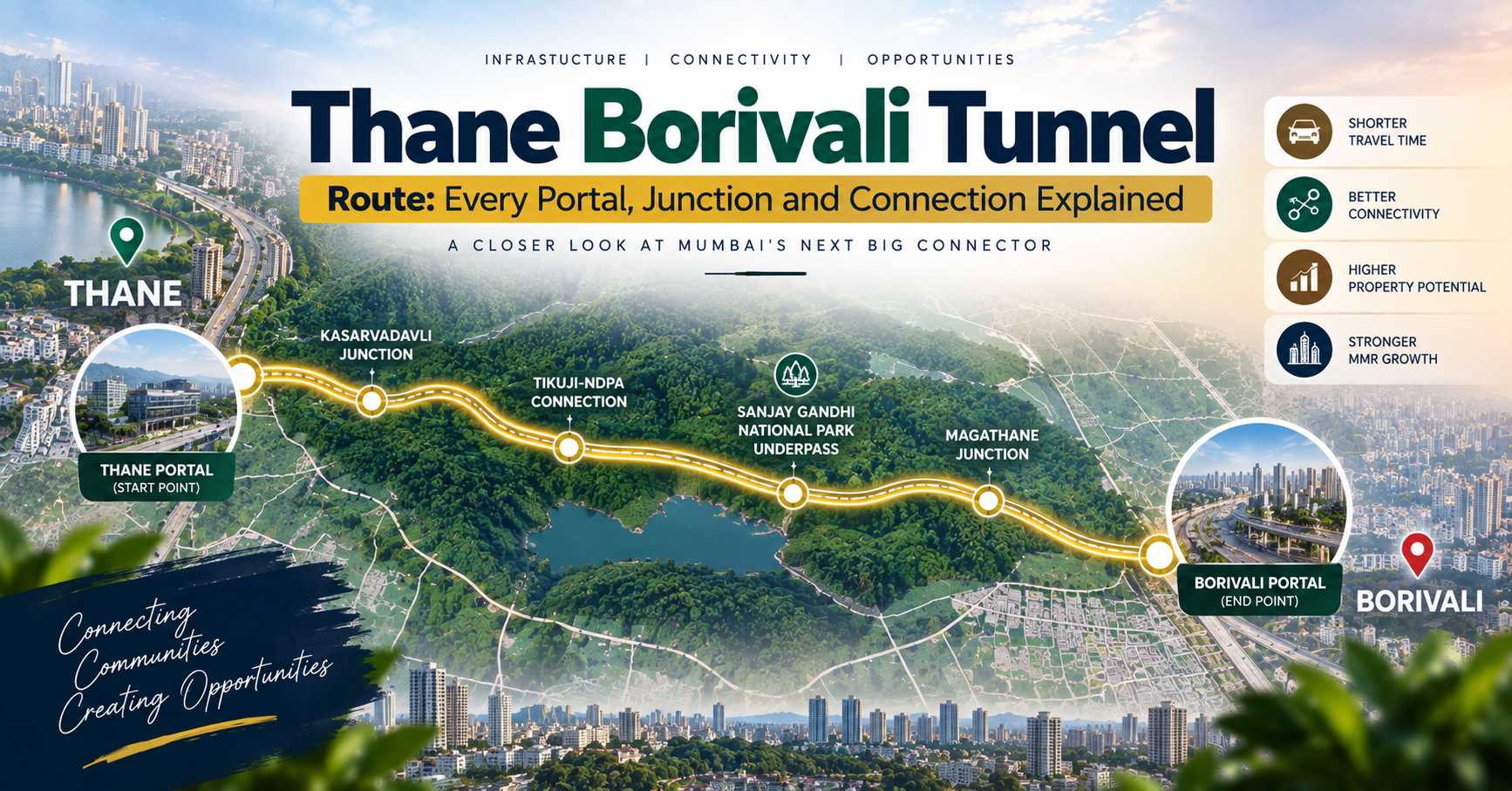
The two portals anchor the section. Tikuji-Ni-Wadi in Manpada, Thane at the eastern end; Ekta Nagar in Magathane, Borivali at the western end, close to the Western Express Highway. The junction-level detail on both approaches is set out in our Borivali Thane tunnel map for 2026.
Cross Passages, Ventilation and the Safety Systems
Twin-tube design exists for one reason: each tube is the other’s escape route. Cross passages are provided at every 300-metre interval, which means no point in either tube is more than 150 metres from a connection to the parallel tube. For a 10.25 km drive that implies roughly 34 cross passages, each of which is a separate excavation the contractor has to complete after the main bore passes.
The declared systems package includes a dedicated mechanical ventilation system, fire extinguishers, smoke detectors, and illuminated retro-reflective and LED signage. Modern air filtration is being installed specifically so that the Air Quality Index inside the national park is not degraded by tunnel exhaust — a condition that follows directly from the wildlife clearance rather than from standard road-tunnel practice.
For buyers, the practical consequence is schedule rather than specification. Cross passages, ventilation plant, fire systems and electromechanical fit-out are all post-boring work. A tunnel that is fully bored is not a tunnel that opens.
What the Map Requires in Land and Clearances
The land ledger is where the western half of the map is still unresolved. The table below sets out what the project needs and where each item stands.
| Requirement | Quantum / Authority | Status | Effect on the map |
|---|---|---|---|
| SGNP land | 40.46 hectares | Forest land approved | Main bore alignment cleared |
| Private land | 16.54 hectares | Acquisition in progress | Portal and approach works |
| State wildlife clearance | Maharashtra State Board for Wildlife | Granted Oct 2023 | Permits SGNP section |
| National wildlife clearance | National Board for Wildlife | Granted Feb 2024 | Permits SGNP section |
| Borivali launch site | Approx 300 affected families | 15-20 families pending | Blocks TBMs 3 and 4 |
| Vibration monitoring | Wildlife Institute of India | Ongoing | Can constrain drive rate |
| Air filtration in SGNP | Clearance condition | To be installed | Post-boring fit-out |
Two rows on that table are live risks rather than settled facts. The pending 15 to 20 families at the Magathane launch site are the reason tunnelling from the Borivali end has not begun, and continuous vibration monitoring inside a national park is a mechanism that can legitimately slow a drive without anyone being at fault. The eastern half of the map is running; the western half is waiting.
Reading the Map Against a Specific Address
Here is the sequence we use when a client sends us a project and asks whether it is on the corridor. It takes about an hour and it settles the question properly.
- Find the nearest portal, not the nearest point of the alignment. A flat sitting directly above the mid-tunnel section in SGNP gains nothing — there is no access for 10 km between portals.
- Measure driving distance to Magathane or Manpada on the actual road network. Straight-line distance overstates the benefit by a wide margin in Mumbai.
- Identify which end you are on. Thane-side addresses are backed by two boring machines. Borivali-side addresses are backed by a land handover that is still incomplete.
- Check the feeder road capacity between you and the portal. The tunnel’s 15 to 20 minute projection assumes the approaches flow; your last two kilometres are yours to verify.
- Compare the project’s RERA possession date against 2028. Handover before the tunnel opens means paying for the benefit before receiving it.
- Pull the last four quarters of rate movement. If the micro-market has already moved 10% or more, part of the tunnel is in the price.
Applied to the Godrej inventory people ask us about, the answer is narrow. Godrej Bliss and Godrej Nest, both in Kandivali East, sit within a short Western Express Highway run of the Magathane portal. Everything else in the developer’s Mumbai portfolio sits on other infrastructure entirely, and we set that out project by project in our tunnel map and status hub with Godrej reviews.
Key takeaway
The map has no intermediate exits. Between Manpada and Magathane there is 10 km of sealed tunnel under a national park, which means the corridor premium belongs to the two portal catchments and nowhere in between.
Why This Matters for MMR Buyers
Godrej Properties Limited holds inventory at both ends of this region — Kandivali East and Thane on the tunnel corridor, plus Chandivali, Vikhroli, Kharghar and Panvel on entirely separate infrastructure clocks. We at Godrej Properties MMR read the alignment as an engineering document rather than a marketing one, because the difference between being three kilometres from a portal and being thirteen is the difference between a real commute saving and a brochure line.
On the Thane side, the inventory that feeds the Manpada portal most directly sits along Ghodbunder Road in Thane. Project specifications and RERA filings for these developments are published by Godrej Properties Limited; the alignment analysis and the portal-distance work are ours.
Frequently Asked Questions
Q: How deep is the Thane Borivali tunnel on the map?
Maximum cover between the tunnel crown and the surface is 23 metres. That is shallow for a mountain tunnel but sufficient to clear all surface structures along the route, which is why no demolition is required through the middle section under Sanjay Gandhi National Park.
Q: Are there any exits between Thane and Borivali?
No. The bored section runs roughly 10.25 km with no intermediate entry or exit. Cross passages every 300 metres connect the two tubes for emergency evacuation only. Access is restricted to the Manpada and Magathane portals.
Q: How wide are the tunnels and how many lanes?
Each tube is around 12.2 metres in bored diameter and carries two traffic lanes plus a dedicated emergency lane in a single direction, giving a six-lane equivalent across both tubes. The design is unidirectional per tube.
Q: Did the tunnel get wildlife clearance for the SGNP section?
Yes. The Maharashtra State Board for Wildlife cleared it in October 2023 and the National Board for Wildlife followed in February 2024. Conditions include continuous vibration monitoring by the Wildlife Institute of India and air filtration to protect the park’s air quality.
Q: How much land does the project need?
Around 40.46 hectares within Sanjay Gandhi National Park and 16.54 hectares of private land. The forest component has been approved. The private component, particularly at the Magathane launch site, is what is still being completed.
Q: Does living above the tunnel alignment help my property value?
Not meaningfully. With no intermediate access points, an address above the mid-tunnel section gains no connectivity. The measurable benefit belongs to properties within driving distance of the Manpada or Magathane portals.
Our Verdict
The Thane Borivali tunnel map is a well-resolved piece of engineering with one unresolved corner: the Magathane launch site. The forest clearances are in hand, the eastern drive is live, and the design provisions for safety and air quality are specified. What remains is a small number of families to rehabilitate and a large amount of post-boring fit-out.
If you are weighing a specific building against this alignment, we will measure the portal distance on the real road network, pull the project’s RERA possession date and show you the last four quarters of rate movement in that micro-market. Start with the Kandivali East and Thane project pages above, or ask us for a site visit on the inventory closest to either portal.