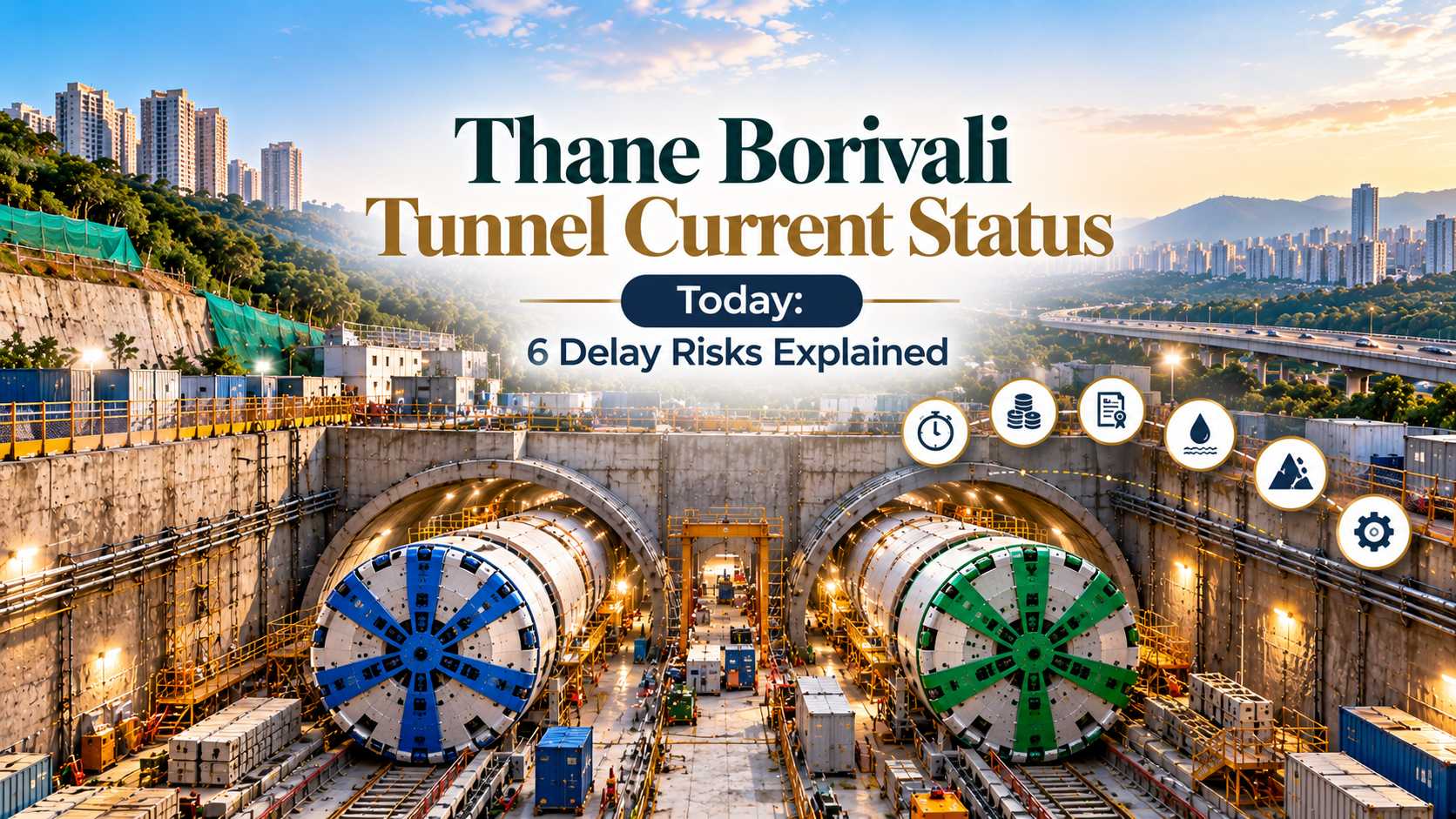
Quick Answer
Today the Thane Borivali tunnel’s biggest risks are not the boring machines. They are the last 15-20 families awaiting relocation at Magathane, wildlife-clearance conditions under SGNP, geology and water ingress in the basalt, and the monsoon schedule at the portals. Any of these could push the May 2028 target into 2029.
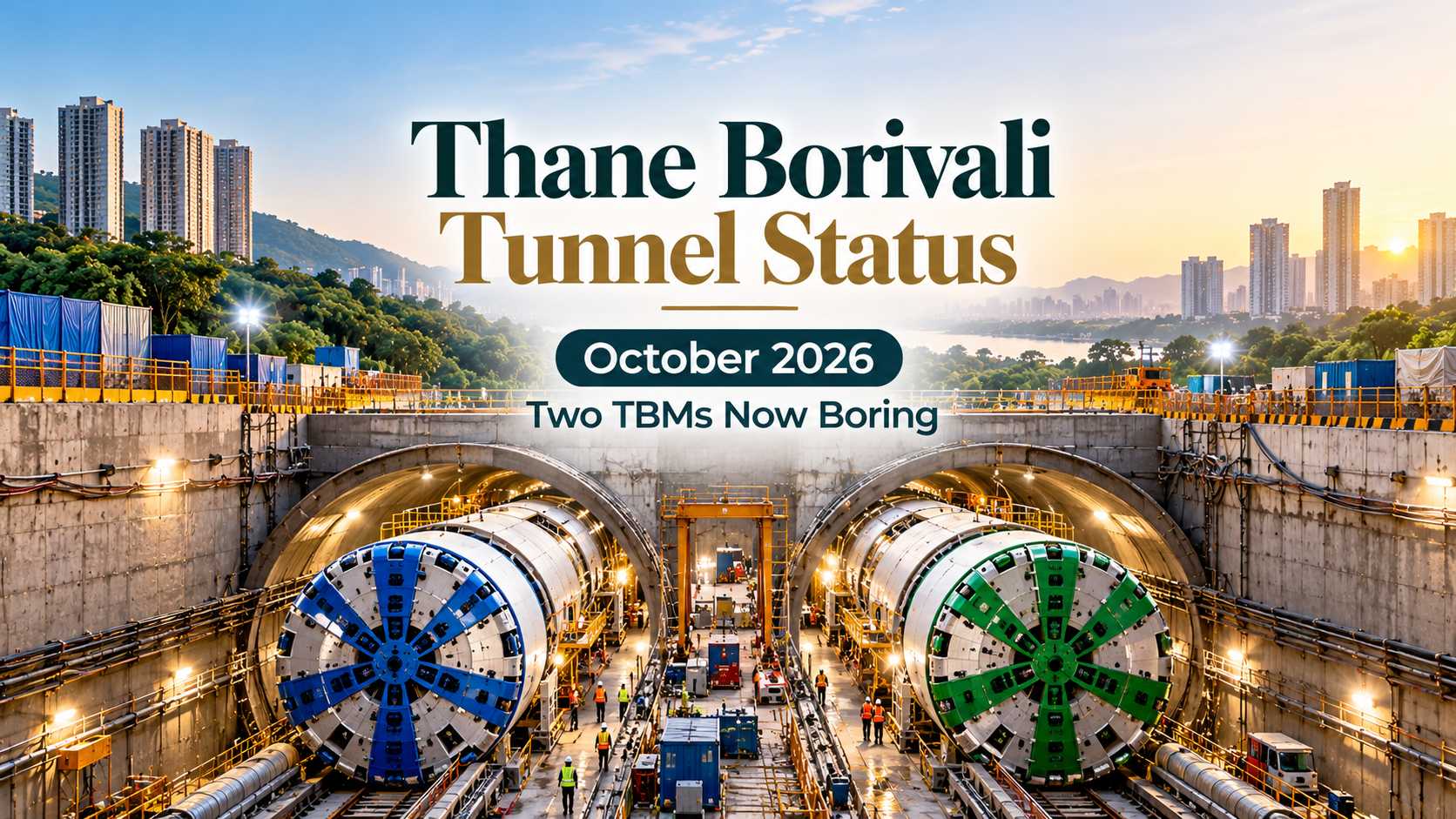
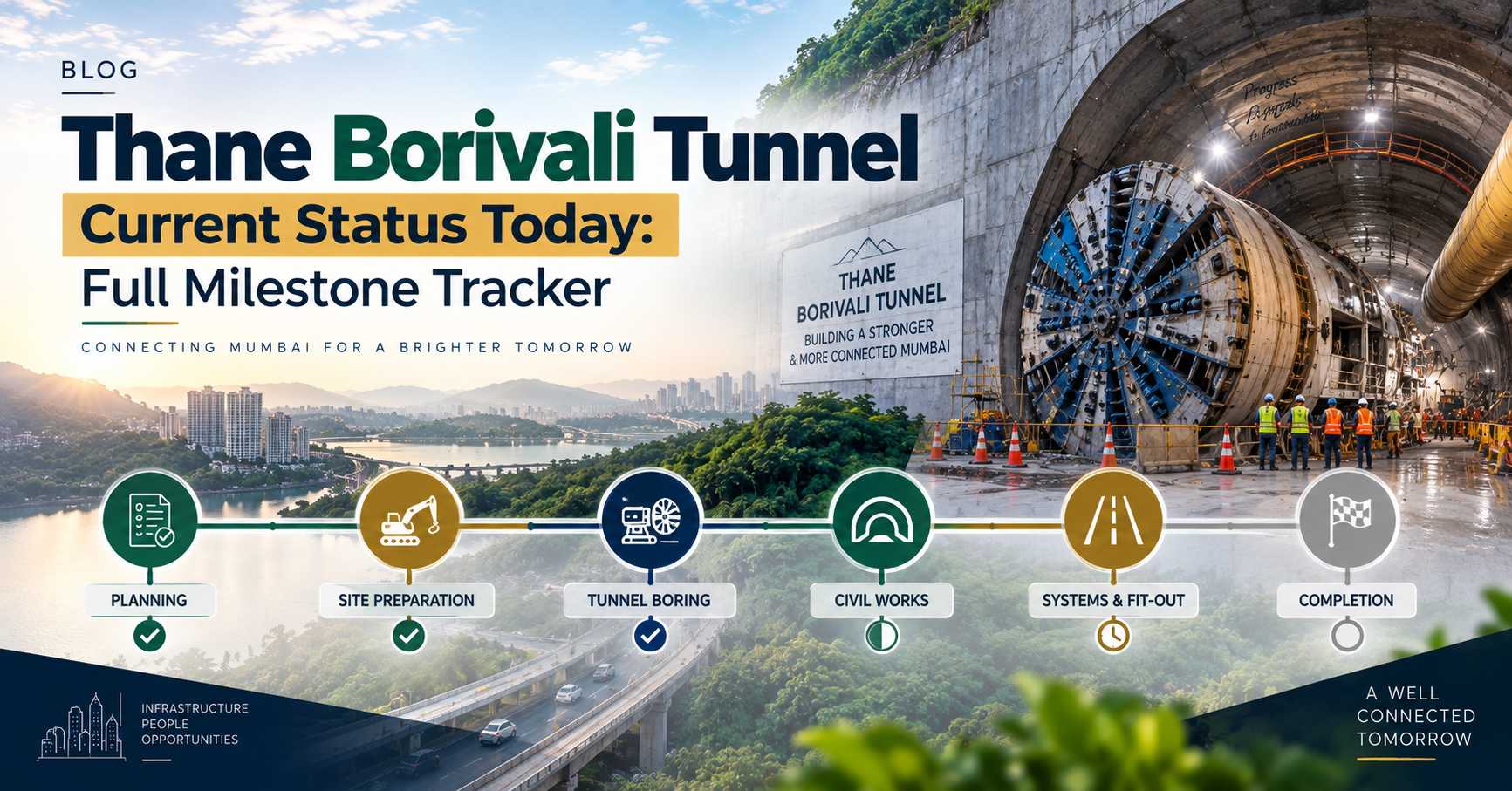
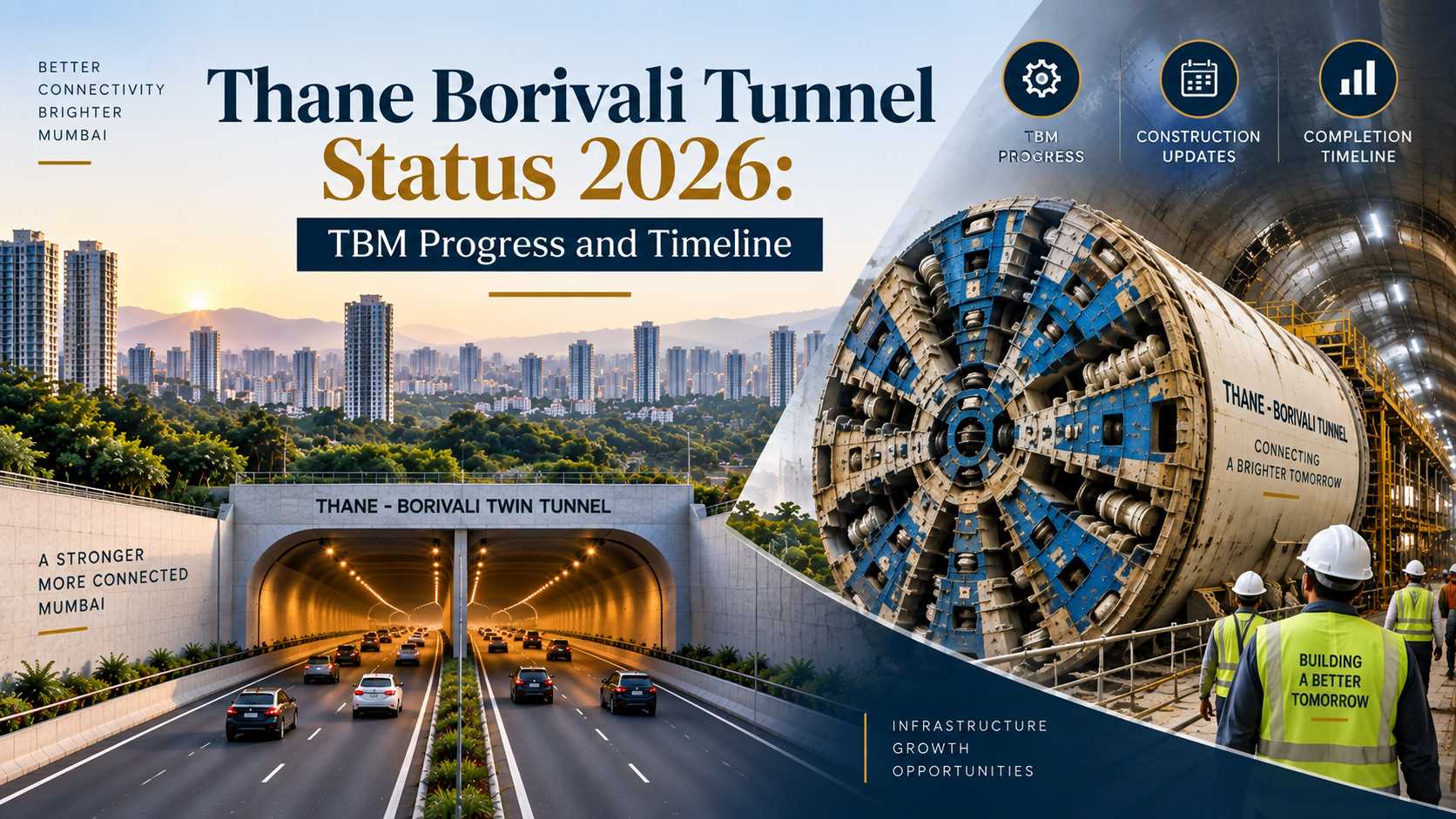
Most updates on the Thane Borivali tunnel focus on one number: how far the tunnel boring machines have advanced. That number matters, but it is not what usually delays a Mumbai megaproject. Land, clearances, rehabilitation and money tend to be the real causes. In October 2026, two TBMs are boring from the Thane end, physical progress was last reported at 13.13% (July 2026), and the 11.84 km link still carries an official May 2028 completion date.
We at Godrej Properties MMR look at the thane borivali tunnel current status today through a buyer’s lens. If you are timing a purchase in Manpada, Ghodbunder Road, Borivali East or Kandivali East around the opening, the non-boring risks are what you need to price in. If you need a step-by-step action plan, read our guide on the thane borivali tunnel current status today and what homebuyers should do now. This post is the risk register behind that advice.
Thane Borivali Tunnel Current Status Today: Delay Risks at a Glance
Our team analysed every public source on the project, from MMRDA statements and wildlife-board conditions to rehabilitation notices and contractor updates. We sorted the risks by how likely they are to move the opening date. The table below is our working view, not an official assessment.
| Risk | Where | Current position | Delay potential |
|---|---|---|---|
| Rehabilitation at launch shaft | Magathane, Borivali | ~300 families affected; 15-20 still to move | High (blocks TBMs 3 and 4) |
| Wildlife-clearance conditions | SGNP section | SBWL Oct 2023, NBWL Feb 2024; monitoring ongoing | Medium |
| Geology and water ingress | Under SGNP | Hard basalt; no major incident reported | Medium |
| Land acquisition | Thane portal | Largely complete | Low |
| Funding and cost escalation | Project-wide | Reported at Rs 14,401 crore; some reports cite up to Rs 16,600 crore | Low-Medium |
| Monsoon and portal works | Both portals | Seasonal slowdown June-September | Medium |
The pattern is clear. The Thane end is largely de-risked: land is in hand and two machines are running. Almost all of the remaining schedule risk sits on the Borivali side and inside the park.
Risk 1: Rehabilitation and Land at Magathane
The Borivali launch shaft sits at Ekta Nagar, Magathane, beside the Western Express Highway. The land was occupied by informal settlements. In June 2025 MMRDA offered three resettlement options to 572 households in the Magathane area: monetary compensation, permanent housing in the Borivali Integrated Housing Complex or Mira-Bhayander rental housing, or in-situ SRA rehabilitation with interim rent.
Since then, progress has been substantial. MMRDA allotted 343 tenements: 290 at Ganesh Nagar in Kandivali West, 29 at Babhrekar Nagar in Malad West and 24 near Gaondevi in Dahisar West. More than 500 structures were cleared by February 2026. By August 2026, roughly 15-20 of about 300 launch-site families remained to be shifted.
A handful of households now stands between the project and the start of its Borivali-end tunnelling. TBMs 3 and 4 are each meant to bore about 5.75 km, nearly half the tunnel, and they cannot be lowered until the shaft is fully clear.
Our view: this is a slow administrative risk, not a structural one. But every month it drags on is a month the Borivali half of the schedule cannot recover. Our thane borivali tunnel map shows exactly where the shaft sits relative to the highway.
Risk 2: Wildlife Clearances and the SGNP Conditions
The tunnel needs about 40.46 hectares inside Sanjay Gandhi National Park and 16.54 hectares of private land. It cleared the Maharashtra State Board for Wildlife in October 2023 and the National Board for Wildlife in February 2024. Those clearances came with conditions.
The NBWL asked for a cumulative study of the tunnel’s ecological, geological, hydrological and seismological effects. The Wildlife Institute of India is running pre-, during- and post-construction monitoring with a reported budget of about Rs 2.5 crore. The project also involves felling about 122 trees and compensatory plantation of roughly 11,000. Environmental groups have raised concerns about aquifers, vibration and Schedule-I species such as leopards. Air filtration inside the tunnel is designed so the park’s air quality is not degraded.
The risk here is not that clearances will be withdrawn. Nothing public suggests that. The risk is that a monitoring finding, such as a groundwater change or a vibration threshold being exceeded, triggers a work restriction on part of the drive. We rate this a medium risk with low probability but a high impact if it happens.
Risk 3: Geology, Funding and the Monsoon
Geology. Nayak and Arjuna are single-shield hard-rock machines with roughly 13.2-13.34 metre cutter heads, working about 23 metres below ground. Deccan basalt is generally good tunnelling rock, but it can contain fractured zones and water-bearing joints. The design rate of about 11 metres per day assumes reasonably uniform rock. A bad fault zone can cut that sharply for weeks [VERIFY: no geological incident has been reported to date].
Funding. The contract with Megha Engineering & Infrastructures Ltd (MEIL) is widely reported at about Rs 14,401 crore. Some reports place the total tunnel figure at up to Rs 16,600 crore. MMRDA is funding the project, and we have seen no evidence of payment-related slowdowns. Cost escalation is likely over a four-year build, but it rarely stops work on a project this visible.
Monsoon. Underground boring continues through the rains, but portal excavation, approach roads and casting-yard logistics slow down between June and September. If the Borivali shaft clears just before a monsoon, the effective start of TBMs 3 and 4 could slip by a season.
How Buyers Should Read These Risks: A 6-Point Plan
None of these risks argues against buying near the tunnel. They argue for buying with realistic dates. Here is how we advise clients:
- Plan for a 2028-2029 opening, not May 2028. Our analysis of the thane borivali tunnel project completion date explains why.
- Watch Magathane, not the percentages. When the last families move and TBM 3 is lowered, the schedule risk drops sharply.
- Prefer possession dates around or after the opening. A 2029 handover lines up neatly with a realistic opening.
- Make sure the home works without the tunnel. A Kandivali East home near Metro Line 7, or a Thane home near Metro 4, holds value even if the tunnel slips a year.
- Don’t pay a “tunnel-open” price for a tunnel-pending asset. Benchmark against resale in the same locality.
- Track official progress quarterly. Our thane borivali tunnel status tracker is updated as MMRDA publishes figures.
Where Godrej Projects Sit in This Risk Picture
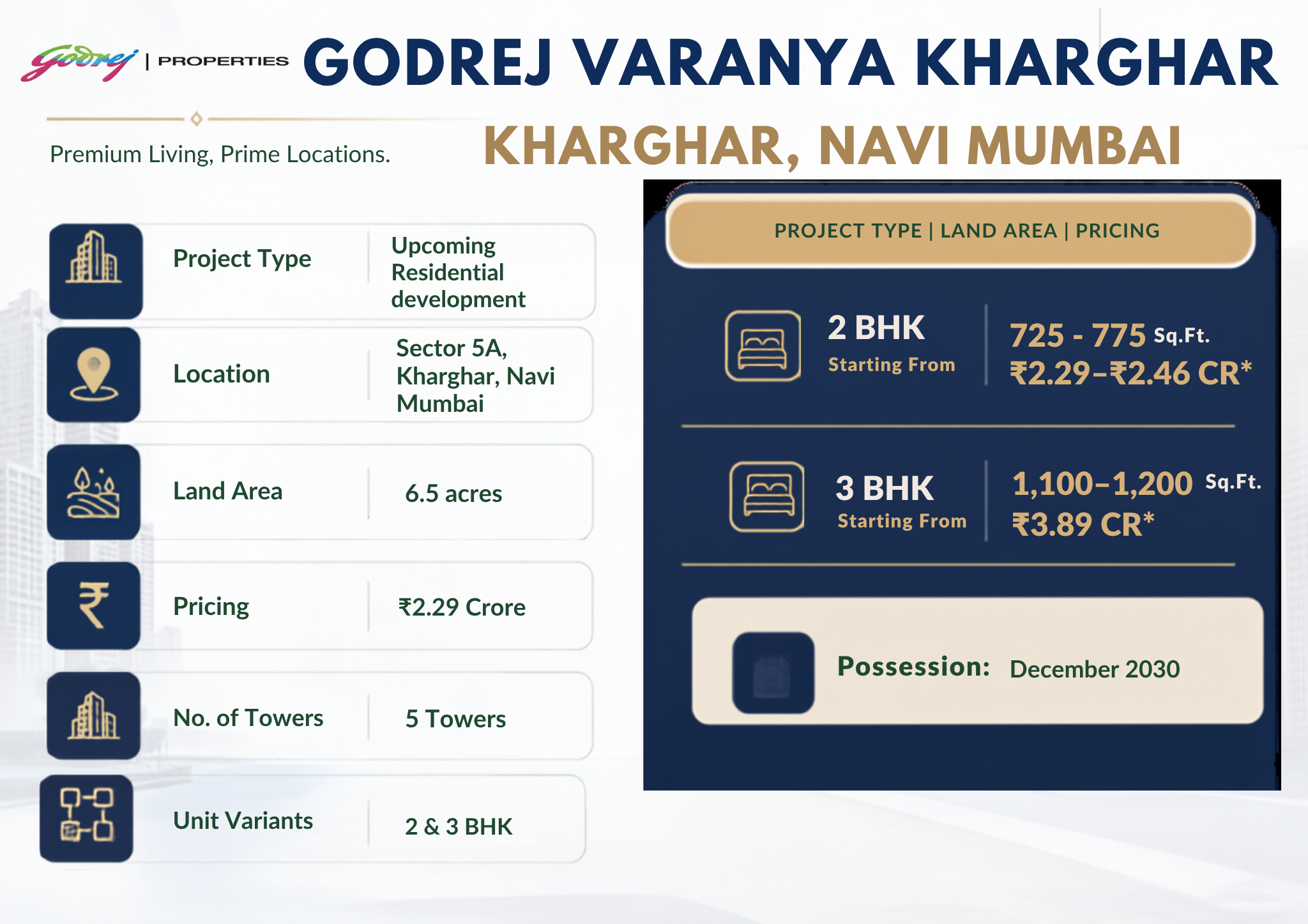
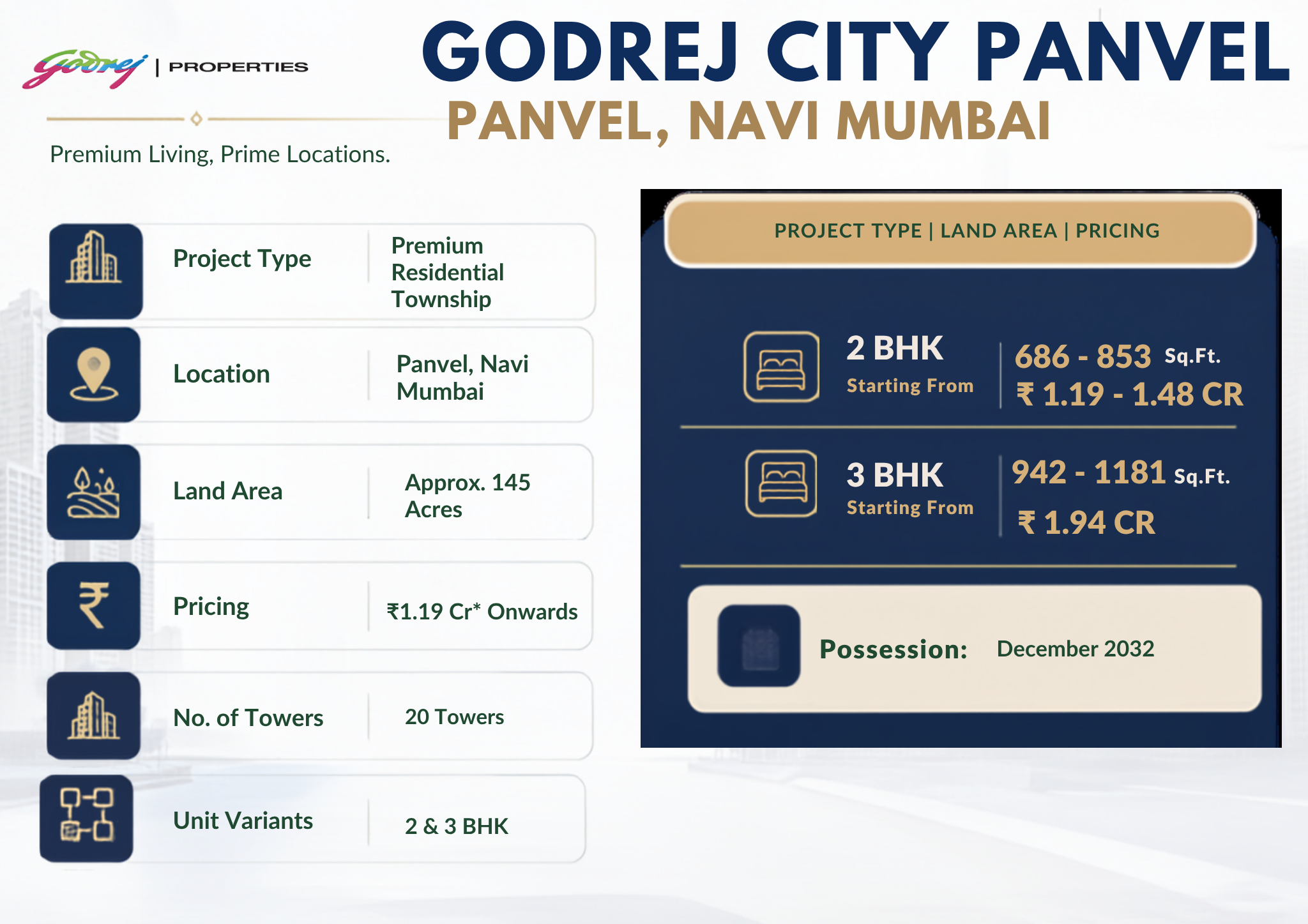
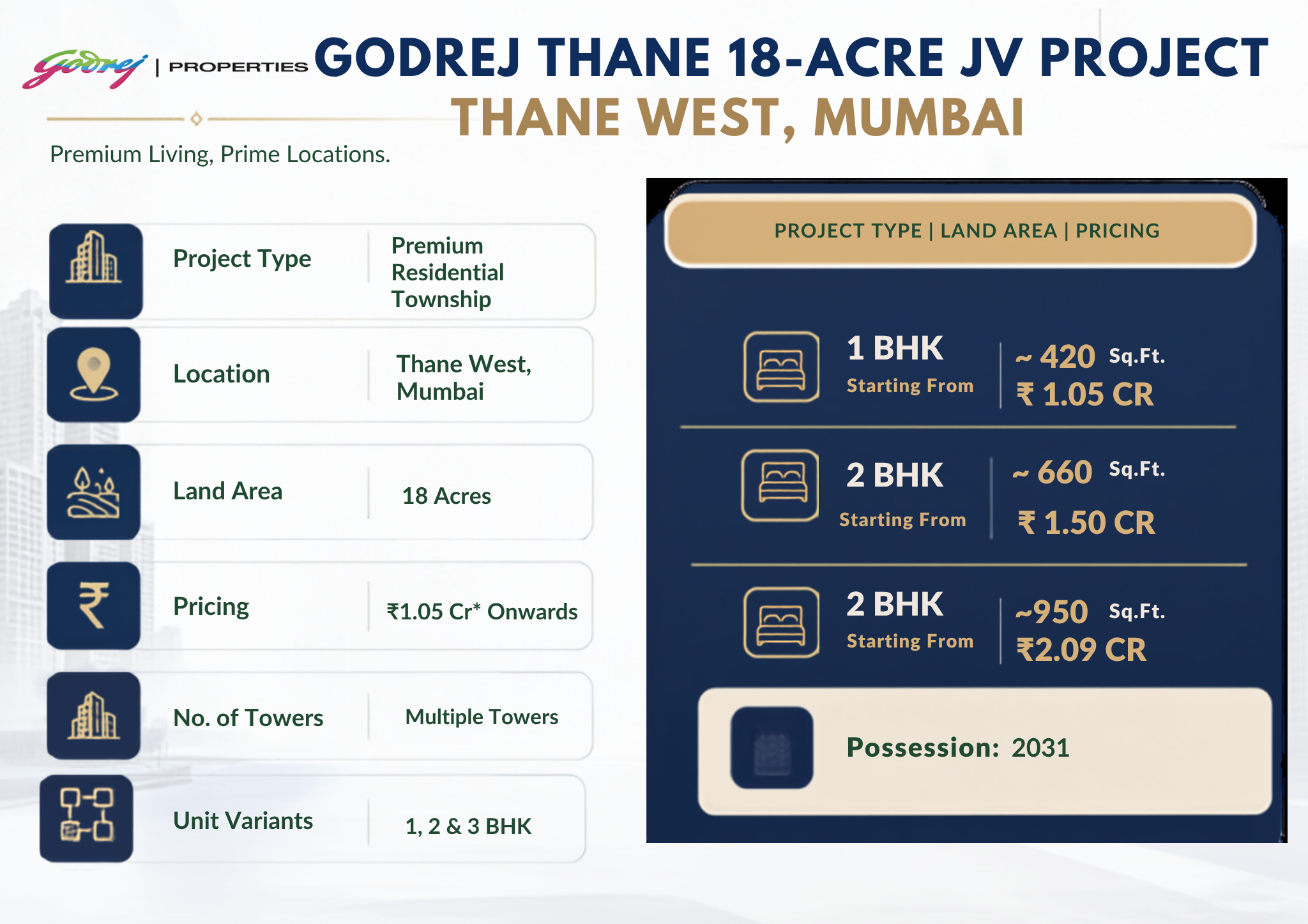
Godrej Properties Limited has projects at both ends of the corridor, so the risks above play out differently for each. In Kandivali East, homes near the Western Express Highway already carry strong standalone connectivity. That makes the tunnel an upside rather than a dependency. godrej reserve kandivali sits about 10 minutes from the Magathane portal. For the more affordable Kandivali options, read our godrej bliss kandivali reviews and godrej nest, kandivali reviews.
On the Thane side, the de-risked end of the tunnel, the upcoming Ghodbunder Road township is about five minutes from the Tikuji-ni-Wadi portal. To compare every option across both portals, see our new projects near Thane Borivali tunnel shortlist.
Frequently Asked Questions
Q: What is the thane borivali tunnel current status today?
As of October 2026, two TBMs, Nayak and Arjuna, are boring from the Thane end. The Borivali end awaits relocation of the last 15-20 families at Magathane before TBMs 3 and 4 can start. The last official progress figure was 13.13% in July 2026, and the target is May 2028.
Q: What is the biggest risk to the tunnel’s completion?
The Borivali launch shaft at Magathane. Until it is fully cleared, nearly half of the tunnel bore, about 5.75 km per tube, cannot begin. Wildlife-monitoring conditions and geology under SGNP are secondary risks.
Q: Has the tunnel got all environmental clearances?
Yes. It received the Maharashtra State Board for Wildlife clearance in October 2023 and the National Board for Wildlife clearance in February 2024. Conditions include an ongoing cumulative impact study and Wildlife Institute of India monitoring during construction.
Q: How much does the Thane Borivali tunnel cost?
The contract with MEIL is widely reported at about Rs 14,401 crore. Some reports put the total tunnel figure at up to Rs 16,600 crore. MMRDA is the funding and implementing agency.
Q: Could the tunnel be delayed to 2029?
Yes. Independent analysts have flagged possible slippage into 2029 because of monsoon and geology risks. The Borivali-end start date adds to that. We plan on a 2028-2029 window.
Q: Should I delay buying until the risks clear?
Not necessarily. Once Magathane clears and all four TBMs are running, much of the remaining risk premium will be priced out. Buying earlier, in a project that works on its own merits, usually captures more of the upside.
Conclusion
The Thane Borivali tunnel is no longer a question of whether it will happen. Two machines are in the ground, land at Thane is secured, and the clearances are in hand. The open question is timing, and timing now depends mostly on a small rehabilitation step at Magathane and on how the basalt behaves under the park.
Buy for a 2028-2029 opening, choose a home that stands on its own connectivity, and let the tunnel be the upside. Our team can walk you through live inventory near both portals and arrange a site visit.