Quick Answer
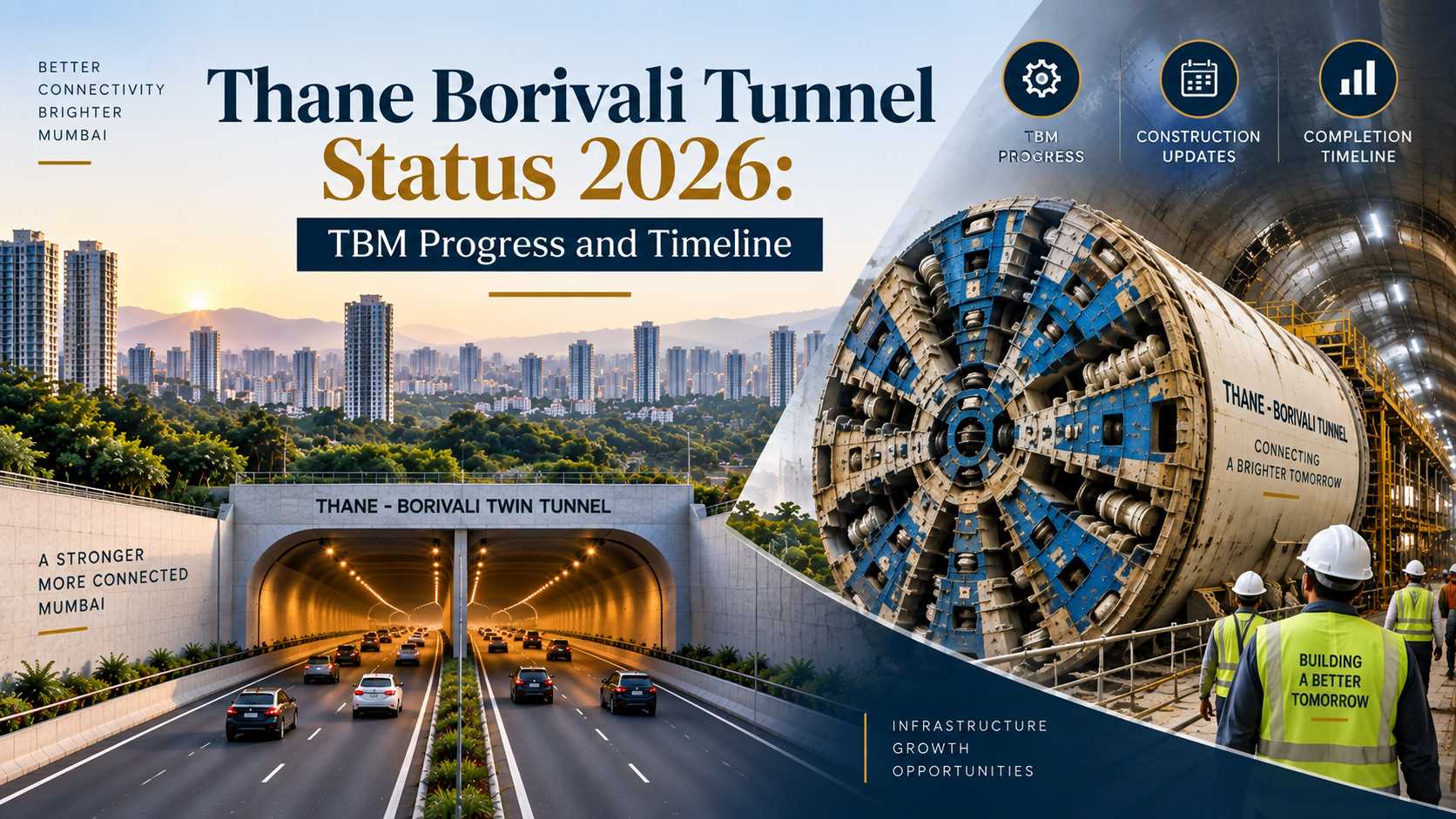
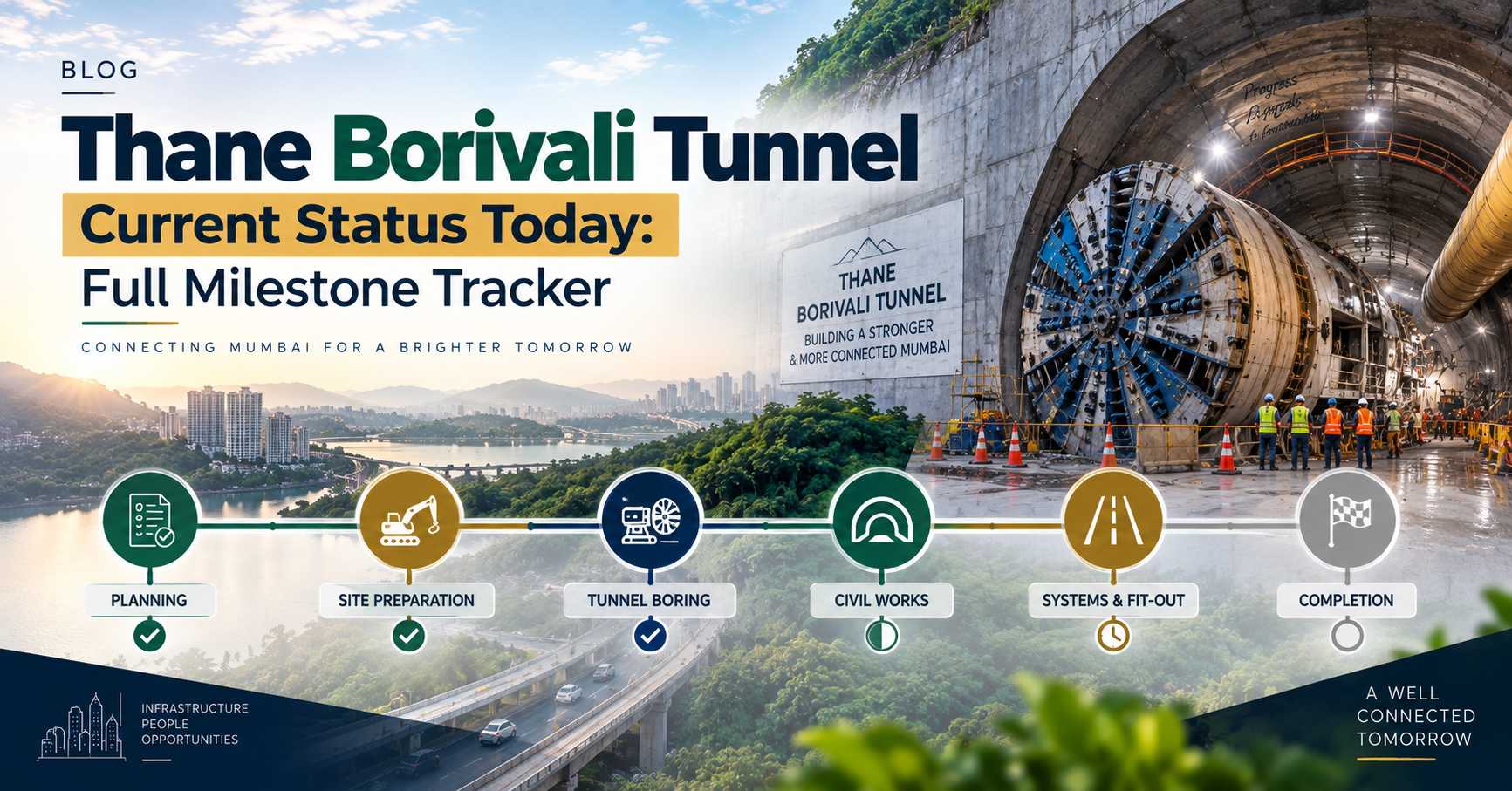
As of September 2026, the thane borivali tunnel current status today is active tunnelling. TBM Nayak — India’s largest single-shield hard rock machine for an urban tunnel — was launched in April 2026 and is boring from the Thane end. A second machine, Arjuna, is being prepared for the parallel tube. The official target remains mid-2028.
Infrastructure timelines in the MMR have a reputation, and it is not a flattering one. So when a buyer on Ghodbunder Road asks what the real position is on the Thane–Borivali twin tunnel, the answer needs to be a set of dated milestones rather than a press release summary. That is what this tracker is.
The short version: the project has crossed the point where it stops being a plan and starts being a construction programme. The foundation stone was laid by the Prime Minister on 13 July 2024. Physical progress stood at 8.19% as of 31 August 2025, with financial progress at 7.89%. TBM deployment began in December 2025, and the first machine was formally launched in April 2026. For a continuously updated view, our thane borivali tunnel current status today tracker follows each announcement as it is made.
Our team analysed the published milestones, the contractor’s scope and the reporting from 2025 and 2026 to separate what has actually happened from what has merely been announced. Both matter, but only one of them moves a completion date.
Thane Borivali Tunnel Current Status Today: The Milestone Record
Here is the dated sequence, with the source of each milestone noted. Everything below is a reported event, not a projection.
| Date | Milestone | Status | Significance |
|---|---|---|---|
| October 2022 | Detailed Project Report published by MMRDA | Complete | Alignment, depth and geometry fixed |
| 13 July 2024 | Foundation stone laid by the Prime Minister | Complete | Project formally commenced |
| 31 August 2025 | Physical progress 8.19%, financial 7.89% | Recorded | Baseline against which later progress is read |
| December 2025 | TBM deployment and assembly begins | Complete | Machines on site at the Thane end |
| February 2026 | Over 500 structures cleared on the Borivali side | Complete | Approach corridor freed at the Mumbai portal |
| April 2026 | TBM Nayak launched | Complete | Excavation under way from Thane |
| Through 2026 | TBM Arjuna under assembly | In progress | Second tube drive to follow |
| 2028 | TBM Nayak expected to reach Borivali | Projected | Breakthrough milestone |
| Mid-2028 | Target completion | Projected | Official deadline; slip to 2029 flagged by observers |
Note the shape of that table. Everything from 2022 to April 2026 is recorded fact. Everything from 2028 onward is projection. That distinction is the single most useful thing a buyer can hold on to when a sales pitch quotes a completion date.
What TBM Nayak Is Actually Doing
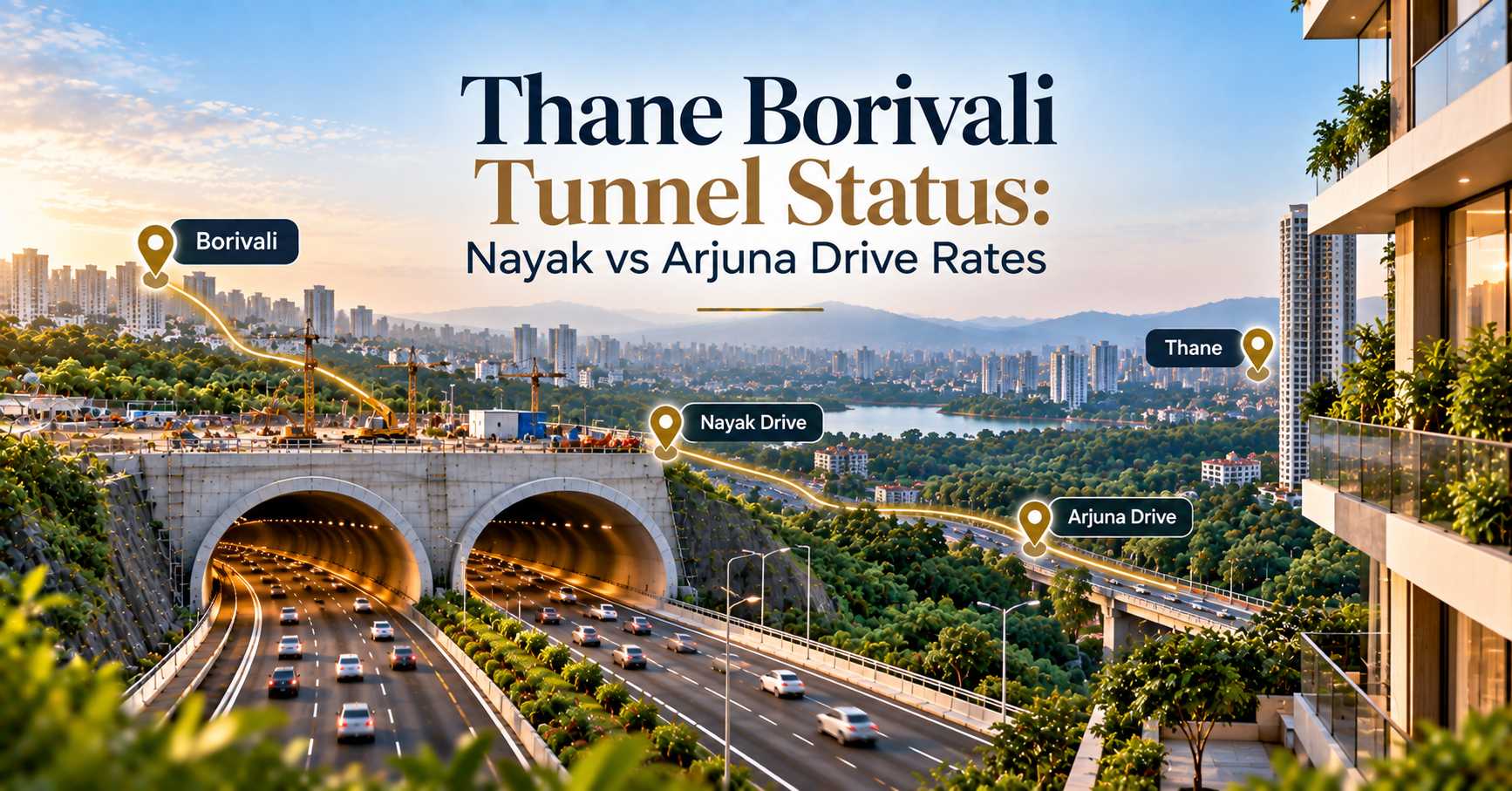
Nayak is a single-shield hard rock tunnel boring machine, described as the largest of its type deployed on an urban tunnel in India. It was launched in April 2026 and is cutting from the Thane portal near Tikuji-ni-Wadi in Manpada, heading west under Sanjay Gandhi National Park towards Magathane in Borivali East.
The geology is the story here. This is hard basalt rock, and that cuts both ways:
- Stability is high. Hard rock does not need the constant settlement monitoring that soft-ground tunnelling under built-up areas requires — one reason surface disruption above the park is minimal.
- Advance rates are slower. Hard rock is genuinely difficult to cut, which is why machines of this scale were specified rather than smaller conventional units.
- Cutter head wear is the schedule risk. Cutter changes in hard basalt are routine but each one halts the drive. This is the most common source of quiet slippage on projects like this.
- Monsoon adds friction. Underground works continue through monsoon, but spoil removal, surface logistics and portal works do not run at full pace from June to September.
- Machines are Herrenknecht-supplied, with a total of four mega TBMs planned across the drives on the project.
The useful mental model is that this is a two-machine race against a mid-2028 deadline, with roughly 10.25 km of hard rock to cut per tube. Nayak’s advance rate over the next four quarters is the number that will actually determine whether 2028 holds.
The Specification Behind the Status
Context for the milestones. This is what is being built, and the scale explains the timeline.
| Parameter | Specification |
|---|---|
| Total project length | 11.84 km |
| Bored tunnel per tube | About 10.25 km |
| Internal diameter | 12.2 m per tube |
| Lanes | Three running lanes plus one emergency lane, per tube |
| Depth below surface | 23 m to 60 m |
| Cross passages | Every 300 m |
| Estimated cost | Around Rs 20,000 crore |
| Implementing agency | MMRDA |
| Contractor | Megha Engineering and Infrastructure Ltd |
| Projected travel time | 15 to 20 minutes, against 60 to 90 minutes today |
What to watch next, in order
Three announcements will tell you more than any press statement: the formal launch of TBM Arjuna on the second tube; the first published advance-rate figure for Nayak in metres per month; and the next MMRDA physical-progress percentage. If progress is materially above 8.19% and climbing, mid-2028 is credible. If not, plan for 2029.
How to Track the Status Yourself — A Five-Step Routine
We check these in the same order every quarter, and any buyer on this corridor can do the same in under thirty minutes.
- Check the MMRDA physical-progress percentage. It is the only unmassaged number in the system. Compare it to 8.19% at 31 August 2025 and work out the run rate.
- Look for TBM breakthrough or launch announcements. Arjuna’s formal launch on the second tube is the next significant one.
- Read the traffic-diversion notices. Year-long diversions around the work sites were notified from mid-May. New or extended diversions signal where surface work is intensifying.
- Track the contractor’s project page. Megha Engineering publishes scope and status detail that is often more specific than news coverage.
- Ignore completion dates quoted in sales material. Cross-check every one against the MMRDA figure. The gap between the two is usually the most informative thing on the page.
What the Current Status Means for the Corridor
Active tunnelling changes the risk profile of buying here. Before December 2025 a purchase on this corridor carried genuine project risk — the possibility that the tunnel would stall entirely. With two machines committed, a contractor mobilised and Rs 20,000 crore of programme under way, the remaining question is timing, not existence. That is a materially different bet.
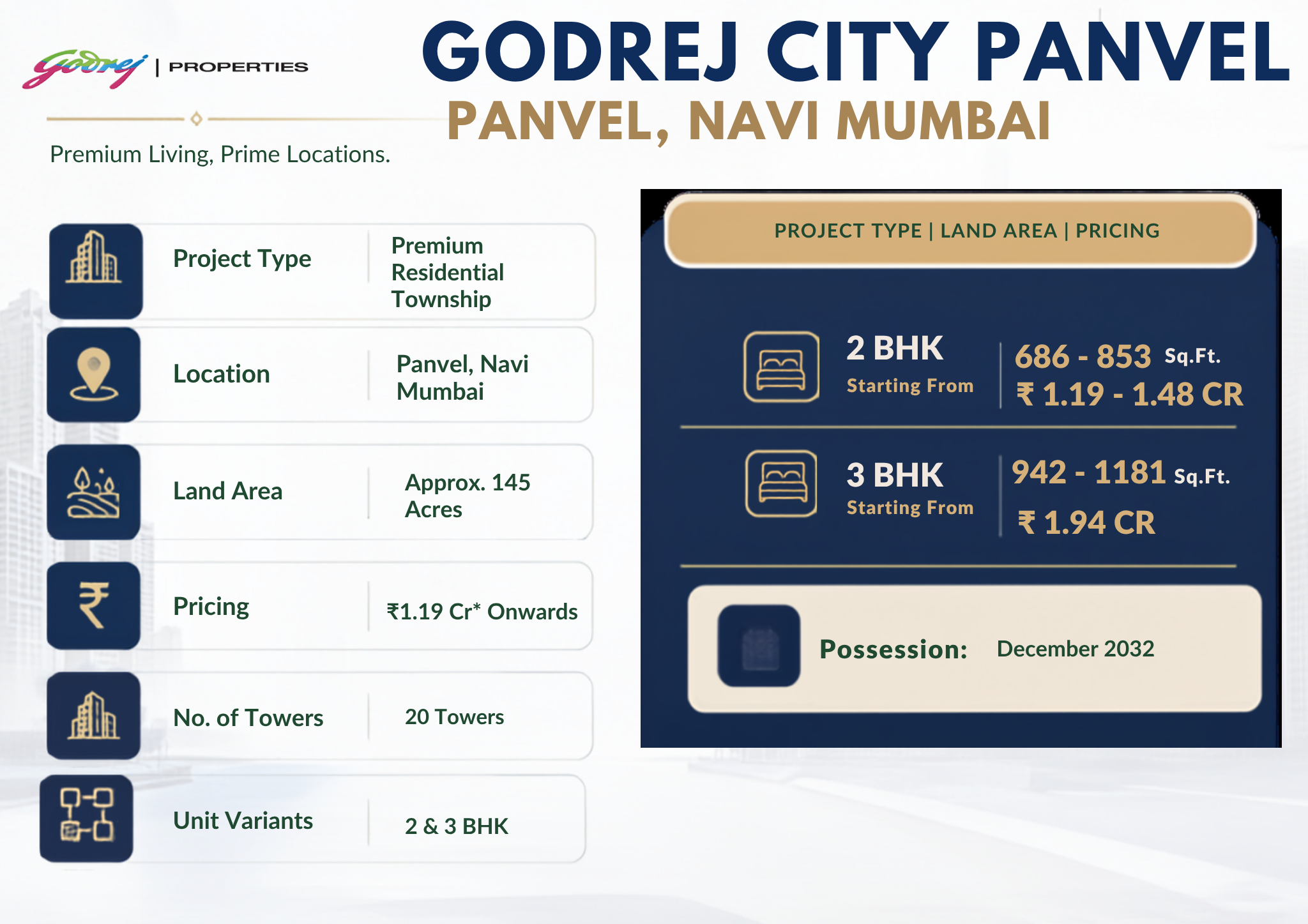
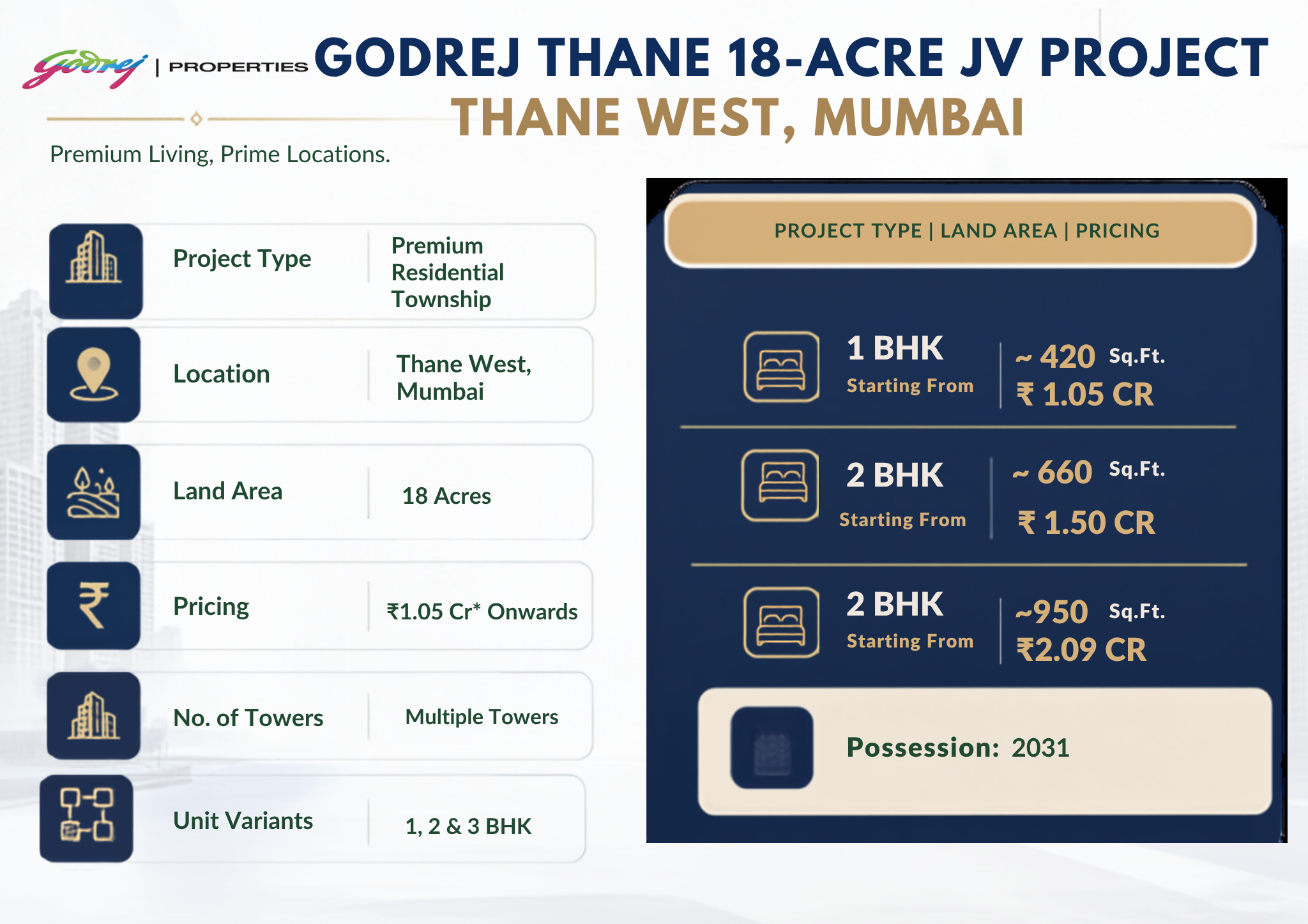
The market has not fully absorbed that. Ghodbunder Road averages around Rs 15,000 per sq ft and is down about 13.5% over three years, while Borivali East at the other portal trades near Rs 32,150 per sq ft. Godrej Properties Limited, a third-party developer whose MMR projects we track, has committed land at both ends — the 18.5-acre Ghodbunder Road township on the Thane arterial, and the Kandivali East cluster including Godrej Reserve inside the Borivali portal catchment. Developer detail is at Godrej Properties Limited.
Our verdict: the status today supports a considered purchase, not an urgent one. The machines are in the ground; the schedule is not yet proven. For the completion-date debate specifically, see our analysis of whether the 2028 completion date is realistic.
Frequently Asked Questions
Q: What is the thane borivali tunnel current status today?
Active tunnelling. TBM Nayak was launched in April 2026 and is boring from the Thane portal towards Borivali. TBM Arjuna is being prepared for the parallel tube. Physical progress was last publicly recorded at 8.19% as of 31 August 2025.
Q: Has any tunnel actually been dug yet?
Yes. TBM deployment began in December 2025 and Nayak was formally launched in April 2026, so excavation is under way from the Thane end. Over 500 structures were also cleared on the Borivali side by February 2026 for the approach corridor.
Q: Is the mid-2028 deadline realistic?
It is the official target and TBM Nayak is expected to reach Borivali by 2028. Independent observers flag a possible slip into 2029 depending on monsoon interruptions and hard-rock conditions. Treat mid-2028 as the optimistic end of a range.
Q: How much of the project is complete?
The last widely reported figure was 8.19% physical and 7.89% financial progress as of 31 August 2025 — before the TBMs were launched. That percentage should move considerably once sustained boring is reflected in MMRDA reporting.
Q: Who is building the tunnel?
MMRDA is the implementing agency and Megha Engineering and Infrastructure Limited holds the construction contract. The tunnel boring machines are supplied by Herrenknecht, with four mega TBMs planned across the drives on the project.
Q: Is construction disrupting life on Ghodbunder Road right now?
Yes, at the portal end. Year-long traffic diversions around the work sites were notified from mid-May, and the Thane portal was shifted about 225 metres after residents raised dust and noise concerns. Expect disruption near Manpada until completion.
Q: What is the single best indicator of whether the timeline will hold?
The next MMRDA physical-progress percentage, read against 8.19% at 31 August 2025. A sustained climb once both TBMs are running is the clearest signal. A flat figure a year into boring would point to 2029.
The Practical Takeaway
Status today: one machine boring, one in assembly, contractor mobilised, mid-2028 target officially intact but not yet demonstrated by advance-rate data. That is a project past its existential risk and into its execution risk — a distinction that should change how you weigh a purchase on either portal, but not how carefully you check the specific project.
If you are holding a decision on a Ghodbunder Road or Kandivali East project pending tunnel clarity, our team will take you through the current milestone position against that project’s RERA possession date. Book a site visit and we will go through both together.