
Quick Answer
Related Godrej projects nearby:
Godrej Bandra Reclamation — Sea-Facing 4 BHK, Mumbai →Godrej Trilogy – Worli, Mumbai →Godrej Horizon – Wadala Mumbai →
A joint home loan in Maharashtra lets two close relatives combine incomes to borrow more, and lets each co-owner claim up to Rs 2 lakh of interest and Rs 1.5 lakh of principal under the old tax regime. Registering in a woman’s name cuts stamp duty by 1%, but a male co-owner on the deed usually cancels that saving.
A joint home loan is how most couples in Mumbai, Thane and Navi Mumbai afford a home in 2026. Kandivali East averaged about Rs 30,950 per sq ft in September 2026, so even a compact 2 BHK needs a loan well above Rs 1 crore. Home loan rates also moved up after the RBI raised the repo rate to 5.50% on 7 October 2026, and a higher rate means a single income qualifies for a smaller loan.
Adding a co-borrower changes three things at once: how much the bank will lend, how much tax the household can save, and how much stamp duty you pay at registration. The third point is specific to Maharashtra, where women buyers get a 1% stamp duty concession. That concession comes with conditions on who can sit on the deed, and its old resale restriction has changed since 2021.
We at Godrej Properties MMR explain who can be a co-borrower, how the ownership structure affects tax and stamp duty, what a joint loan does to eligibility in rupees, and the risks couples and siblings rarely discuss until something goes wrong.
Joint Home Loan Rules: Who Can Be a Co-Borrower
Banks and housing finance companies limit co-borrowers to close family. Spouses are accepted everywhere. Parents and children are widely accepted, and many lenders allow siblings, usually when they also co-own the property. Friends, unmarried partners and business partners are generally not accepted, though a few housing finance companies have their own wider rules [VERIFY: lender-specific]. Some lenders allow up to six applicants on one loan, but two is by far the most common.
Being a co-borrower and being a co-owner are different things. A co-borrower signs the loan and is liable to repay it. A co-owner is named on the sale agreement and the registered deed. Lenders typically do not require a spouse co-borrower to be a co-owner, but they usually do require parents or siblings who borrow together to co-own the flat. For tax and stamp duty, only the deed matters.
| Co-borrower | Usually accepted? | Co-ownership needed by lender? | Can claim tax benefit? |
|---|---|---|---|
| Spouse | Yes, all lenders | Usually not | Only if co-owner |
| Parent or child | Yes, most lenders | Usually yes | Only if co-owner |
| Sibling | Many lenders | Usually yes | Only if co-owner |
| Friend or partner | Rarely | Lender-specific | Only if co-owner |
The rule that runs through every row is simple. If you want a tax benefit, be on both the loan and the deed. If you want the women’s stamp duty concession, think hard about who else goes on the deed.
How Much More You Can Borrow Together
Banks generally cap total EMIs at about 50% to 60% of net monthly income. Adding a second income raises that ceiling, and the higher loan is the main reason most couples apply jointly.
Take one salaried buyer earning Rs 1.5 lakh a month after tax. At a 50% cap, the bank allows an EMI of about Rs 75,000. At 8% over 20 years, that supports a loan of roughly Rs 89.7 lakh. Add a spouse earning Rs 1 lakh a month, and the EMI ceiling rises to Rs 1.25 lakh, which supports about Rs 1.49 crore. That is the difference between a 1 BHK and a 2 BHK in most western-suburb projects. At Godrej Urban Park Chandivali, for example, homes start near Rs 1.38 crore, a level that usually needs two incomes.
In our example, a second income of Rs 1 lakh a month adds nearly Rs 60 lakh of borrowing capacity at 2026 rates. In Mumbai, that is often the whole gap between the flat you want and the flat a single income can buy.
Many lenders also offer women borrowers a slightly lower rate, usually 5 basis points and in some cases 10 to 25 basis points, when a woman is the primary applicant or a co-owner [VERIFY: current rate cards vary by lender]. On a Rs 1.5 crore, 20-year loan, a 0.05% cut saves only a few hundred rupees a month, so treat it as a bonus rather than a reason to restructure ownership.
The bank also assesses both credit scores. A weak score on one applicant can reduce the loan or raise the rate for both, so check both reports before you apply.
Double Tax Benefit: Old Regime vs New Regime
Under the old tax regime, each co-owner who is also a co-borrower can claim up to Rs 2 lakh a year of interest on a self-occupied home, the deduction long known as Section 24(b), and up to Rs 1.5 lakh of principal within the 80C limit. Each claims on their own share of the repayment. The Income-tax Act, 2025 renumbered these sections from 1 April 2026, but the limits are broadly unchanged.
On a Rs 1.5 crore loan at 8%, first-year interest is about Rs 11.9 lakh and principal about Rs 3.2 lakh. A single borrower can deduct only Rs 3.5 lakh of that. Two co-owners holding 50:50 can each deduct Rs 2 lakh of interest and Rs 1.5 lakh of principal, Rs 7 lakh in total. At the 30% slab plus 4% cess, the yearly tax saving rises from about Rs 1.09 lakh to about Rs 2.18 lakh.
Under the new regime, now the default, neither deduction is available on a self-occupied home. A couple where both partners choose the new regime gets no tax benefit from the joint structure at all. Each co-owner picks a regime separately, so one spouse may claim while the other does not. Our full guide to home loan tax benefits in 2026 under the old vs new tax regime shows the break-even deductions at different incomes.
Our verdict on tax: Set the ownership ratio before registration and match it to the share of EMI each person actually pays. Banks split the interest certificate in proportion to ownership by default. A spouse with no taxable income gains nothing from a large share.
Women Buyers: The 1% Stamp Duty Concession in Maharashtra
Maharashtra gives women buyers a 1% stamp duty concession on residential property. It was announced on 8 March 2021 and now runs under the Rajmata Jijau Griha Swamini Yojana. In Mumbai, stamp duty falls from 6% to 5%. In Thane and other areas charged at 7%, it falls to 6%. On a Rs 1.5 crore Mumbai flat, that saves Rs 1.5 lakh. Our ready reckoner rates, stamp duty and total cost guide covers how the duty is calculated on the higher of agreement value and RR value.
The conditions matter more than the headline:
- Residential property only. Shops, offices and commercial units do not qualify.
- The deed must be in women’s names. The 2021 announcement tied the concession to transfer in the name of one or more women. Two sisters or a mother and daughter buying together qualify.
- A male co-owner usually cancels it. Most guidance says a husband on the deed means the full rate applies. Some sources say a woman named first may still qualify [VERIFY: confirm with the sub-registrar before registration].
- No resale lock-in since 31 May 2023. The original scheme barred selling to a man for 15 years, on pain of repaying the 1% with a penalty. Deputy chief minister Devendra Fadnavis removed that condition on 31 May 2023, so a woman owner can now sell to anyone at any time.
- The loan can still be joint. A husband can be a co-borrower without being a co-owner, which keeps the concession, but he then cannot claim the tax benefit.
That last point is the real trade-off. Rs 1.5 lakh of stamp duty is saved once. The second tax claim under the old regime can be worth about Rs 1.09 lakh a year. If both spouses will use the old regime, joint ownership usually pays more over time. If they will use the new regime, sole female ownership with a joint loan is usually the better structure.
Risks and Exit Issues in Joint Ownership
Joint loans are easy to sign and harder to unwind. Every co-borrower is liable for the full loan, not just their share. If one partner stops paying, the bank can recover the whole EMI from the other, and missed payments hurt both credit scores.
Separation is the hardest case. Removing a co-borrower needs the bank’s consent, and the bank will usually agree only if the remaining borrower qualifies alone or a new co-borrower joins. Removing a co-owner needs a registered deed. In Maharashtra, a gift of residential property to a spouse, child or grandchild attracts a flat Rs 200 stamp duty, but a release or transfer to anyone else may attract duty at market value [VERIFY: release deed rate depends on relationship and facts].
Use this checklist before you sign a joint loan:
- Agree the ownership ratio and write it into the sale agreement.
- Match each person’s EMI contribution to their ownership share, and keep bank records of who paid.
- Check both credit reports and clear any defaults first.
- Buy separate term cover for each borrower, sized to the full loan.
- Make wills that state what happens to each share.
- Siblings or parents buying together should sign a simple co-ownership agreement covering sale and buy-out.
- Decide the women’s concession question before the stamp duty is paid, since it cannot be changed after registration.
What This Means for Godrej Buyers in MMR
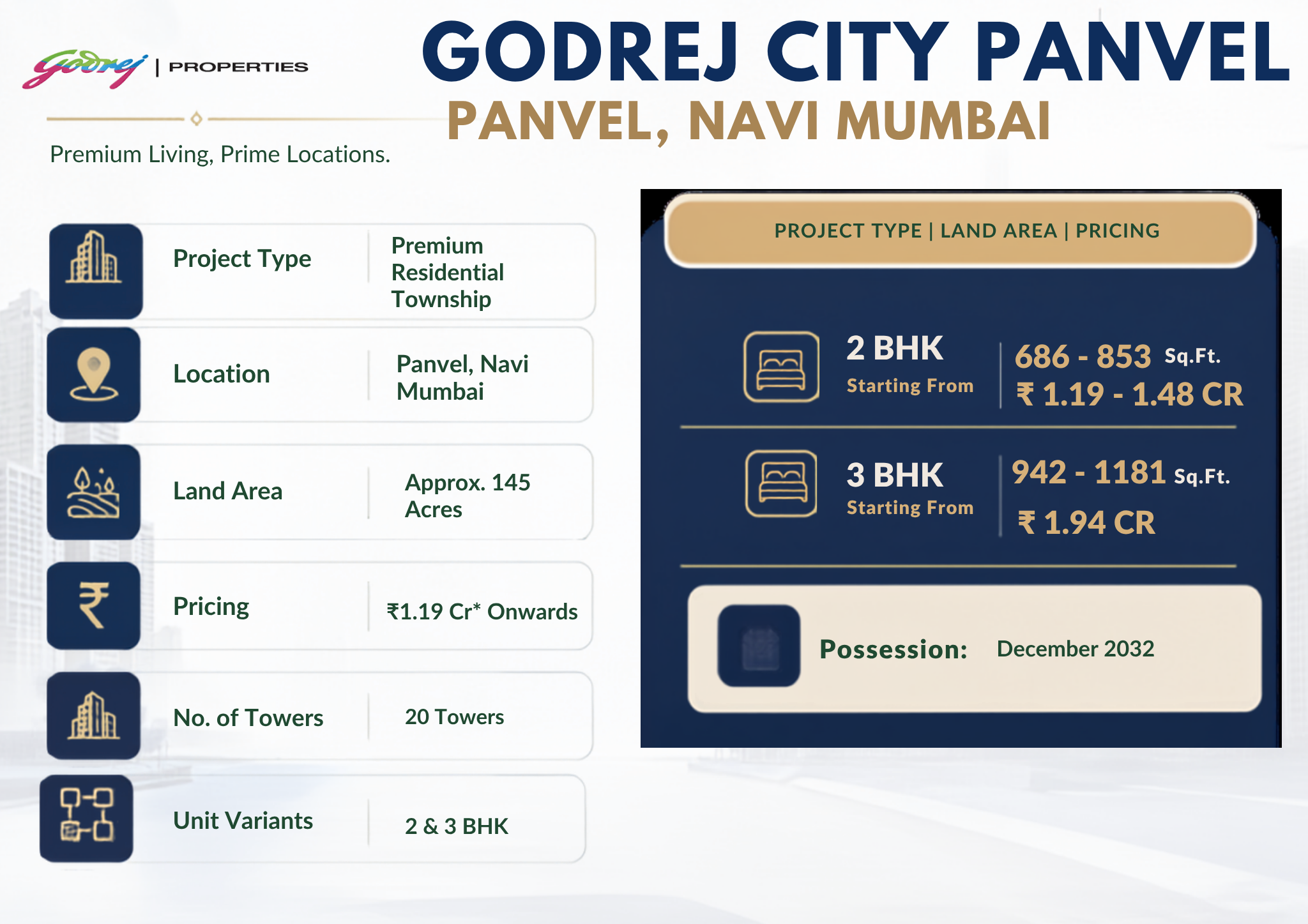
Most of the families we work with in Kandivali East, Chandivali and Thane buy on a joint home loan, because two incomes are what make the ticket size work. Godrej Properties Limited, a third-party developer with several projects across the region, has homes across a wide range. Godrej Nest Kandivali East offers ready homes from about Rs 1.21 crore, where a couple can register, claim and start the tax clock straight away. Godrej Urban Park Chandivali, near Powai, is a common choice for couples who combine incomes to reach a larger 2 BHK or 3 BHK.
For developer background, see Godrej Properties Limited. We at Godrej Properties MMR help buyers decide the ownership structure, stamp duty and tax regime together before the agreement is drafted, which is when the choice is cheapest to get right.
Frequently Asked Questions
Q: Can both co-owners claim home loan tax benefits in 2026?
Yes, under the old tax regime, if each person is both a co-borrower and a co-owner. Each can claim up to Rs 2 lakh of interest and Rs 1.5 lakh of principal a year on a self-occupied home. Under the new regime, neither can claim these deductions on a self-occupied home.
Q: Do I get the women’s stamp duty concession if I buy jointly with my husband?
Usually not. The concession is tied to registration in the name of one or more women, and most guidance says a male co-owner means the full rate applies. Your husband can still be a co-borrower without being on the deed. Confirm with the sub-registrar before paying stamp duty.
Q: Can a woman who used the 1% concession sell the flat to a man?
Yes. The original 2021 rule required a 15-year wait before selling to a male buyer, or repayment of the concession with a penalty. The Maharashtra government removed that restriction on 31 May 2023, so the owner can sell to anyone at any time.
Q: Who can be a co-applicant on a joint home loan?
Usually a spouse, parent, child or sibling. Spouses are accepted by every lender. Parents and siblings are often required to co-own the property too. Friends and unmarried partners are rarely accepted, though some housing finance companies have wider rules. Check with your lender.
Q: How do I remove a co-borrower from a joint home loan?
You need the bank’s consent. The bank will usually agree only if the remaining borrower qualifies alone or a new co-borrower joins, often through a fresh sanction or a balance transfer. If the person is also a co-owner, their share must be transferred by a registered deed.
Q: Does a joint loan increase my eligibility?
Yes. Banks add both incomes and cap total EMIs at about 50% to 60% of net income. In our example, adding a spouse earning Rs 1 lakh a month lifts borrowing from about Rs 89.7 lakh to about Rs 1.49 crore at 8% over 20 years.
Conclusion
A joint home loan raises what you can borrow, can double the tax benefit under the old regime, and, with the right deed, can cut stamp duty by 1% in Maharashtra. You rarely get all three at once. A woman as sole owner saves stamp duty. Joint ownership saves tax every year. Choose based on which tax regime each of you will actually use.
If you are planning a joint purchase in Mumbai, Thane or Navi Mumbai, our team can walk you through the ownership structure, stamp duty and loan eligibility for a specific unit. Book a site visit, or explore our current listings to see what your combined budget can reach.