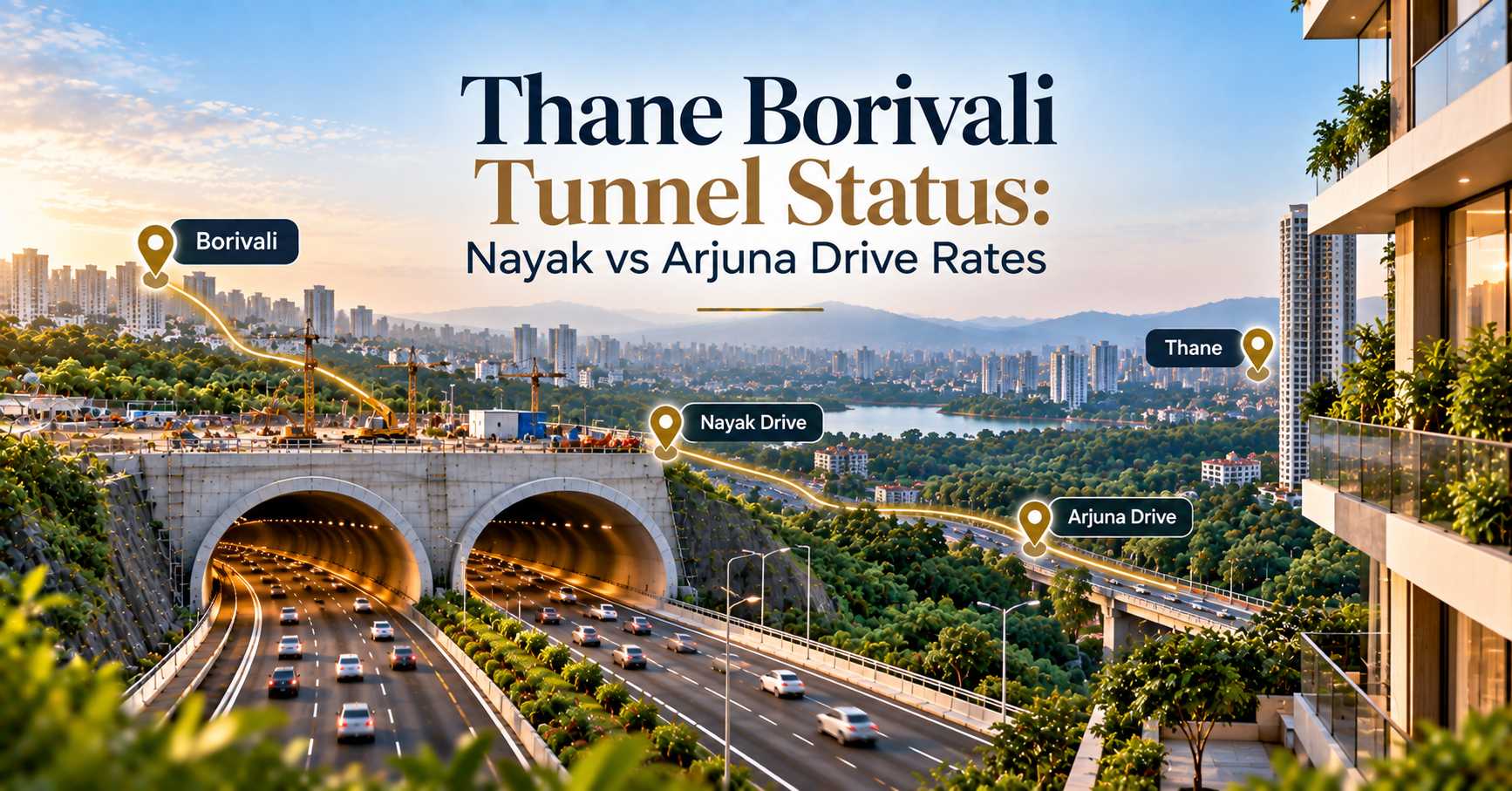
Quick Answer
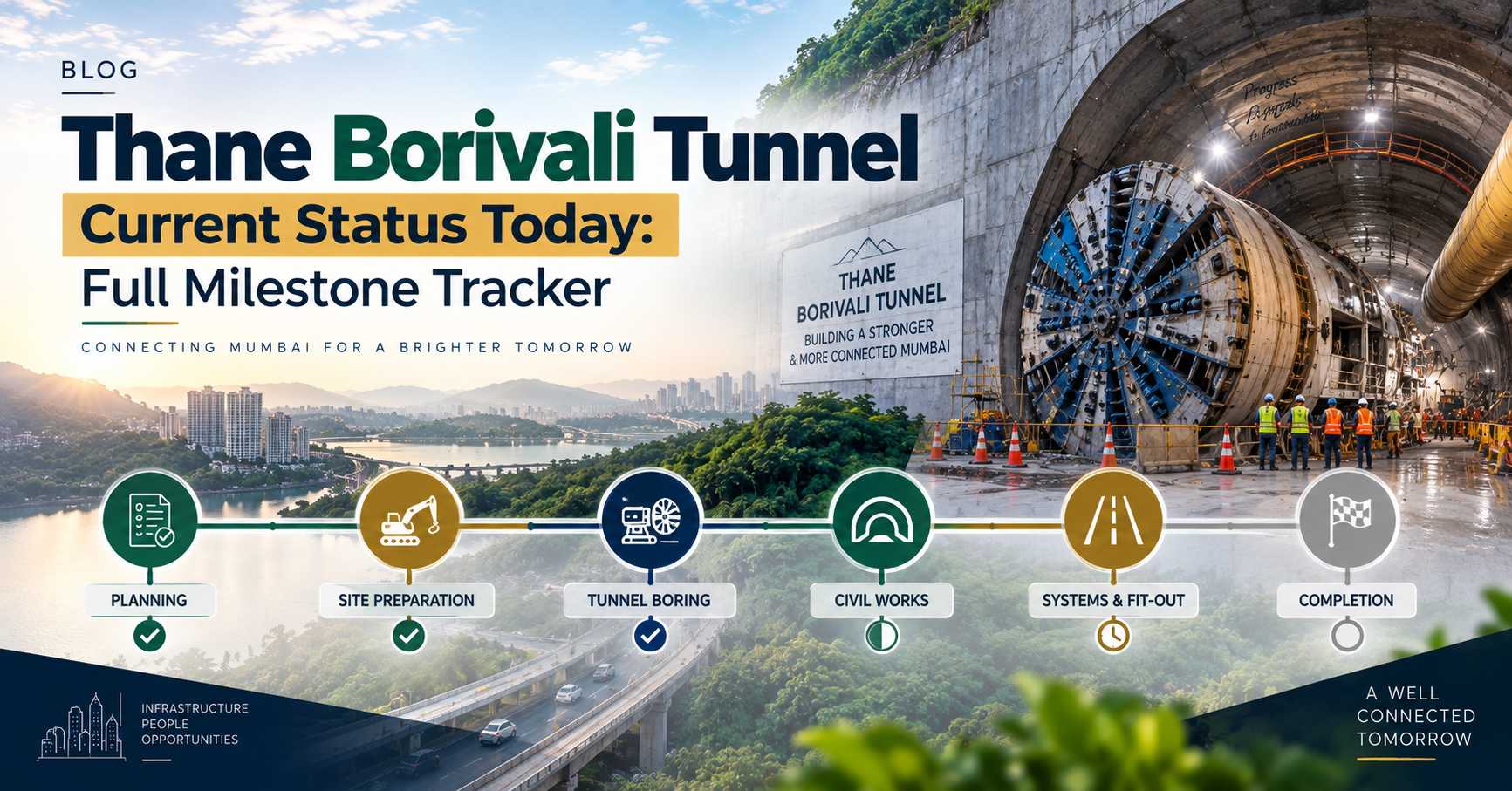
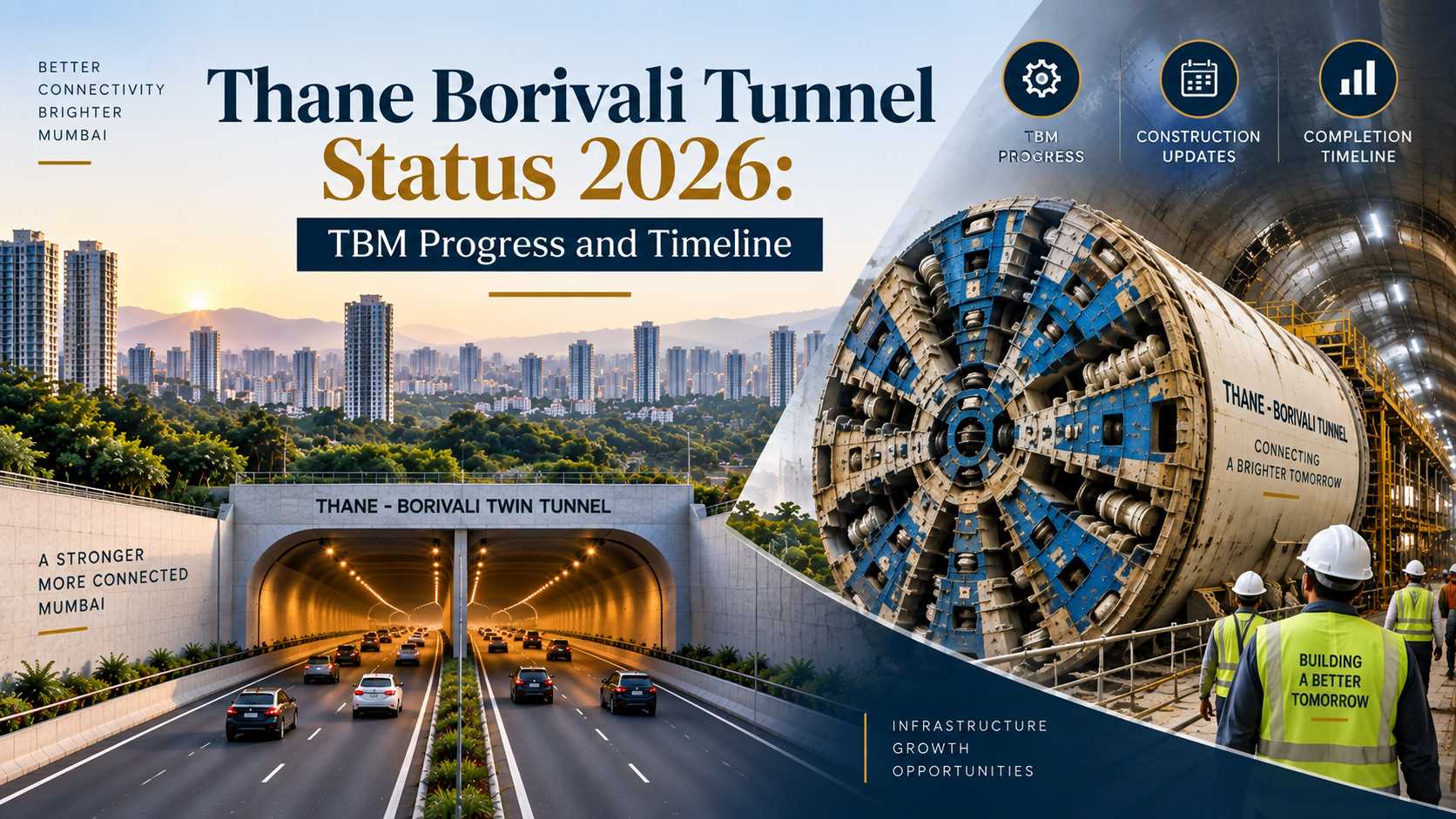
The Thane Borivali tunnel status as of July 2026 is 13.13% physical progress. TBM Nayak has been boring from the Thane end since April 2026 and TBM Arjuna joined on 13 August 2026. Two Borivali-end machines are still waiting on land, which is the real constraint on the May 2028 target.
Every update on this project quotes the same two facts — a progress percentage and a TBM launch date — and then stops. Neither fact answers the question buyers are actually asking, which is whether the machines can cover the remaining distance in the remaining time. That is an arithmetic question, and it is answerable.
Here is the raw material. Each tube is roughly 10.25 km of bored section. Four Herrenknecht machines are planned, two launching from Manpada in Thane and two from Magathane in Borivali, each pair meeting in the middle of its respective tube. TBM Nayak, with a 13.34-metre cutter head — the largest single-shield hard-rock diameter deployed in India — started from the Thane end in April 2026. Arjuna followed on 13 August 2026, with Chief Minister Devendra Fadnavis initiating the launch remotely. MMRDA recorded 13.13% physical progress to July 2026 against a sanctioned cost of roughly Rs 16,600 crore.
Our team analysed what that implies for each machine. The milestone-by-milestone record is in our Thane Borivali tunnel current status milestone tracker; what follows is the drive-rate layer underneath it.
Thane Borivali Tunnel Status: The Drive-Rate Arithmetic
Split the work the way the contractor has to. Two tubes, each about 10.25 km. If each tube is bored from both ends and the drives meet near the middle, every machine is responsible for roughly 5.1 km. That is the number that matters, not the 11.84 km headline.
Now apply the calendar. From Arjuna’s August 2026 launch to a May 2028 completion target is about 21 months. Covering 5,100 metres in 21 months requires roughly 243 metres per month, or about 8 metres per working day allowing for downtime. For a large-diameter hard-rock TBM that rate is demanding but within the normal band — comparable machines typically deliver somewhere between 150 and 350 metres per month depending on rock conditions, cutter wear and how much time goes into segment installation.
The Thane-end machines have a difficult but credible job. The Borivali-end machines, which have not started, have the same 5.1 km to cover in materially less time. That asymmetry is the whole story.
These distance splits and monthly rates are our calculation from the published tube length and launch dates, not figures issued by MMRDA. Treat them as a sanity check on the official target rather than a forecast. What they do establish is that the eastern drives are not the problem.
Why Two Machines Is Not Twice the Progress
A common misreading of the Arjuna launch is that Thane-side progress doubled in August 2026. It did not, and the reason is that Nayak and Arjuna are not working the same tube — they are each driving one of the two parallel tubes from the same portal. Doubling the machine count doubles the total metres bored per month across the project, but it does not halve the time to complete either individual tube.
Boring is also not the whole scope. Cross passages are provided every 300 metres, which over a 10.25 km tube implies roughly 34 separate excavations, each begun after the main bore has passed. On top of that sit the ventilation plant, fire detection and suppression, air filtration required by the wildlife clearance, retro-reflective and LED signage, pavement and electromechanical fit-out. None of that appears in a tunnelling progress photograph.
This is why a 13.13% physical progress figure at the point when boring has only just begun is not as alarming as it first looks, and also why a 100% bored tunnel would still be well short of an open one.
Status by Workfront: What Is Running and What Is Not
| Workfront | Machine / Scope | Status Sept 2026 | Approx distance to cover |
|---|---|---|---|
| Thane end, tube 1 | TBM Nayak | Boring since April 2026 | About 5.1 km |
| Thane end, tube 2 | TBM Arjuna | Launched 13 Aug 2026 | About 5.1 km |
| Borivali end, tube 1 | TBM 3 | Not launched | About 5.1 km |
| Borivali end, tube 2 | TBM 4 | Not launched | About 5.1 km |
| Cross passages | Approx 34 per tube | Follows main bore | Every 300 m |
| Ventilation and fire systems | Electromechanical | Post-boring | Full length |
| SGNP air filtration | Clearance condition | Post-boring | Park section |
| Approach roads | Manpada and Magathane | Separate contracts | About 1 km combined |
Four of those eight rows have not started. That is not unusual at 13% progress, but it does mean the official May 2028 date assumes a great deal of parallel execution in 2027 — and assumes the two Borivali machines are launched soon enough to matter. Whether that date survives is the subject of our separate read on the tunnel’s current status and what homebuyers should do now.
How to Track the Status Yourself, Monthly
You do not need a consultant for this. Four checks, once a month, and you will know more than most sales desks.
- Read MMRDA’s physical progress figure on the project page. It is the only official, comparable number. A month-on-month delta under half a percent means the drive is slow.
- Watch for the TBM 3 and TBM 4 launch announcements. This is the single most important event remaining. Until Borivali-end boring starts, the western half has no clock.
- Track the Magathane rehabilitation count. Around 300 project-affected families were at the Borivali launch site; most have been rehoused in SRA and MHADA housing, with 15 to 20 pending. When that reaches zero, the machines can follow.
- Look for the first cross-passage and ventilation tenders. Those contracts moving is the signal that the project is planning for fit-out rather than still fighting the bore.
Key takeaway
Do not underwrite a purchase on the 2028 date. Underwrite on 2029 and treat 2028 as upside. If the Borivali machines launch before mid-2027, revise upward; if they do not, revise down.
What the Status Means for Buyers on the Corridor
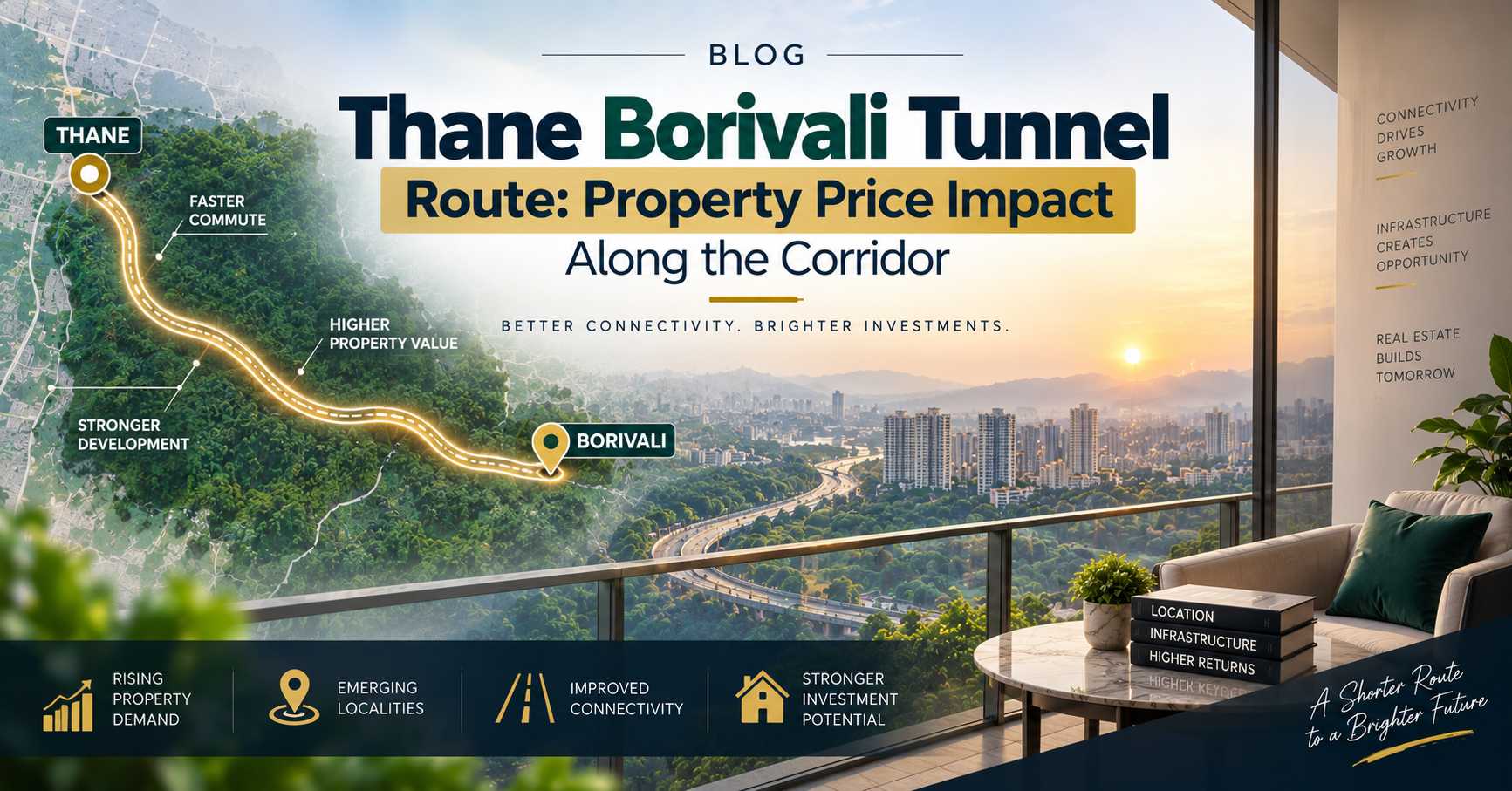
The drive-rate picture argues for ready inventory over long-dated inventory inside the same catchment. If the tunnel opens in 2028, a completed flat captures the repricing. If it slips to 2029 or 2030, a completed flat has been earning rent throughout while an under-construction one has been absorbing interest.
In Kandivali East, that trade is concrete. Godrej Nest offers ready homes from around Rs 1.21 crore, while Godrej Bliss is the longer-dated asset in the same micro-market, having already moved from roughly Rs 26,100 to Rs 29,100 per sq ft across a single quarter in 2026. We set out which Godrej projects sit inside the tunnel catchment at all in our tunnel map and status hub.
We at Godrej Properties MMR track MMRDA’s monthly figure alongside the project-level RERA dates, because the two together are what determine whether a buyer pays for infrastructure before receiving it. Development details for these projects are published by Godrej Properties Limited; the drive-rate analysis is ours.
Frequently Asked Questions
Q: What is the Thane Borivali tunnel status right now?
Physical progress was 13.13% as of July 2026 per MMRDA. TBM Nayak has been boring from the Thane end since April 2026, TBM Arjuna launched on 13 August 2026, and the two Borivali-end machines have not started pending land handover at Magathane.
Q: How far does each tunnel boring machine have to travel?
Each tube is roughly 10.25 km of bored section. With drives launched from both portals meeting near the middle, each of the four machines covers about 5.1 km. That split is our calculation from the published tube length, not an MMRDA figure.
Q: Is the May 2028 completion date realistic?
For the Thane-side drives it is demanding but credible, needing roughly 240 metres per month. For the Borivali-side drives, which have not begun, the same distance in less time is a harder case. Our view is that 2029 is the prudent planning assumption.
Q: Did progress double when TBM Arjuna launched?
Total metres bored per month across the project increased, but the two machines drive separate parallel tubes rather than the same one. Neither tube’s individual completion date halves. It is additive across the project, not multiplicative per tube.
Q: What is blocking the Borivali end?
Land at the Magathane launch site. Around 300 project-affected families occupied it; most have been rehabilitated into SRA and MHADA housing, with roughly 15 to 20 still to be shifted. TBMs 3 and 4 cannot be launched until that site is handed over.
Q: Does 100% boring mean the tunnel opens?
No. Around 34 cross passages per tube, ventilation plant, fire detection, the SGNP air filtration required by the wildlife clearance, signage, pavement and electromechanical fit-out all follow the bore. Approach-road widening at both portals is contracted separately.
Our Verdict
The Thane Borivali tunnel status in September 2026 is genuinely encouraging on the eastern half and genuinely unresolved on the western half. Two machines are in rock, the drive rate required of them is within normal engineering range, and the remaining risk is concentrated in a small land parcel at Magathane and a large volume of post-boring fit-out.
Our practical advice has not changed since Arjuna launched: buy inside the catchment, buy something that is already built or close to it, and treat 2028 as the optimistic case. If you want us to run the portal distance and the RERA possession date for a specific project, ask — that comparison takes an hour and settles most of these decisions.