Quick Answer
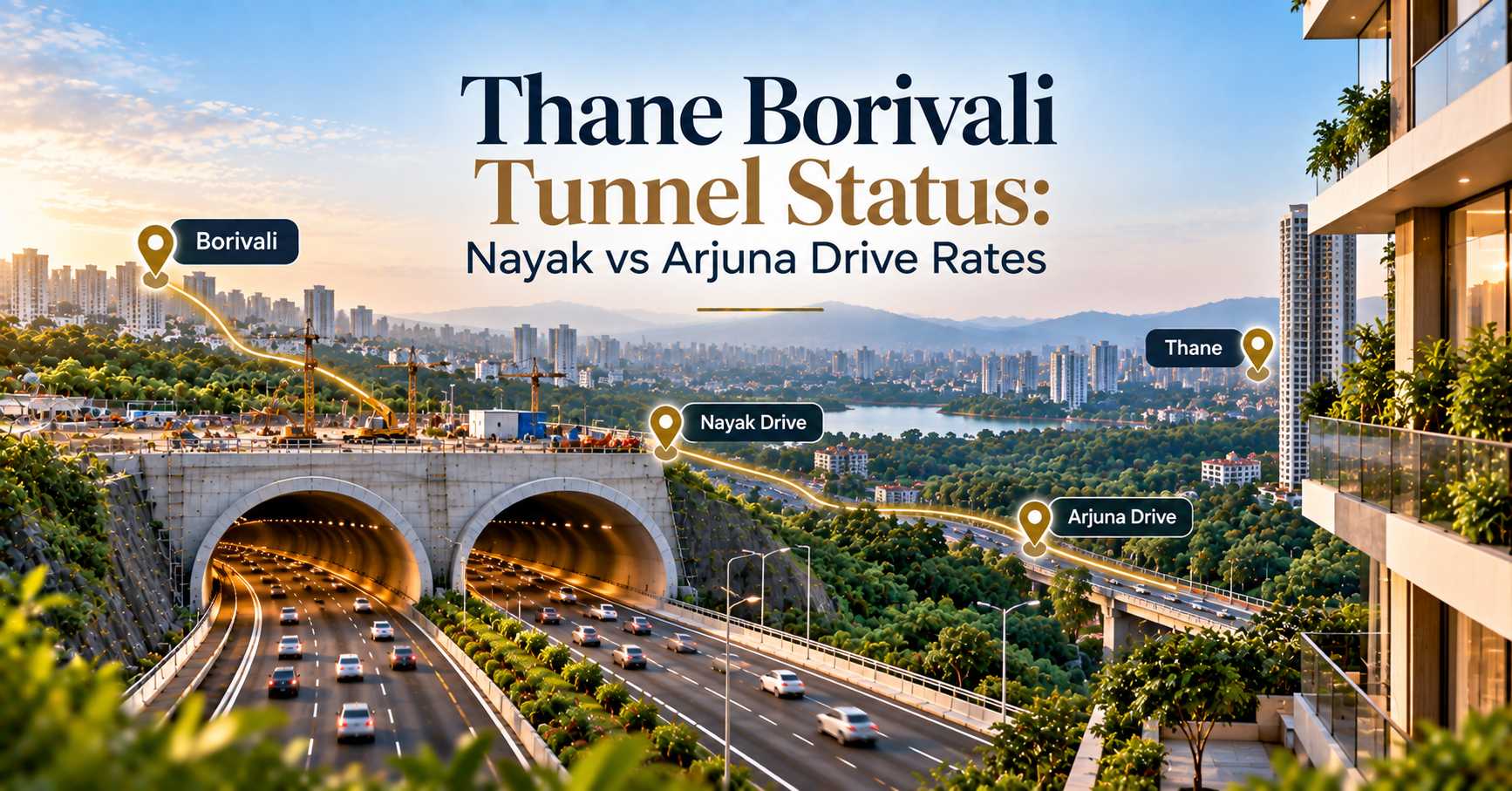
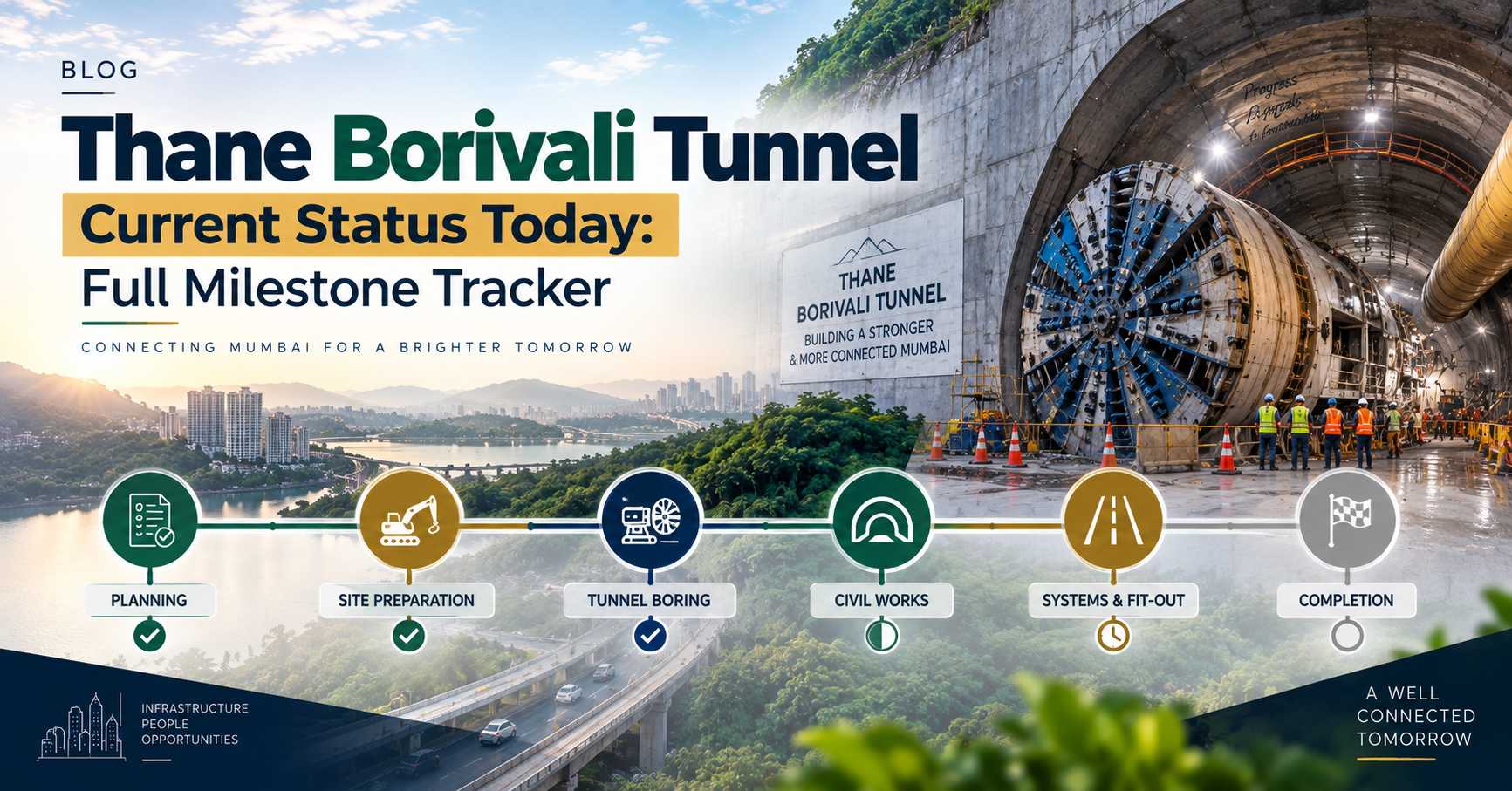
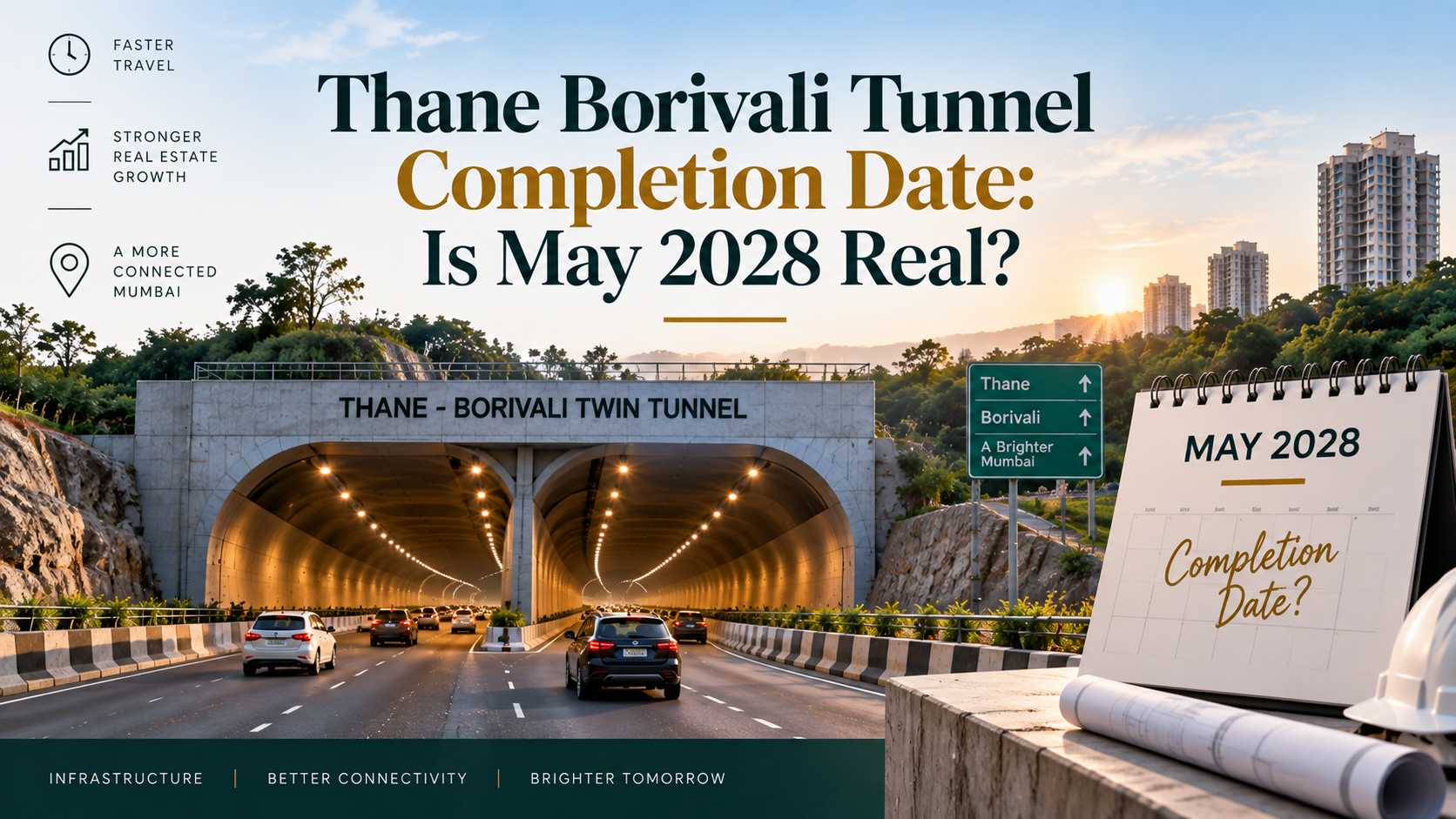
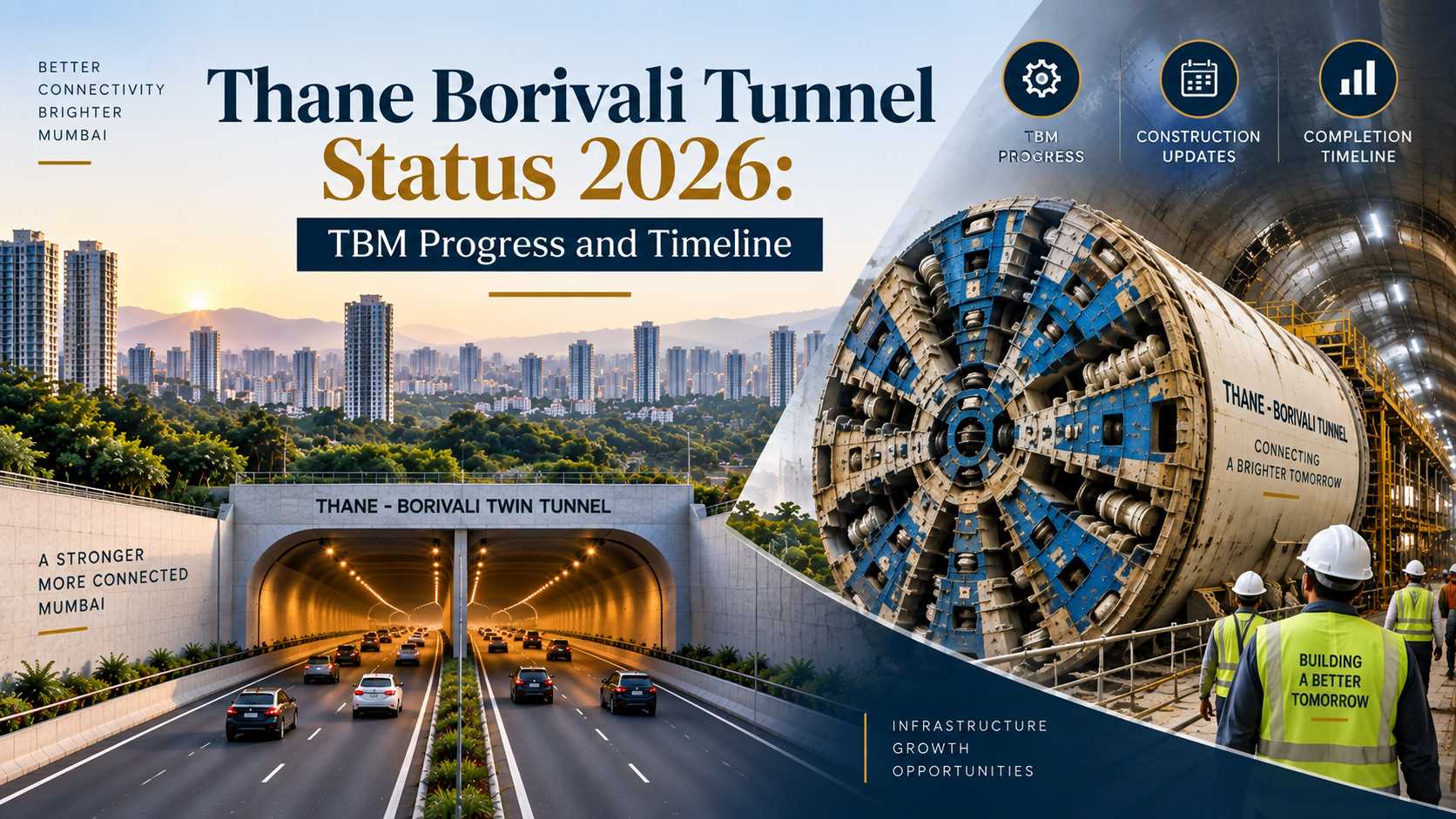
As of September 2026, the Thane Borivali tunnel status is active tunnelling. TBM “Nayak” began boring on 7 April 2026 and the second machine, “Arjuna”, cleared its site acceptance test on 25 June 2026. MMRDA is holding to a May 2028 completion target for the 11.84 km corridor.
Two years after the foundation stone went down in July 2024, the Thane Borivali tunnel status has finally moved from clearances and land acquisition into visible, measurable boring. That distinction matters more than most buyers realise. Infrastructure in the Mumbai Metropolitan Region has a long history of announcements that sat idle for a decade; a tunnel boring machine physically cutting rock under the Sanjay Gandhi National Park is a different category of evidence altogether.
We at Godrej Properties MMR track this project closely because it sits directly under the Thane micro-markets our buyers ask about every week. The Thane-side portal is at Tikuji-ni-Wadi in Manpada, a few hundred metres off Ghodbunder Road. The Borivali-side portal is at Ekta Nagar in Magathane, next to the Western Express Highway. Between them lie 10.25 km of twin tubes running 20 to 23 metres beneath protected forest. When it opens, a drive that currently eats 60 to 90 minutes in peak traffic is projected to take about 15 minutes.
This post is a straight status report — what has actually been built, what the numbers say, and where the schedule is genuinely exposed. Our team analysed the MMRDA project disclosures, contractor updates and construction-sector reporting through 2026 to put it together.
Thane Borivali Tunnel Status: Where Construction Stands in 2026
The headline number from MMRDA’s own reporting was just over 8% physical progress as of August 2025. That figure was low for a reason: almost all of the first year’s work was enabling work rather than tunnelling. Launch shafts had to be excavated at both ends, more than 500 structures had to be cleared at the Borivali end for the shaft and casting yard, and the final residential evictions in the Magathane area ran into early 2026.
The inflection point came on 7 April 2026, when TBM-01 “Nayak” was launched. Site acceptance testing for that machine had completed on 26 February 2026. TBM-02 “Arjuna” completed its own site acceptance test on 25 June 2026 and has been prepared for its initial drive. Two more machines are part of the four-TBM fleet supplied by Herrenknecht of Germany for the project.
| Milestone | Date | What it unlocked |
|---|---|---|
| Administrative approval, Rs 16,600.40 crore | 10 March 2023 (MMRDA 154th Authority meeting) | Budget sanction |
| Wildlife clearances | October 2023 and February 2024 | Permission to tunnel under SGNP |
| Foundation stone | July 2024 | Site mobilisation begins |
| Reported physical progress ~8% | August 2025 | Shafts, portals, land clearance |
| TBM “Nayak” site acceptance test | 26 February 2026 | Machine certified on site |
| TBM “Nayak” launched | 7 April 2026 | Boring under SGNP starts |
| TBM “Arjuna” site acceptance test | 25 June 2026 | Second drive readied |
| Target completion | May 2028 | Corridor opens to traffic |
The contractor is Megha Engineering and Infrastructure Limited, which won both civil packages after a bid contest that also drew L&T. MMRDA is the implementing authority, not MSRDC or the MCGM, which is worth knowing if you ever need to chase an RTI or a status note.
What the Machines Are Actually Doing Underground
The engineering here is unusually demanding and it explains both the cost and the timeline. These are not metro-sized bores. One of the machines on this project is India’s largest single-shield TBM, with a cutterhead measuring roughly 13.34 metres across. The finished internal diameter of each tube is about 12.2 metres, which is what allows three lanes — two running lanes plus an emergency lane — in each direction.
This is the first time in India that road tunnels are being driven beneath legally protected forest land. Everything about the method statement, from the 20 to 23 metre depth to the choice of shielded TBMs over drill-and-blast, exists to keep the surface of Sanjay Gandhi National Park undisturbed.
Key physical parameters worth committing to memory if you are evaluating property near the alignment:
- Total corridor length: 11.84 km, of which 10.25 km is tunnel and roughly 1.59 km is approach road
- Tubes: two, each carrying one-way traffic, three lanes per tube
- Maximum depth below SGNP: about 23 metres
- Cross passages: every 300 metres for emergency evacuation
- TBM fleet: four mega machines from Herrenknecht, Germany
- Sanctioned cost: Rs 16,600.40 crore
Because the tunnels sit 20-plus metres down and are driven by shielded TBMs rather than blasting, surface settlement risk for buildings above the alignment is low. That is a question we get from buyers in Manpada and Magathane, and the honest answer is that TBM method statements are specifically designed to keep it that way, with instrumentation monitoring along the route.
Reading the Schedule Honestly: Can May 2028 Hold?
Our verdict is that May 2028 is ambitious but not fantasy — with one important caveat. The critical path is now almost entirely TBM advance rate. With the first machine launched in April 2026 and roughly 24 months to the target, each drive needs a sustained monthly advance that large-diameter machines in Indian geology have achieved but rarely comfortably.
Three things would tell you the schedule is holding:
- Arjuna’s actual launch date. A machine that cleared testing in June 2026 should be in the ground within a couple of months. A long gap between test and drive is the first warning sign.
- Monthly advance disclosures. MMRDA publishes progress percentages. Watch the slope of that line through 2027, not the absolute number.
- Breakthrough of the first tube. If one tube holes through by late 2027, the fit-out, ventilation and systems work can run in parallel with the second drive and the target stays live.
What this means for your buying decision
Treat May 2028 as the optimistic case and 2029 as the planning case. If a project’s investment argument only works because the tunnel opens exactly on time, the argument is too thin. If it works on Thane’s existing fundamentals and the tunnel is upside, that is a purchase you can defend.
The Price Picture Along the Alignment Right Now
Prices near both portals have already absorbed part of the tunnel story, which is normal — infrastructure premiums build between announcement and commissioning, not on opening day. Here is where the relevant micro-markets sit in 2026.
| Micro-market | Indicative rate (per sq ft, 2026) | Distance to portal | Recent trend |
|---|---|---|---|
| Manpada, Thane | Around Rs 22,500 | Portal locality | +4.4% in 12 months, +31.2% over 5 years |
| Ghodbunder Road corridor (average) | Around Rs 14,950 | 0-8 km | Steady, wide band of Rs 9,000-16,000 |
| Kasarvadavali | Around Rs 13,900 | ~8 km | Metro 4 terminus effect |
| Borivali East | Rs 29,350-32,150 | Portal locality | About +7% in 12 months |
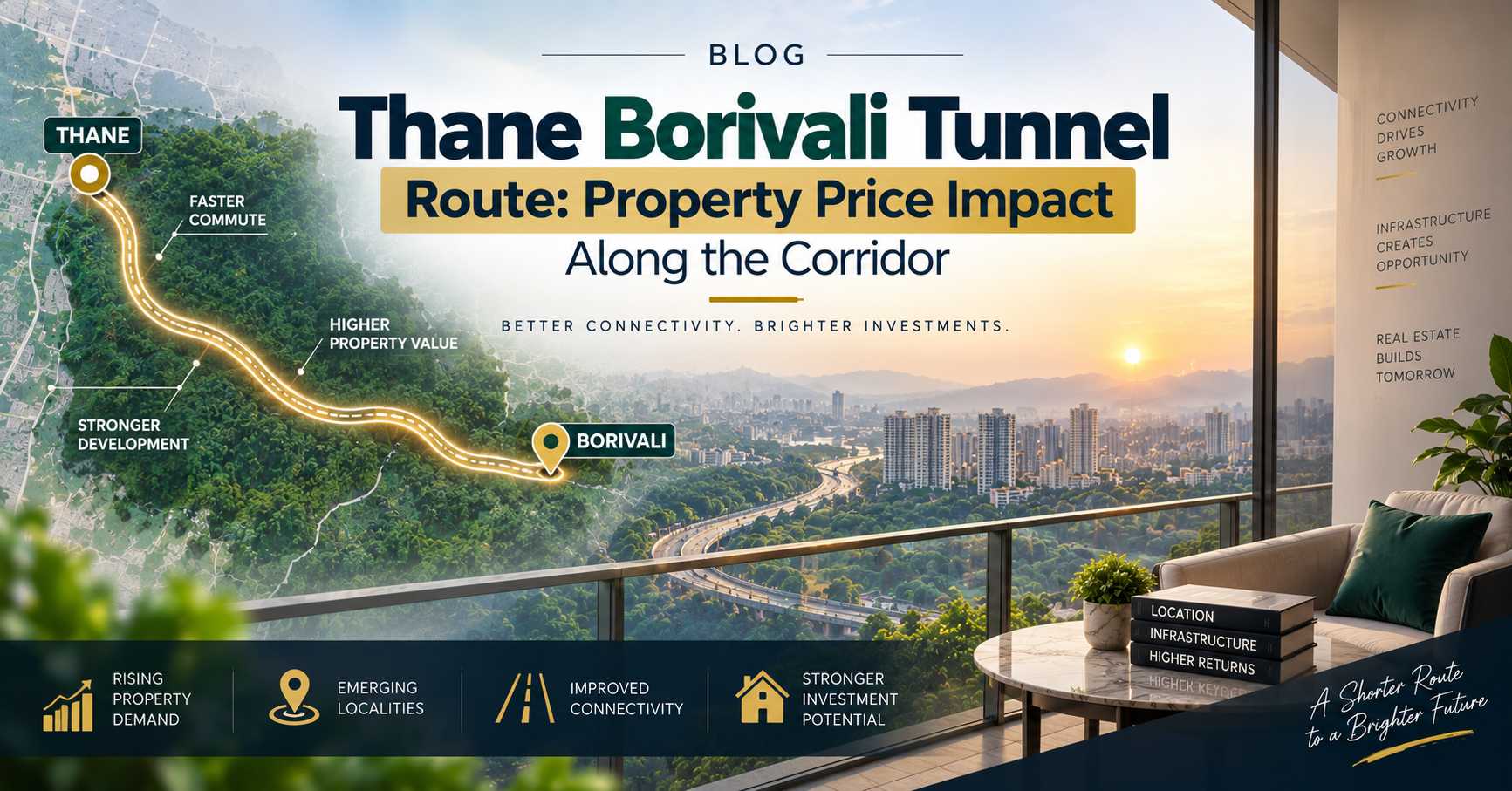
The spread is the story. Manpada, sitting at the Thane portal, already trades at a clear premium to the wider Ghodbunder average. Borivali East trades at roughly double the Ghodbunder average. The tunnel’s economic function is to compress the travel-time gap between those two numbers to about 15 minutes — which is exactly why the Thane side has more room to move than the Borivali side.
For a fuller treatment of that repricing argument, see our analysis of how the twin tunnel will change property prices on Ghodbunder Road.
Why This Matters for Godrej Buyers in Thane
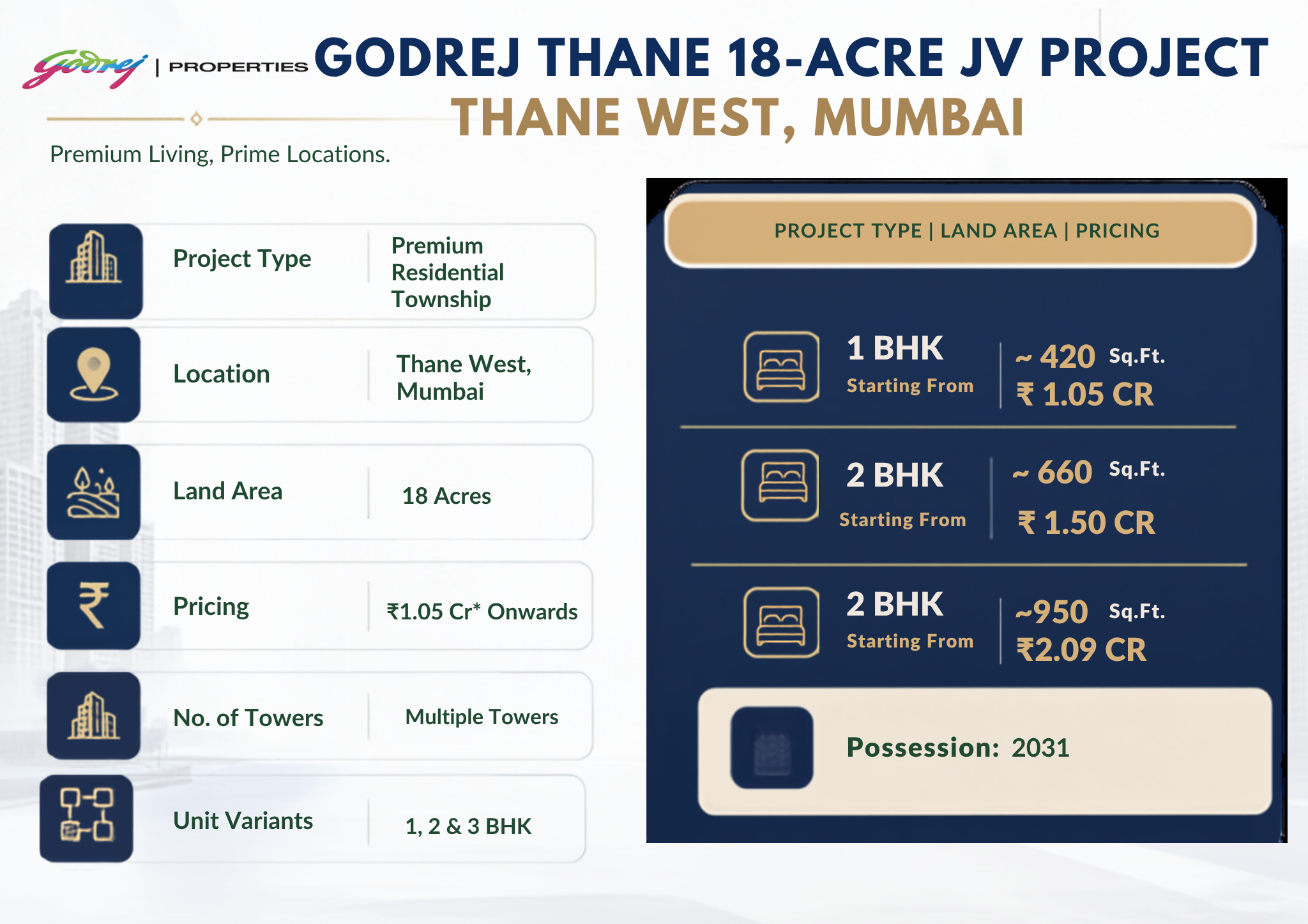
Godrej Properties Limited, the third-party developer whose MMR portfolio we cover, has positioned two of its Thane assets within the tunnel’s direct catchment. The larger one is the 18.5-acre Ghodbunder Road township at Manpada, which is the closest Godrej address to the Thane portal and overlooks the Yeoor Hills edge of the national park the tunnel passes under. The second is Godrej Ascend on Kolshet Road, roughly 15 to 20 minutes from the portal and better placed for buyers who also want proximity to the Thane railway station side.
Neither project depends on the tunnel to make sense. Thane West already carries its own employment base, its own retail, and Metro Line 4 arriving at Kasarvadavali. The tunnel is the layer on top. Buyers who understand the difference between a base case and an upside case tend to make better decisions here, which is why we publish status updates like this one rather than marketing timelines. Godrej Properties Limited’s own project disclosures are available at godrejproperties.com.
Frequently Asked Questions
Q: What is the current Thane Borivali tunnel status in 2026?
Active tunnelling. TBM “Nayak” was launched on 7 April 2026 and is boring under Sanjay Gandhi National Park. TBM “Arjuna” completed site acceptance testing on 25 June 2026 and is being readied for its drive. Physical progress was reported at just over 8% in August 2025, before boring began.
Q: When will the Thane Borivali twin tunnel open?
MMRDA’s stated target is May 2028. Given that the first TBM launched in April 2026, that leaves about 24 months for two 10.25 km drives plus systems fit-out. We treat May 2028 as the optimistic case and 2029 as the realistic planning case for buyers.
Q: How much did the Thane Borivali tunnel cost?
Administrative approval was granted for Rs 16,600.40 crore at MMRDA’s 154th Authority meeting on 10 March 2023. Some later reports cite a higher all-in figure of around Rs 18,000 crore once escalation and land costs are included.
Q: Who is building the Thane Borivali tunnel?
Megha Engineering and Infrastructure Limited is the contractor for both civil packages, working under MMRDA. The four tunnel boring machines were supplied by Herrenknecht of Germany, one of which is India’s largest single-shield TBM at about 13.34 metres cutterhead diameter.
Q: How deep does the tunnel run under the national park?
Between roughly 20 and 23 metres below the surface at its deepest. The depth and the use of shielded TBMs instead of drill-and-blast are both deliberate choices to leave the Sanjay Gandhi National Park surface and its wildlife undisturbed.
Q: Will the tunnel be tolled?
MMRDA has not published a final toll policy for the corridor. Comparable MMRDA and MSRDC road assets in the region are tolled, so buyers should assume a user charge rather than free access when modelling daily commute costs. [VERIFY: not sourced]
Q: Does the tunnel affect buildings above the alignment?
Risk is low. At 20 to 23 metres depth with shielded TBMs and continuous instrumentation monitoring, surface settlement is engineered to stay within tolerance. The structures that were cleared were at the Borivali portal and shaft site, not above the deep alignment.
Our Verdict
The Thane Borivali tunnel has crossed the line that separates a proposal from a project. Two certified TBMs, a named contractor, a sanctioned Rs 16,600 crore budget and an active drive under SGNP are facts, not projections. The open question is no longer whether it gets built but whether it lands in May 2028 or slips a year — and that difference is not large enough to change a ten-year housing decision.
If you are evaluating Thane West on the strength of this corridor, buy on what Thane already delivers and let the tunnel be the upside. Our team is happy to walk you through the portal-distance maths for specific towers. Start with our Ghodbunder Road location review, then book a site visit to see how the alignment sits against the projects on your shortlist.