1 BHK vs 2 BHK vs 3 BHK in Mumbai 2026 — How to Choose the Right Flat Size
Covers: Budget impact, family suitability, rental yields, resale liquidity and EMI implications | With real examples from Godrej Properties projects across Mumbai
Our Take: The configuration you choose determines your budget, your lifestyle for the next decade and your exit options when you eventually sell. Most buyers default to “the biggest I can afford” — but that is not always the right answer. This guide walks you through the trade-offs with actual project examples.
Why Configuration Matters More Than You Think
After location, the choice between a 1 BHK, 2 BHK and 3 BHK is the single biggest decision in your home-buying journey. It is not just a lifestyle choice — it directly determines your loan quantum, your monthly EMI, the rental income you can earn, how easily you can sell the unit later and even the stamp duty you pay. A buyer who stretches from a 2 BHK to a 3 BHK adds ₹30–80 Lakh to their commitment in most Mumbai micro-markets, which translates to ₹20,000–55,000 more in monthly EMI over 20 years. That is not a rounding error — it reshapes your financial life.
The right configuration depends on a matrix of factors: your family size today and over the next 5–7 years, whether you are buying to live or to invest, your monthly cash flow after EMI, and the micro-market dynamics of the location you are targeting. This guide breaks down each configuration with real pricing examples from the Godrej Properties Mumbai portfolio, so you can make a decision grounded in actual numbers rather than assumptions.
Quick Comparison: 1 BHK vs 2 BHK vs 3 BHK
| Factor | 1 BHK | 2 BHK | 3 BHK |
|---|---|---|---|
| Typical budget (Mumbai) | ₹55 Lakh – ₹1.85 Cr | ₹1.20 Cr – ₹3.50 Cr | ₹2.00 Cr – ₹6.50 Cr |
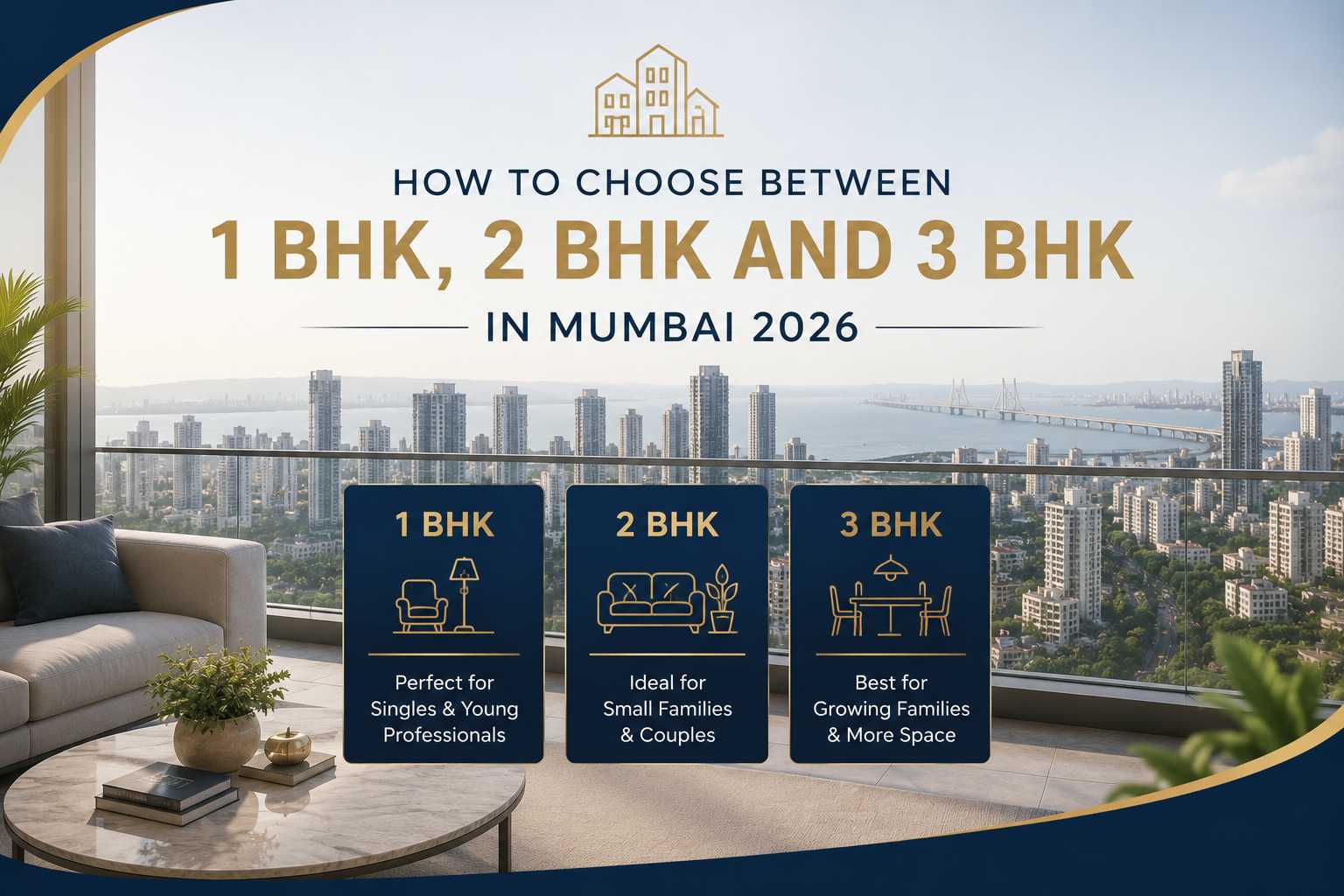
| Best for | Singles, couples, investors | Small families, young couples planning ahead | Families with children, long-term residents |
| Gross rental yield | 3.0% – 4.0% | 2.8% – 3.5% | 2.3% – 3.0% |
| Resale liquidity | High (investor demand), lower from families | Highest (broadest buyer pool) | Moderate (family buyers only, longer to sell) |
| EMI at 8.5% / 20 years (indicative) | ₹4,800–16,000/month per ₹10L | Higher total, same per-lakh rate | Highest total commitment |
| Appreciation potential | Moderate | Strong (liquid) | Strong (driven by scarcity in premium areas) |
| Lifestyle flexibility | Limited — single bedroom, minimal storage | Comfortable for 2–3 people | Full family living, home office, guest room |
1 BHK: The Investor’s Configuration
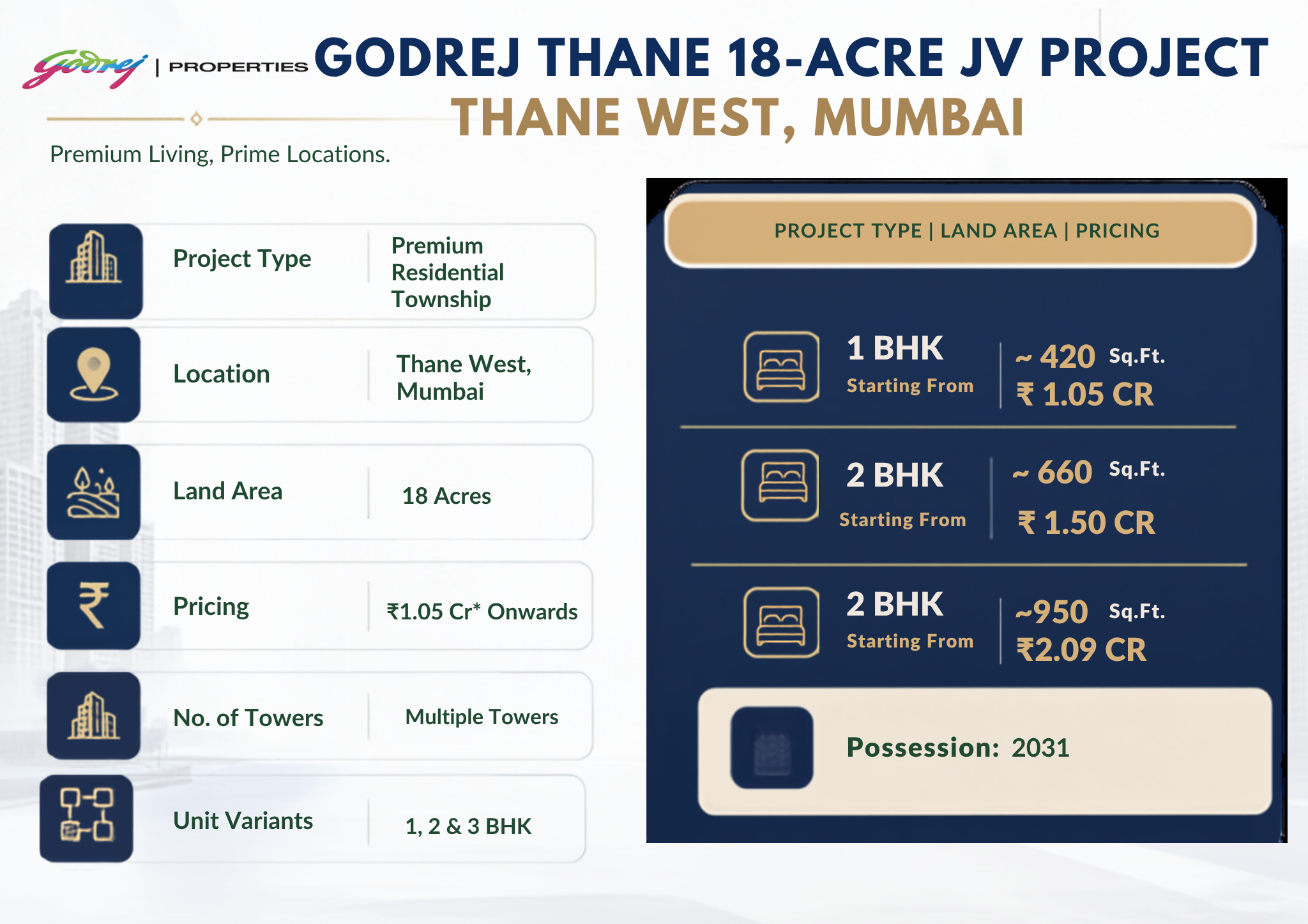
A 1 BHK is the lowest-ticket entry into any micro-market, making it the natural choice for first-time investors and single professionals who prioritise location over space. In Mumbai, 1 BHK options from Godrej Properties start as low as ₹98 Lakh at Godrej Bliss in Kandivali East and go up to ₹1.85 Crore at Godrej The Trees in Vikhroli East, depending on the location and project vintage.
The financial case for a 1 BHK is rental yield — smaller units typically deliver 3.0–4.0% gross yields because rent does not scale linearly with price. A ₹98 Lakh 1 BHK that rents for ₹28,000–32,000 per month yields roughly 3.4–3.9%, while a ₹3.5 Crore 3 BHK renting at ₹75,000 yields only 2.6%. That yield differential matters for investors who are optimising for cash-on-cash returns rather than absolute appreciation.
The trade-off is lifestyle and resale. A 1 BHK works for a single person or a couple without children, but a growing family will outgrow it within 2–3 years — forcing either a sale-and-upgrade cycle (with transaction costs of 7–8% in stamp duty, registration and brokerage) or a parallel purchase. On resale, the buyer pool for 1 BHK units is heavily investor-driven; families almost never buy 1 BHK, which can make exit timing more market-dependent.
2 BHK: The Most Liquid Configuration in Mumbai
The 2 BHK is the sweet spot of the Mumbai residential market — it attracts both end-users and investors, which makes it the most liquid configuration to resell. Within the Godrej portfolio, 2 BHK options range from Godrej Urban Park in Chandivali (from ₹1.38 Crore) to Godrej Horizon in Wadala (from ₹3.37 Crore), giving buyers a genuine choice between micro-markets at different price points.
A 2 BHK suits a young couple planning a family, a small family with one child, or an investor who wants the liquidity advantages of a broad buyer pool without the higher capital commitment of a 3 BHK. The configuration comfortably accommodates 2–4 people, supports a work-from-home setup in the second bedroom, and carries enough resale appeal that exit timelines are typically shorter than for either 1 BHK or 3 BHK units in the same project.
The trade-off is that a 2 BHK may feel tight for a family with two growing children, particularly if both parents work from home regularly. In that scenario, the second bedroom doubles as both a children’s room and a home office — a compromise that works for a few years but eventually pushes families toward a 3 BHK upgrade.
3 BHK: The Family Home
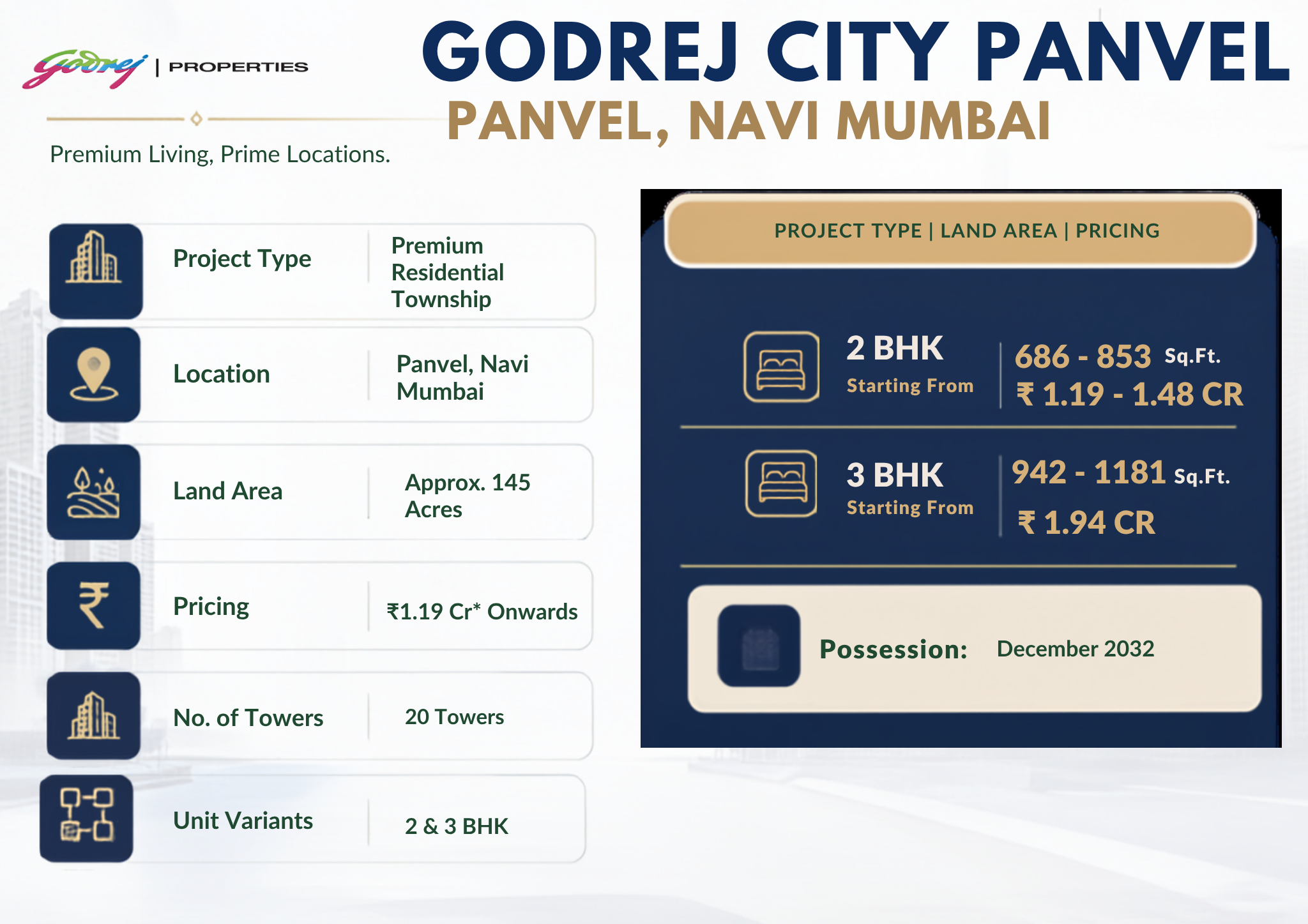
A 3 BHK is the configuration that families buy to stay — it provides separate bedrooms for parents and children, a dedicated guest room or home office, and enough storage and living space for a household of 4–5 people. In the Godrej Mumbai portfolio, 3 BHK options start at Godrej Reserve in Kandivali East (from ₹2.35 Crore) and extend to Godrej Sky Terraces in Chembur (from ₹6.22 Crore) at the premium end.
The financial case for a 3 BHK rests on appreciation rather than yield. Larger configurations in established micro-markets tend to appreciate faster in absolute terms because supply is limited — developers build more 1 BHK and 2 BHK units to keep ticket sizes accessible, which means 3 BHK inventory is inherently scarcer. In premium locations like Worli and Wadala, this scarcity effect is pronounced. However, gross rental yields on 3 BHK units run 2.3–3.0%, below the 3.0–4.0% band a 1 BHK delivers, because rent scales more slowly than price.
The trade-off is capital commitment and resale speed. A 3 BHK ties up ₹2.35–6.50 Crore of capital, the buyer pool on resale is exclusively family-oriented (investors rarely buy 3 BHK), and the time to sell can be 3–6 months longer than for a 2 BHK in the same project. For a buyer who plans to live in the unit for 7–10 years, that resale speed difference is irrelevant. For an investor looking at a 3–5 year hold, it matters.
Beyond 3 BHK: The Ultra-Luxury Segment
For buyers whose budget and lifestyle requirements exceed what a standard 3 BHK offers, Mumbai’s ultra-luxury segment provides 4 BHK and larger formats designed for a different tier of living. Godrej Trilogy in Worli offers sea-facing 3 and 4 BHK residences from ₹17.50 Crore with 10.5 ft ceilings, private decks and only three units per floor. Godrej Bandra Reclamation is an upcoming sea-facing launch starting at ₹19.5 Crore.
This segment operates by entirely different rules — rental yield is irrelevant (HNI and NRI buyers rarely rent out), appreciation is driven by scarcity of irreplaceable addresses rather than by market-wide trends, and purchase decisions are often lifestyle-first rather than financially optimised. If this is your bracket, the comparison is not 3 BHK vs 4 BHK — it is one irreplaceable address vs another.
Decision Framework: Budget and Family Size
| Your Situation | Recommended Configuration | Why |
|---|---|---|
| Single professional, investor, budget under ₹1.5 Cr | 1 BHK | Highest yield, lowest EMI, location flexibility |
| Couple, no children yet, budget ₹1.2–3.5 Cr | 2 BHK | Room to grow, most liquid resale, balanced EMI |
| Family with 1–2 children, budget ₹2.3–6.5 Cr | 3 BHK | Separate rooms for children, home office, long-term home |
| HNI / NRI, lifestyle-first, budget ₹6 Cr+ | 3 or 4 BHK luxury | Irreplaceable addresses, privacy, premium finishes |
| Investor optimising for yield, any budget | 1 BHK (first choice) or 2 BHK | Rent-to-price ratio favours smaller units |
Conclusion
There is no universally “best” configuration — only the one that fits your family, your finances and your timeline. A 1 BHK is an investor’s tool; a 2 BHK is the market’s most versatile format; a 3 BHK is a family’s long-term home; and anything above that is a lifestyle statement. The critical discipline is to pick the configuration first, then find the best project within that budget, rather than falling in love with a project and stretching your configuration beyond what your EMI capacity can sustain. Explore the full range of configurations across Godrej Properties Mumbai and MMR projects to find the right match.
Q1. Which configuration gives the highest rental yield in Mumbai?
1 BHK units typically deliver the highest gross rental yield, in the range of 3.0–4.0%, because rent does not scale linearly with price. A ₹98 Lakh 1 BHK renting at ₹28,000–32,000 per month yields 3.4–3.9%, while a ₹3.5 Crore 3 BHK renting at ₹75,000 yields approximately 2.6%. For yield-focused investors, smaller configurations outperform.
Q2. Is a 2 BHK easier to resell than a 1 BHK or 3 BHK?
Yes. The 2 BHK is the most liquid configuration in the Mumbai residential market because it attracts both end-users (couples, small families) and investors. The buyer pool for a 1 BHK is predominantly investors, while the 3 BHK buyer pool is exclusively family-oriented. A 2 BHK typically sells 30–50% faster than a 3 BHK in the same project, though premium 3 BHK units in supply-constrained locations can be exceptions.
Q3. What EMI should I expect for a 2 BHK in Mumbai?
At a home loan interest rate of approximately 8.5% over 20 years, every ₹10 Lakh of loan translates to roughly ₹8,700 per month in EMI. A 2 BHK at ₹1.50 Crore with a 20% down payment would carry a loan of ₹1.20 Crore and an EMI of approximately ₹1,04,400 per month. At ₹3.37 Crore (Godrej Horizon, Wadala), the EMI on 80% loan would be approximately ₹2,34,600 per month.
Q4. Can I upgrade from a 1 BHK to a 2 BHK later?
Yes, but factor in transaction costs of 7–8% of the sale value (stamp duty, registration and brokerage) on the exit, plus the same on the new purchase. That 14–16% round-trip cost means a 1 BHK-to-2 BHK upgrade only makes financial sense if the 1 BHK has appreciated enough to absorb those costs. If you anticipate needing a 2 BHK within 3–4 years, buying the 2 BHK outright is almost always cheaper than the upgrade cycle.
Q5. Is a 3 BHK worth the premium over a 2 BHK for a family with one child?
It depends on your time horizon. If you plan to stay for 7–10 years, a 3 BHK gives you a dedicated children’s room plus a home office or guest room — space you will genuinely use as the family grows. If your horizon is 3–5 years, a 2 BHK may be more efficient: lower EMI, faster resale, and you can upgrade later when your needs and budget are clearer. The inflection point is usually when the second child arrives or both parents begin working from home regularly.