
Quick Answer
Related Godrej projects nearby:
Godrej Ascend — Kolshet Road, Thane →Godrej Manpada – Ghodbunder Road, Thane — Ultra Luxury 3 & 4 BHK Township →
The Mumbai rental market in 2026 favours the suburbs. Navi Mumbai posted the highest gross rental yield in Magicbricks’ April-June 2026 index at 4.8%, with rents up 11.1% year on year. Thane also beat the national average, while South Mumbai yields sit near 2-2.5%. Net yields run roughly 1 percentage point lower after costs.
Rents across the Mumbai Metropolitan Region kept climbing through 2026, but the more useful story for buyers and investors is where the return on a rented flat is actually strongest. According to Magicbricks’ Rental Index for April-June 2026, Navi Mumbai recorded a gross rental yield of 4.8%, the highest among the markets it tracked, and rents there rose 11.1% year on year. Thane also cleared the national average. The island city, meanwhile, still delivers yields closer to 2-2.5%, because prices have run far ahead of rents.
The Mumbai rental market 2026 picture also changed in October. On 7 October the Reserve Bank of India raised the repo rate by 25 basis points to 5.50%, its first hike since February 2023, and lenders such as Punjab National Bank and Bank of Baroda lifted their lending rates within days. That shifts the rent-versus-buy maths for every household weighing a lease renewal against a purchase.
We at Godrej Properties MMR have pulled together the 2026 yield data, the gap between gross and net returns, the micro-markets where tenant demand is strongest, and what the rate hike means for anyone choosing between paying rent and paying an EMI.
Mumbai Rental Market 2026: Where Yields Stand Now
Rental yield is simply annual rent divided by the property’s price. In Mumbai the ratio has been squeezed for years because purchase prices, not rents, did most of the climbing. Knight Frank put Mumbai’s weighted average price at Rs 37,064 per sq ft in Q3 2026, up 5% year on year. Rents have risen faster than that in many suburbs, which is why yields in the outer MMR have started to improve.
The sources do not agree perfectly, so we have shown ranges rather than single numbers. Magicbricks gives Navi Mumbai 4.8% gross for April-June 2026. A May 2026 area guide puts Navi Mumbai at 3.9-4.8% and Thane at 3.6-4.4%. Keystone Real Estate Advisory places well-located Thane at 3.5-4.5%. RentVsBuy India places South Mumbai at 2-2.5%.
| Micro-market | Gross yield 2026 | Likely net yield | Main tenant base |
|---|---|---|---|
| Navi Mumbai (Kharghar, Panvel, Ulwe) | 3.9% – 4.8% | 2.9% – 3.8% | Belapur-Vashi IT staff, airport and logistics jobs, students |
| Thane West | 3.5% – 4.5% | 2.5% – 3.5% | Families, Wagle Estate and Ghodbunder offices |
| Western suburbs (Andheri, Malad, Kandivali) | 2.5% – 3% | 1.8% – 2.3% | Professionals working in Andheri, Goregaon, BKC |
| Central suburbs (Powai, Vikhroli, Chembur) | About 3% | 2% – 2.3% | Powai tech and finance workforce |
| South Mumbai (Worli, Malabar Hill) | 2% – 2.5% | 1.5% – 2% | Senior executives, expatriates, corporate leases |
The pattern is clear. The cheaper the entry price per square foot, the better the yield, as long as the location has a job base and a train or metro line nearby.
Gross Yield vs Net Yield: The Number That Pays Your Bills
Most published yields are gross. They ignore everything a landlord pays out. Before you treat 4.8% as your return, take off society maintenance, property tax, brokerage on each new lease, repairs between tenants and at least one vacant month every couple of years. In our experience across MMR, those costs pull the net yield down by roughly 0.8 to 1.2 percentage points.
Here is a simple worked example for a Rs 1 crore flat in Navi Mumbai at a 4.8% gross yield:
- Gross rent: Rs 4.8 lakh a year, or Rs 40,000 a month.
- Maintenance and property tax: about Rs 60,000 a year (our working assumption for a mid-size 2 BHK; actual society charges vary).
- Brokerage: one month’s rent every 11-month lease, about Rs 40,000.
- Vacancy allowance: half a month a year, about Rs 20,000.
- Net rent: about Rs 3.6 lakh, a net yield of roughly 3.6% before income tax.
Rent is taxed as income from house property, with a 30% standard deduction on the annual value, so the post-tax return depends on your bracket. Rental income alone rarely beats a fixed deposit in Mumbai; capital growth is what makes the overall return work. For a project-level example of this calculation, see our breakdown of rental income from Godrej City Panvel.
Navi Mumbai’s 4.8% gross yield and 11.1% rent growth in April-June 2026 were the strongest numbers in Magicbricks’ index. For a landlord, that rent growth matters more than the yield, because it compounds every renewal.
What Is Driving Tenant Demand in 2026
Rental demand follows jobs and commute times. Three forces are pushing tenants toward Navi Mumbai and Thane this year. First, the Navi Mumbai International Airport opened on 25 December 2025, and airport, cargo and hospitality hiring has begun to show up in Panvel, Ulwe and Kharghar enquiries. Second, Atal Setu, open since January 2024, cut the drive from South Mumbai to Navi Mumbai to around 20 minutes, so a Nariman Point or Fort worker can now consider a Kharghar lease. Third, Thane’s office market around Wagle Estate and Ghodbunder Road keeps adding seats, and family tenants prefer to live near work.
Inside Mumbai, Bhoomi9 reports rental increases of 8-12% a year in Andheri, Malad and Thane, driven by working professionals. We could not verify that range against a primary dataset, so treat it as directional. At the top end, the market is thin but eye-catching: in October 2026 a 6,831 sq ft apartment in Three Sixty West, Worli, was leased at Rs 28.5 lakh a month, rising to more than Rs 31 lakh by the third year.
For the full corridor view of how the airport, Atal Setu and the planned Third Mumbai are reshaping Navi Mumbai, read our guide to Navi Mumbai airport, Atal Setu and Third Mumbai property impact in 2026.
Rent or Buy After the October 2026 Rate Hike?
The repo rate hike changes the comparison at the margin. Business Standard’s illustration shows that on a Rs 1 crore, 20-year loan, the EMI moves from about Rs 80,559 at 7.50% to about Rs 82,095 at 7.75%. If your bank prices you at 8.15%, which is where Bank of Baroda’s rate moved after the hike, the EMI is about Rs 84,580.
Compare that with renting the same Rs 1 crore flat at Rs 40,000 a month. The EMI is roughly twice the rent, and that is before the down payment, stamp duty and registration. Pure monthly cash flow says rent. Buying wins over a longer horizon only if the property appreciates, if you stay at least seven to ten years, and if you value the security of ownership.
Our verdict on rent vs buy
Rent if you may move cities within five years or your EMI would exceed 40% of take-home pay. Buy if you plan to stay, your down payment is ready, and the location has a clear rent-growth story. Fewer near-term rate cuts make a fixed budget more important, not less.
The supply side also matters for renters. Rising unsold stock gives tenants and buyers more choice; our analysis of unsold housing inventory in MMR in 2026 explains where that leverage is real.
Checklist: Buying a Flat to Rent Out in MMR
If you are buying primarily for rental income, judge the flat as a tenant would, not as an owner. These are the checks our team runs before recommending a rental purchase:
- Distance to a station: under 1.5 km from a suburban, metro or Harbour line station. Tenants pay for short commutes.
- Job base within 30 minutes: an office cluster, IT park, airport or hospital belt nearby.
- Configuration: 1 and 2 BHK units rent fastest; large 3 BHKs have a narrower tenant pool.
- Maintenance per sq ft: high charges eat directly into net yield, so ask for the current bill.
- Society rules: some societies restrict bachelors or require heavy NOC fees for tenants.
- Occupancy certificate: lenders and corporate tenants prefer homes with an OC in hand.
- Comparable rents: check three to five live listings in the same building or tower before you price.
Why It Matters for Godrej Projects in MMR
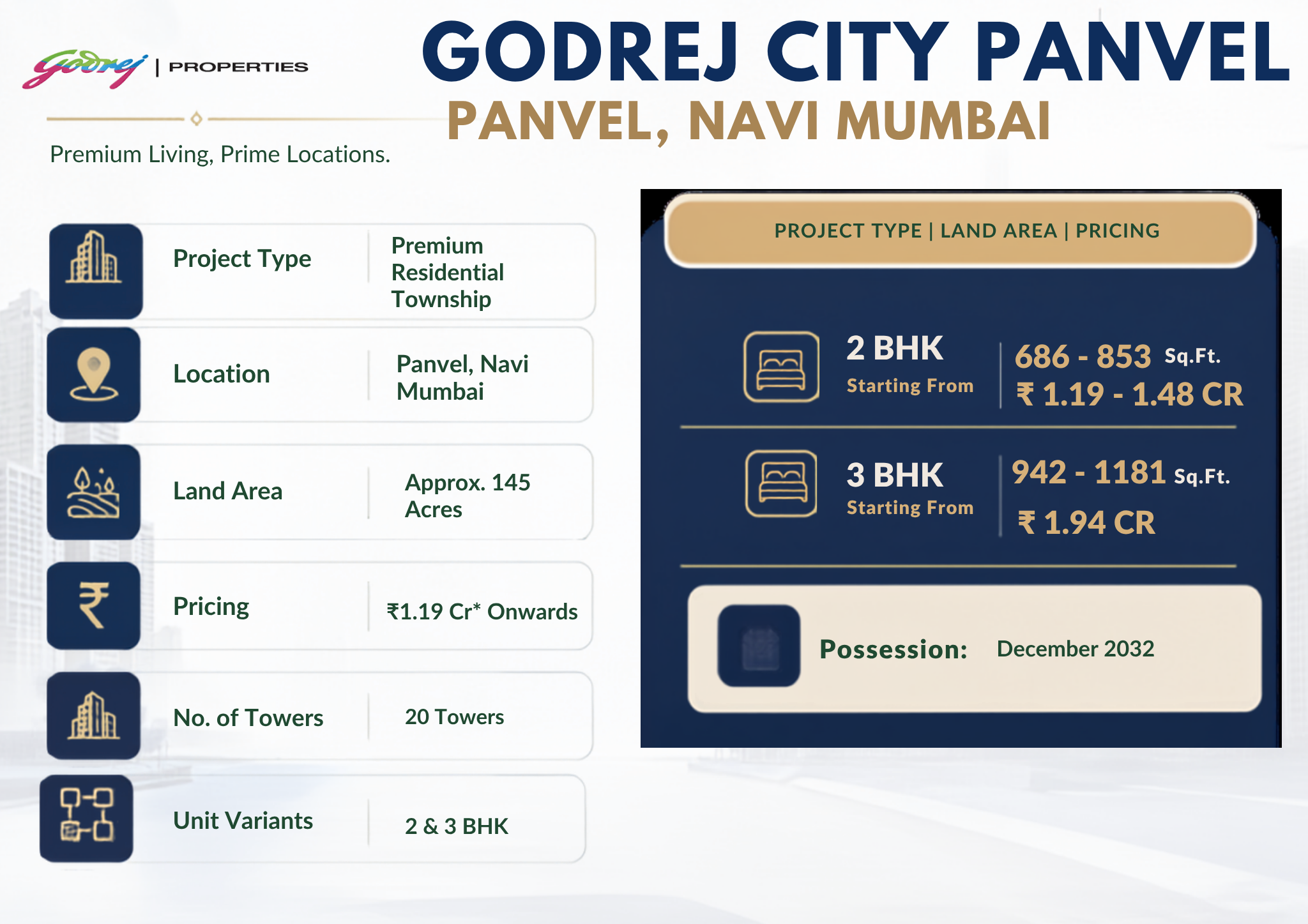
Godrej Properties Limited, the developer behind several large MMR communities, has projects in exactly the belts where the Mumbai rental market 2026 data looks strongest. In Navi Mumbai, Godrej City Panvel sits in the airport-influenced Panvel market, where entry prices start near Rs 79 lakh, so the yield maths works better than in the island city.
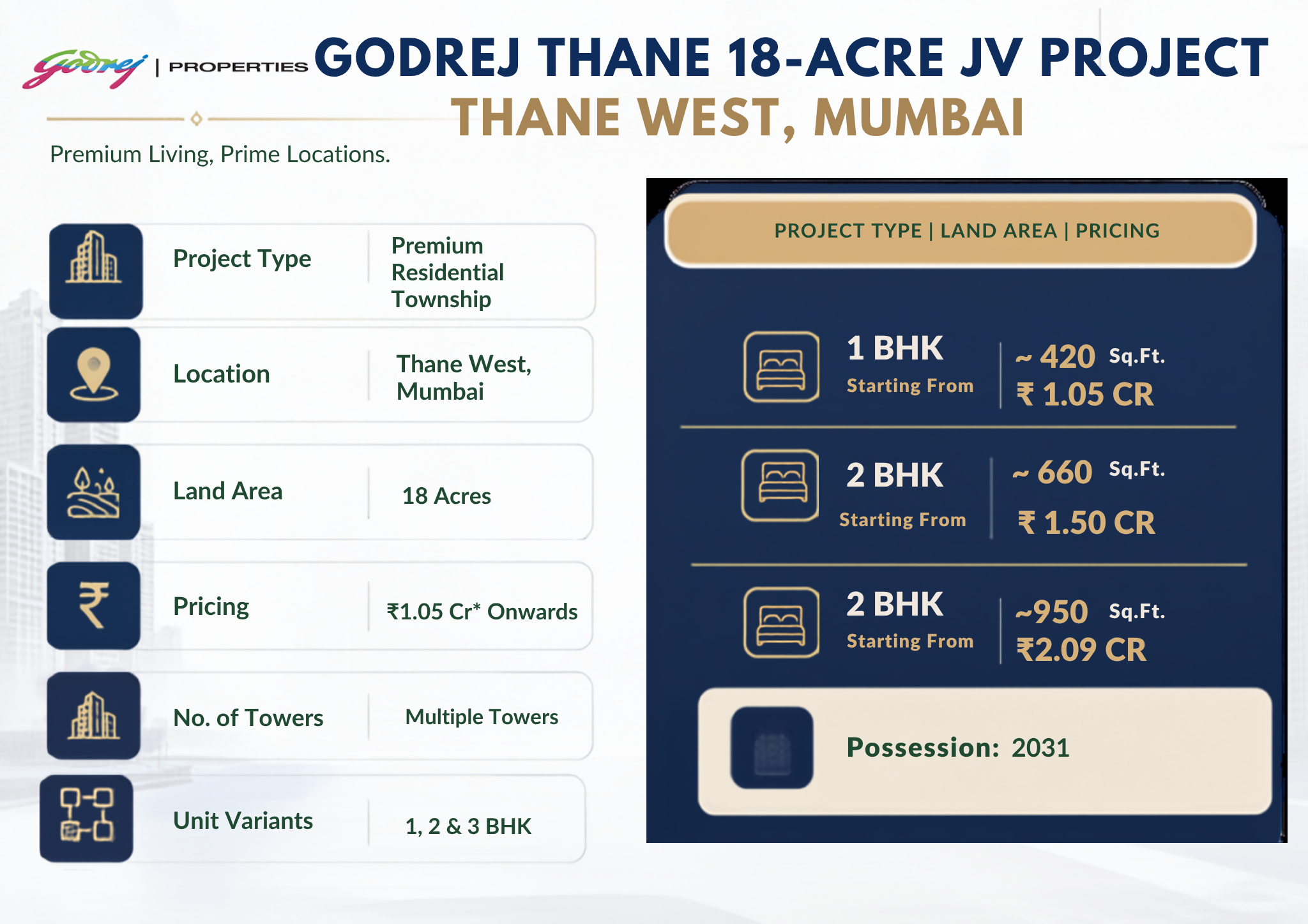
In Thane, Godrej Ascend on Kolshet Road starts near Rs 99 lakh and targets the family tenant base around Thane West’s office corridors. For developer background, see Godrej Properties Limited. We at Godrej Properties MMR track rents, resale prices and possession timelines across these projects so investors can compare like for like.
Frequently Asked Questions
Q: What is the average rental yield in Mumbai in 2026?
Gross yields across Mumbai run roughly 2% to 4% in 2026, with the island city at the bottom and the outer MMR at the top. South Mumbai sits near 2-2.5%, Thane at about 3.5-4.5%, and Navi Mumbai led Magicbricks’ April-June 2026 index at 4.8%. Net yields are usually about 1 percentage point lower.
Q: Which area in MMR gives the highest rental yield?
Navi Mumbai, based on Magicbricks’ April-June 2026 data, at 4.8% gross with 11.1% annual rent growth. Within Navi Mumbai, homes close to a station or the airport corridor, such as Kharghar and Panvel, tend to let fastest. Thane West is the next strongest belt in most 2026 reports.
Q: Are rents in Mumbai still rising in 2026?
Yes. Navi Mumbai rents rose 11.1% year on year in April-June 2026, and broker reports suggest 8-12% annual increases in Andheri, Malad and Thane. Growth is uneven by building and configuration, so compare live listings in the specific project before setting or accepting a rent.
Q: Does the RBI rate hike make renting better than buying?
For monthly cash flow, yes. The 7 October 2026 hike to 5.50% pushed some bank rates above 8%, and a Rs 1 crore loan EMI is now roughly twice the rent on a comparable flat. Buying still makes sense for buyers with a long holding period and a ready down payment.
Q: How is rental income taxed in India?
Rent is taxed as income from house property. You can deduct municipal taxes paid and then claim a flat 30% standard deduction on the net annual value, plus home loan interest within the legal limits. The balance is added to your income and taxed at your slab rate.
Q: Is a 1 BHK or 2 BHK better for rental income?
In most MMR micro-markets, 1 BHK and compact 2 BHK units deliver the best yield because their rent per square foot is higher and the tenant pool is wider. Large 2 BHK and 3 BHK homes rent well only near strong family-tenant demand, such as Thane West or Powai.
Our Verdict
The Mumbai rental market 2026 rewards investors who buy where entry prices are reasonable and jobs are close: Navi Mumbai and Thane lead on yield, while South Mumbai is a capital-growth play rather than an income one. Work out net yield, not gross, and stress-test the purchase at today’s higher loan rates before committing.
If you are comparing rental-ready homes in Panvel, Kharghar or Thane, our team can share current rent comparables and arrange a site visit to the projects that fit your budget.