Quick Answer
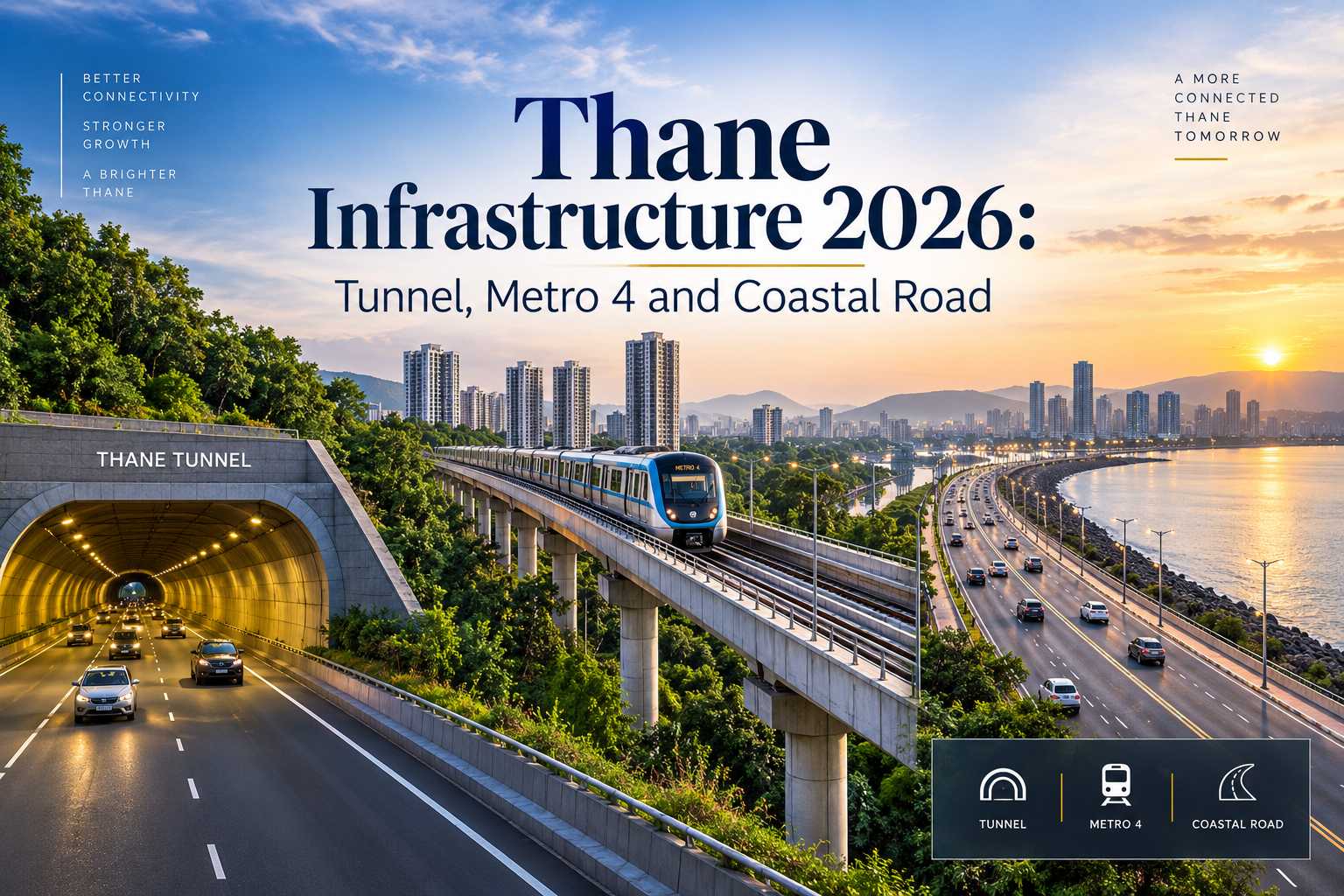
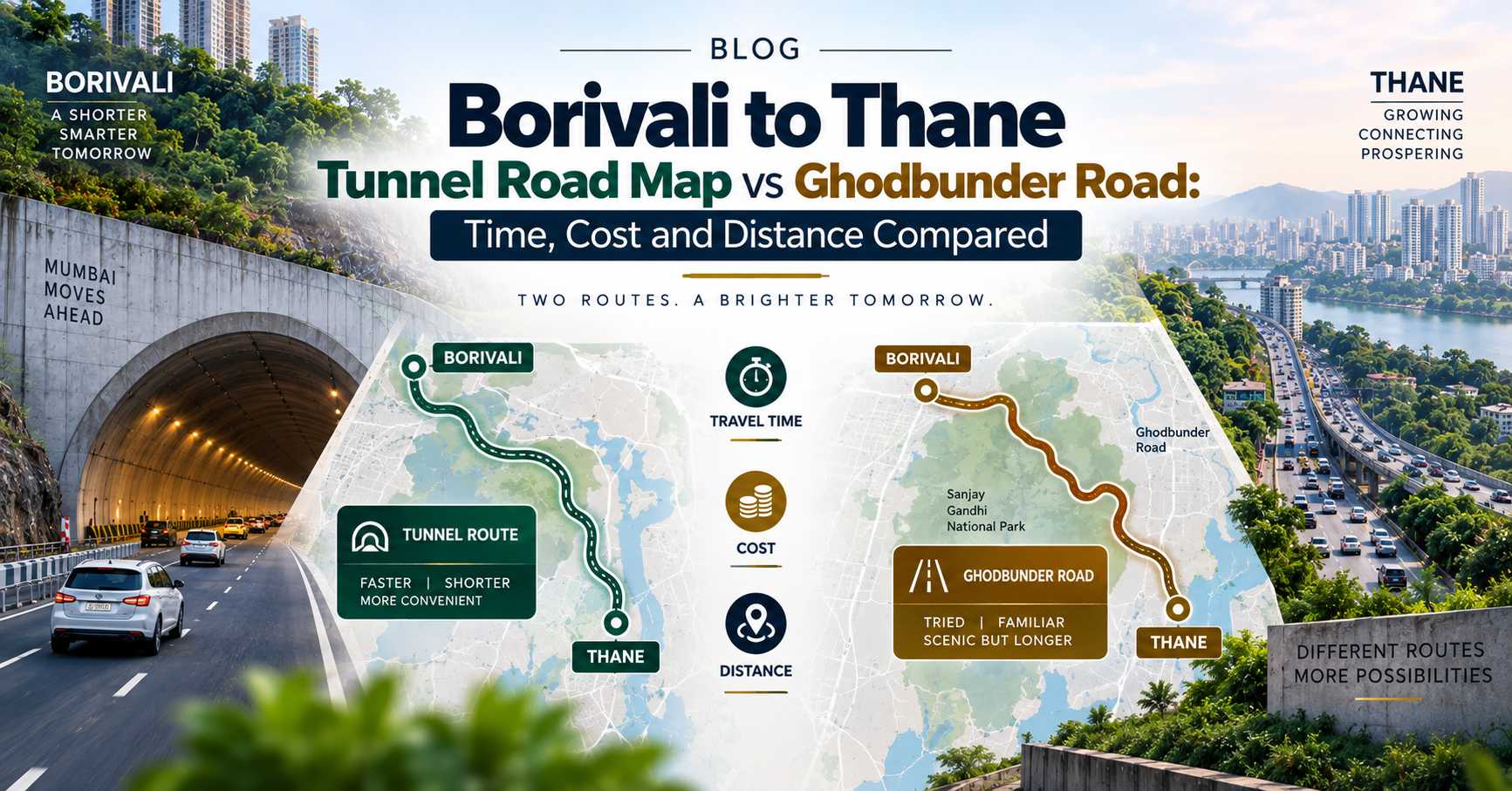
Today the Borivali–Thane drive runs about 23 to 26 km via Ghodbunder Road or the Eastern corridor and takes 60 to 90 minutes. The borivali to thane tunnel road map replaces that detour with an 11.84 km direct link, cutting the trip to roughly 15 to 20 minutes — a saving of about 12 km and up to 70 minutes each way.
Every commuter on this route has their own workaround. Some leave Borivali at 6:40 am to beat the Ghodbunder bottleneck. Some go the long way through Mulund and the Eastern Express Highway. Some have simply given up and taken the Western Line to Dadar, changed to Central, and come back out to Thane — a rail journey that is genuinely faster than driving on many weekday mornings. All three are responses to the same structural problem: Sanjay Gandhi National Park sits directly between the two suburbs, and there is currently no road through it.
The borivali to thane tunnel road map is the first serious attempt to remove that detour rather than optimise around it. With TBM Nayak boring from the Thane end since April 2026 and a mid-2028 target, the comparison between the tunnel route and the existing surface routes has stopped being hypothetical and started being something you can plan a home purchase around.
Our team analysed both options the way a daily commuter would — distance, realistic peak-hour time, fuel burn, and what each implies for where you should actually live. The numbers below are drawn from MMRDA project documentation and 2025–2026 market data, not from promotional material.
Tunnel Route vs Ghodbunder Road: The Direct Comparison
The current Ghodbunder Road route is not a bad road. It is a six-lane arterial that carries traffic from Thane West up to the Ahmedabad highway at Fountain Hotel junction. The problem is geometric, not engineering: to get from Borivali to Thane you have to travel north-east around the park, then come back south-east, adding roughly 12 km of pure detour.
| Factor | Current surface route | Tunnel route (from 2028) | Difference |
|---|---|---|---|
| Distance | 23–26 km | 11.84 km | About 12 km shorter |
| Peak-hour time | 60–90 minutes | 15–20 minutes | Up to 70 minutes saved |
| Off-peak time | 40–50 minutes | 12–15 minutes | Around 30 minutes saved |
| Signals / junctions | Multiple, including Fountain and Kapurbawdi | None between portals | Uninterrupted run |
| Monsoon reliability | Waterlogging at known points | Enclosed, drained carriageway | Materially more predictable |
| Lanes | Shared with local traffic | 3 lanes plus emergency lane per tube | No local traffic mixing |
The line that matters most is the one about junctions. A 12 km saving on distance is worth perhaps 15 minutes at open-road speeds. The remaining 50-odd minutes of saving comes from removing signalised junctions and the merge points where Ghodbunder traffic meets local traffic. That is why the tunnel’s advantage grows rather than shrinks as vehicle numbers rise.
What the Saved Time Is Actually Worth
A 70-minute saving each way is 140 minutes a day for a five-day commuter. Over a working year that is roughly 560 hours — the equivalent of about 70 working days returned to the household. Treat that with the usual caution applied to any time-value calculation, but the order of magnitude is not in dispute.
Fuel arithmetic is simpler and harder to argue with. Twelve kilometres saved each way, ten times a week, is roughly 6,240 km a year of driving that simply stops happening. At typical city efficiency and 2026 pump prices, that is a meaningful annual sum before you count wear, tyres and servicing.
There is a caveat worth stating plainly. MMRDA has not published a toll schedule for the tunnel as of September 2026, and comparable MMRDA-built links in the region operate on a user-fee basis. A toll would offset part of the fuel saving. It would not offset the time saving. [VERIFY: toll schedule not yet announced]
How the Two Routes Change Where You Should Live
This is where the comparison becomes a property decision rather than a traffic one. Right now, a household with one earner working in Borivali or Andheri and another in Thane has no good answer — whichever suburb they pick, one person suffers. The tunnel makes both suburbs viable from either side, and that changes the price logic across the corridor.
Look at what the two ends cost today:
| Micro-market | Average rate (2026) | Recent trend |
|---|---|---|
| Borivali East | Around Rs 32,150 per sq ft | Up 11.2% year on year |
| Kandivali East | Around Rs 30,950 per sq ft | Up 1.61% year on year |
| WEH frontage, Borivali East | Around Rs 28,794 per sq ft | Steady, August 2026 |
| Ghodbunder Road, Thane | Around Rs 15,000 per sq ft | Down 2% over one year, down 13.5% over three |
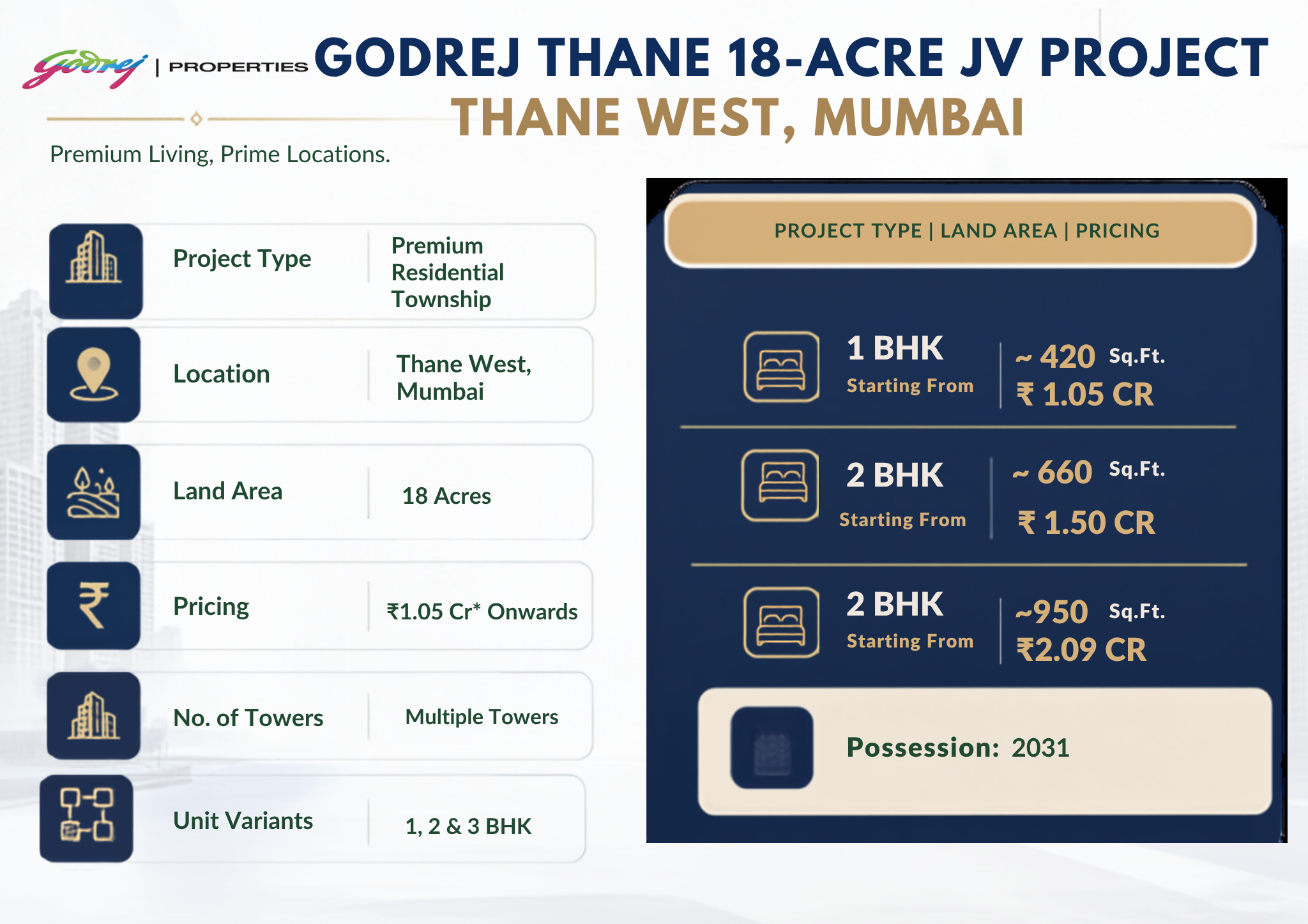
A buyer moving 12 km through a tunnel currently saves roughly half the per-square-foot cost. That gap exists because Ghodbunder Road has been priced as a Thane sub-market with Thane-only access. Once the tunnel opens it becomes a sub-market with direct western-suburb access — and the soft three-year price record makes the entry point unusually forgiving. Projects on that spine, including the 18.5-acre Ghodbunder Road township and the established Kolshet Road address at Godrej Ascend, sit on the Thane side of that arithmetic.
The honest counter-argument
Ghodbunder Road is cheaper partly because of connectivity and partly because of supply. It has a very large pipeline of under-construction inventory. The tunnel fixes the connectivity half of that discount, not the supply half. Expect the gap to narrow, not to close.
A Six-Step Check Before You Commit to Either Side
Whether you end up in Borivali or on Ghodbunder Road, the same due diligence applies. Work through this in order.
- Time your actual commute twice — 8:30 am and 7 pm. Not a map estimate. Drive it. The gap between the app’s number and reality on Ghodbunder Road is routinely 20 minutes.
- Measure straight-line distance to the nearest portal. Magathane on the Borivali side, Tikuji-ni-Wadi on the Thane side. Under 3 km is genuine catchment; beyond that you are buying the story.
- Pull the MahaRERA registration and read the possession date. Match it against the mid-2028 tunnel target. A 2028–2029 possession means you move in as the benefit arrives.
- Ask specifically about construction diversions. Year-long traffic diversions around the work sites were notified from mid-May. Find out whether your access road is on a diversion list.
- Separate the metro story from the tunnel story. Metro Line 4 from Wadala to Kasarvadavali serves a north–south trip. The tunnel serves an east–west one. They are additive, not interchangeable — do not pay twice for the same benefit.
- Stress-test the purchase without the tunnel. If the project only works on the assumption of a 2028 opening, it is too tightly priced. It should stand on its own at today’s connectivity, with the tunnel as upside.
Why This Corridor Sits at the Centre of Godrej’s MMR Map
Godrej Properties Limited, a third-party developer whose MMR projects we track, holds land on both ends of this route — the Kandivali East cluster inside the Borivali portal catchment, and the Ghodbunder Road and Kolshet belt on the Thane side. That is not a coincidence of timing; land aggregation on both flanks of SGNP predates the tunnel’s foundation stone in July 2024.
We at Godrej Properties MMR treat that as useful signal rather than endorsement. When a developer with a long land bank commits capital to both ends of a route that does not yet exist, it tells you something about how the corridor is expected to behave. The developer’s own portfolio detail is at Godrej Properties Limited.
Our verdict on the route comparison: the tunnel does not make Ghodbunder Road obsolete — local traffic will still use it heavily — but it removes the single structural reason Thane’s western spine has traded at half of Borivali’s rate. For a fuller side-by-side of the two destinations, see our Thane vs Borivali post-tunnel comparison.
Frequently Asked Questions
Q: How much shorter is the tunnel route than the current road?
The tunnel project is 11.84 km end to end against roughly 23 to 26 km on existing surface routes, so about 12 km shorter. The bigger saving is time: 15 to 20 minutes against 60 to 90 minutes at peak, because the tunnel has no intermediate junctions.
Q: Will Ghodbunder Road get less congested once the tunnel opens?
Partly. Through-traffic heading to Borivali or the western suburbs will divert into the tunnel, which should ease the Kapurbawdi to Fountain stretch. Local Thane traffic and traffic heading north to Gujarat will continue using Ghodbunder Road as before.
Q: Can two-wheelers use the tunnel?
MMRDA has not published the final vehicle-class policy. Long urban road tunnels in India commonly restrict two-wheelers and slow-moving vehicles for safety reasons, so a restriction is plausible, but nothing has been confirmed for this project. [VERIFY: not sourced]
Q: Is the tunnel route safe in an emergency?
The design uses two separate tubes connected by cross passages every 300 metres, so occupants of one tube can escape into the other. Each tube also carries a dedicated emergency lane alongside its three running lanes, which is not available on the current surface route.
Q: Should I buy in Thane now or wait until the tunnel opens?
Ghodbunder Road rates are down 2% over one year and 13.5% over three, so current pricing reflects little tunnel premium. Buying before completion captures the repricing; buying after means paying for it. The risk is timeline slippage beyond mid-2028.
Q: Does the tunnel replace the need for Metro Line 4?
No. Metro Line 4 runs Wadala to Kasarvadavali, a north–south route serving Thane’s link to central and south Mumbai. The tunnel is an east–west road link to the western suburbs. Different trips, different users, and both matter to Ghodbunder Road values.
Q: What happens to travel times if the tunnel is delayed?
The current route stays as it is. The official target is mid-2028, with physical progress at 8.19% as of 31 August 2025 and TBM Nayak expected to reach Borivali by 2028. Some observers flag a possible slip into 2029 on monsoon and geology.
The Practical Takeaway
On distance the tunnel wins by about 12 km. On time it wins by up to 70 minutes at peak. On price, the side that gains most is the one that is currently cheapest — Ghodbunder Road, where three soft years have left an entry point that does not yet price in a 2028 connection to Borivali.
If you are comparing a specific Thane project against a Borivali one, bring both to us and our team will map each against the published alignment, the RERA possession date and the realistic commute on both routes. Book a site visit and drive the current route with us before you decide.