Quick Answer
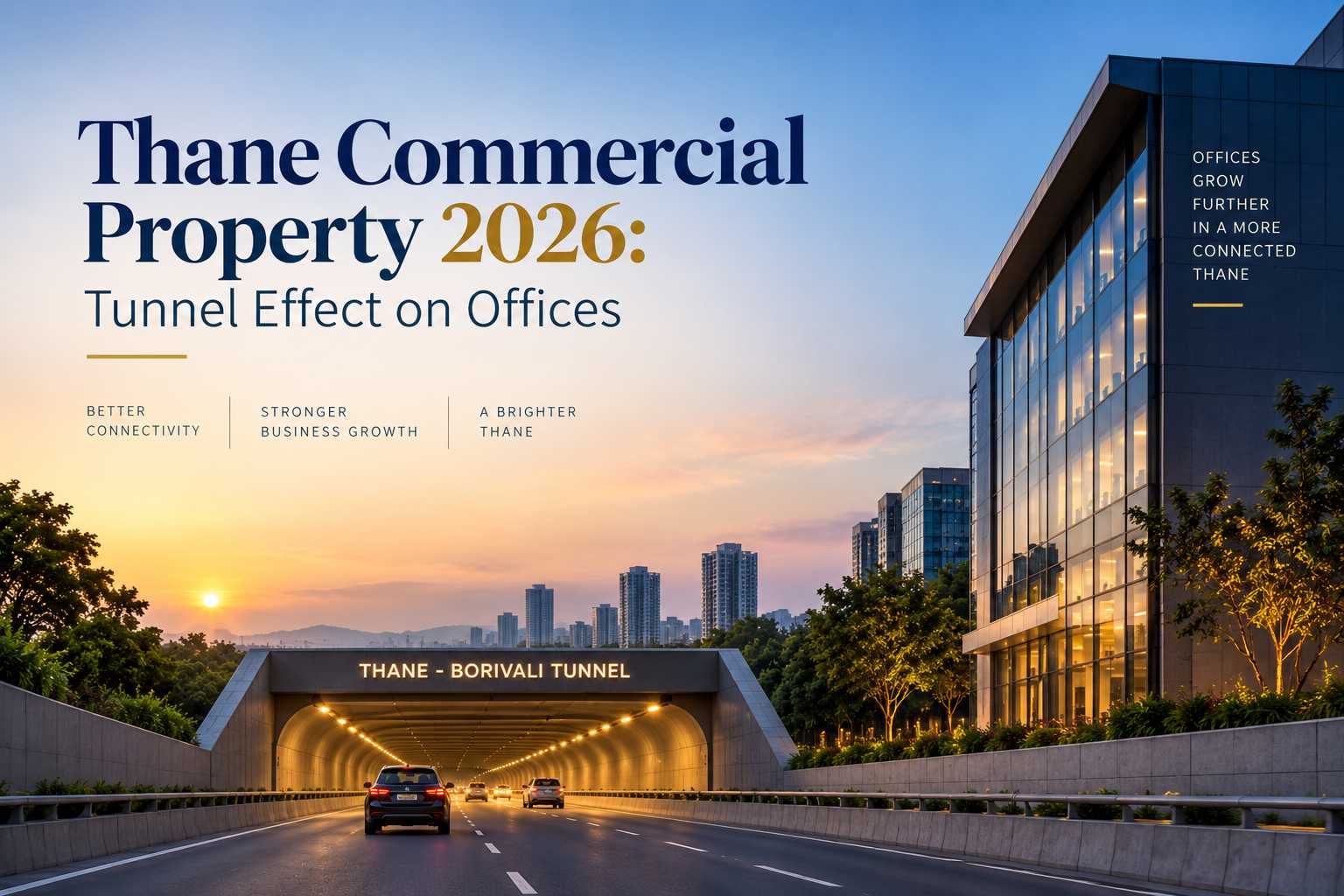
Thane commercial property is expected to gain most from the twin tunnel, with office values around Ghodbunder Road, Wagle Estate and Majiwada projected to appreciate 20 to 25% over five to seven years. The corridor puts the western suburbs roughly 15 minutes away, widening Thane’s hiring catchment for the first time.
Residential coverage of the Thane Borivali twin tunnel has been relentless. The commercial story has been almost ignored, which is odd, because the tunnel’s economics are far more directly a commercial proposition than a residential one. Roads do not create homes; they create labour catchments. And a labour catchment is what Thane’s office market has always been short of.
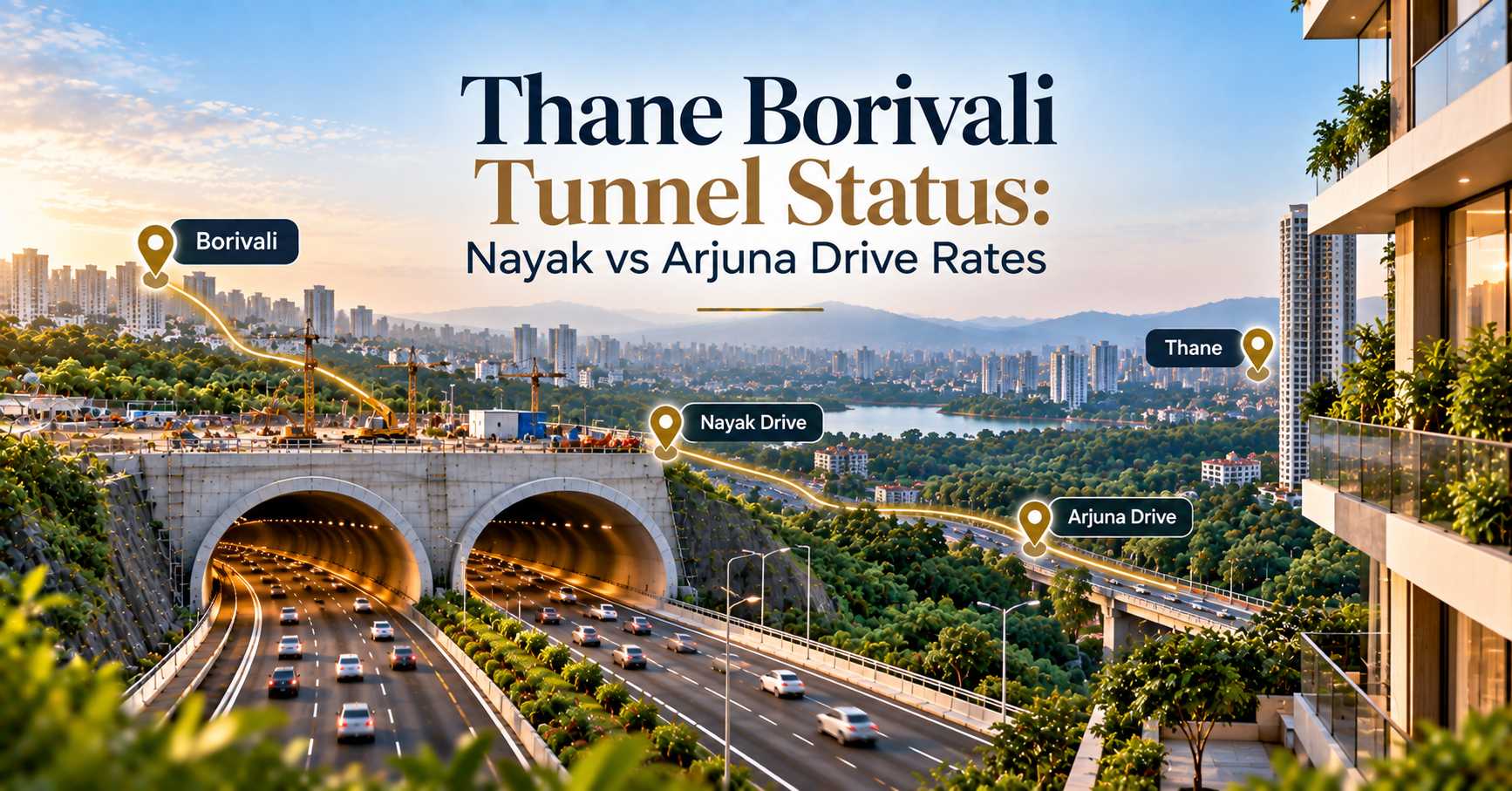
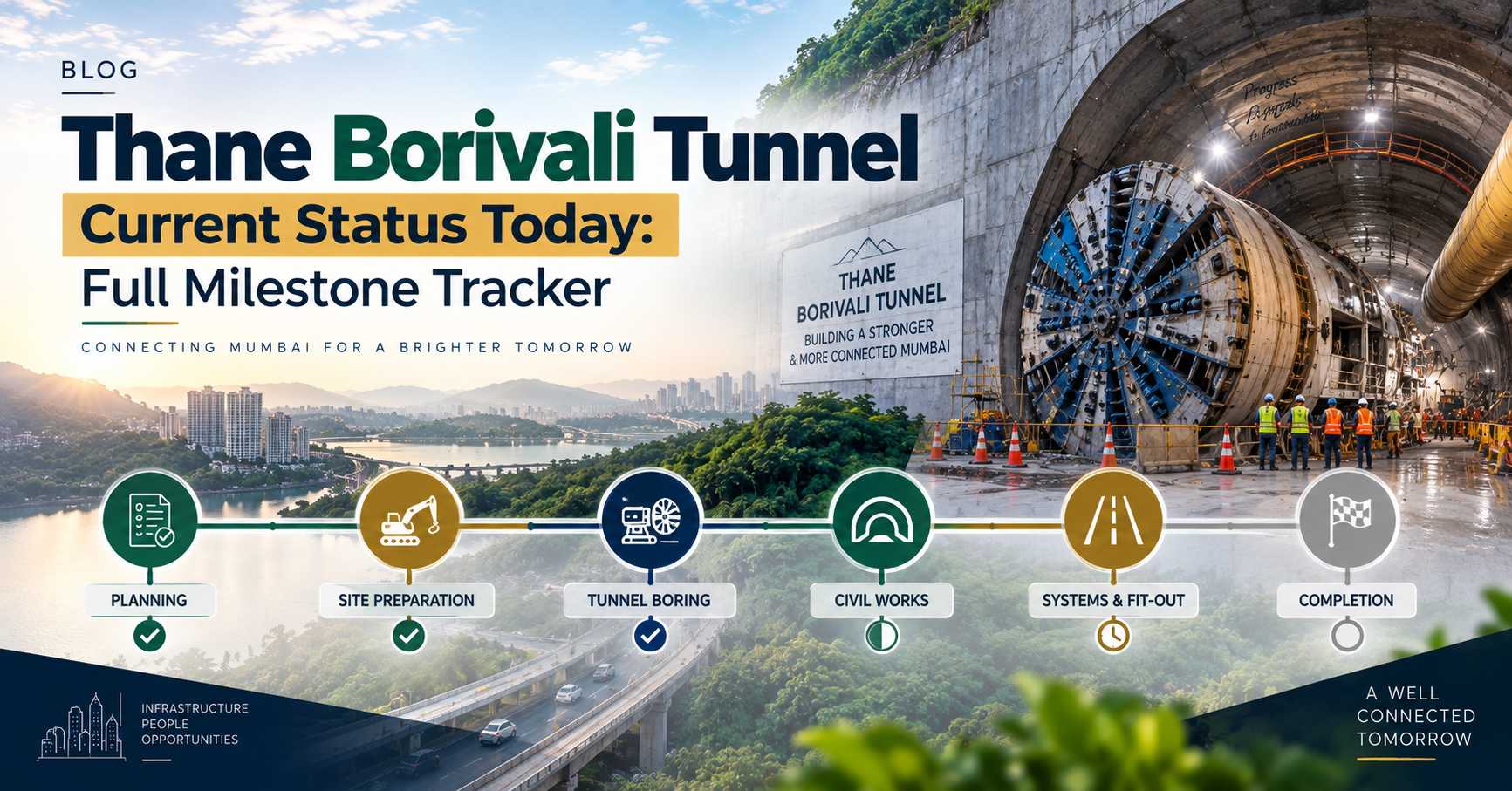
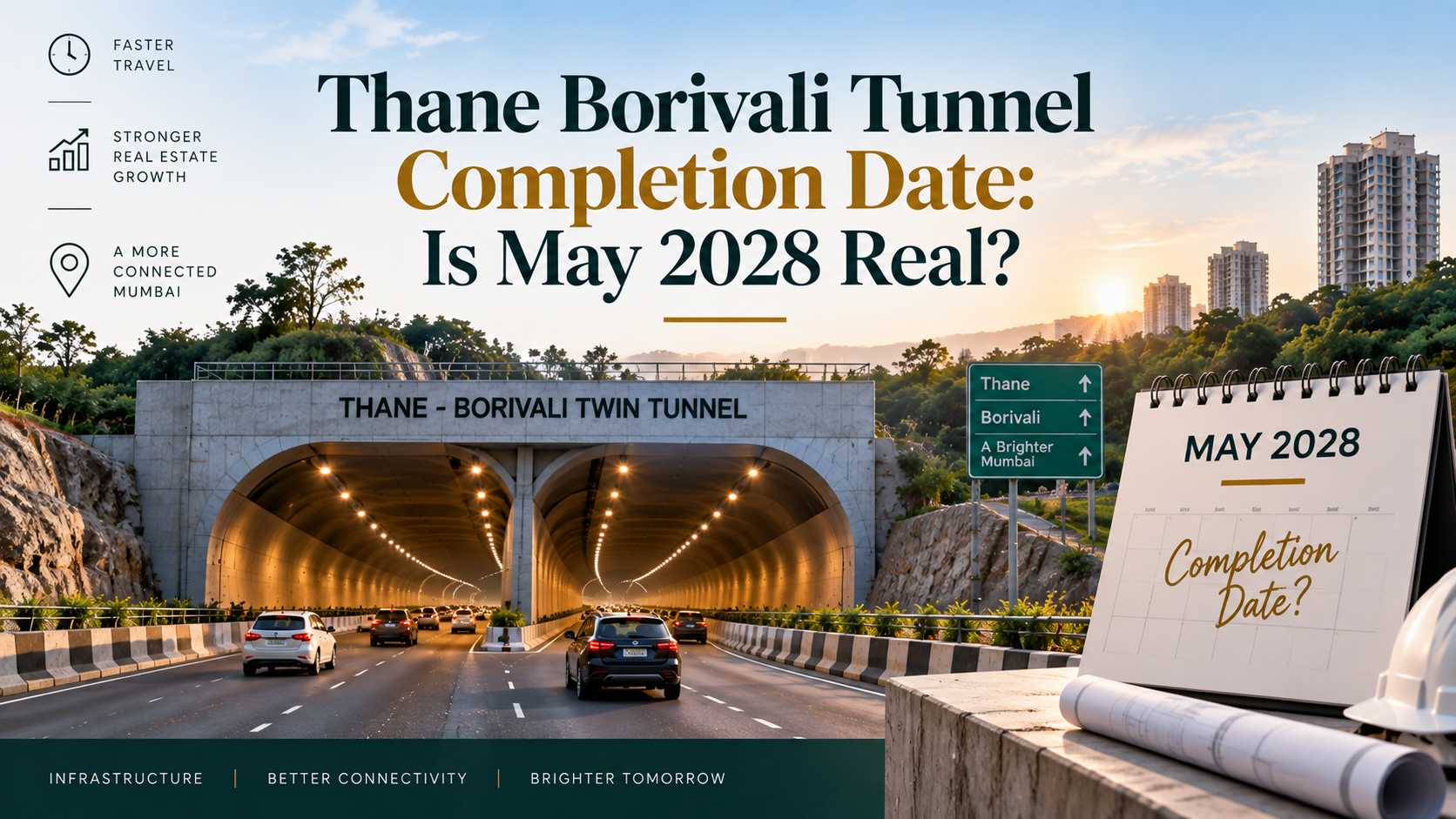
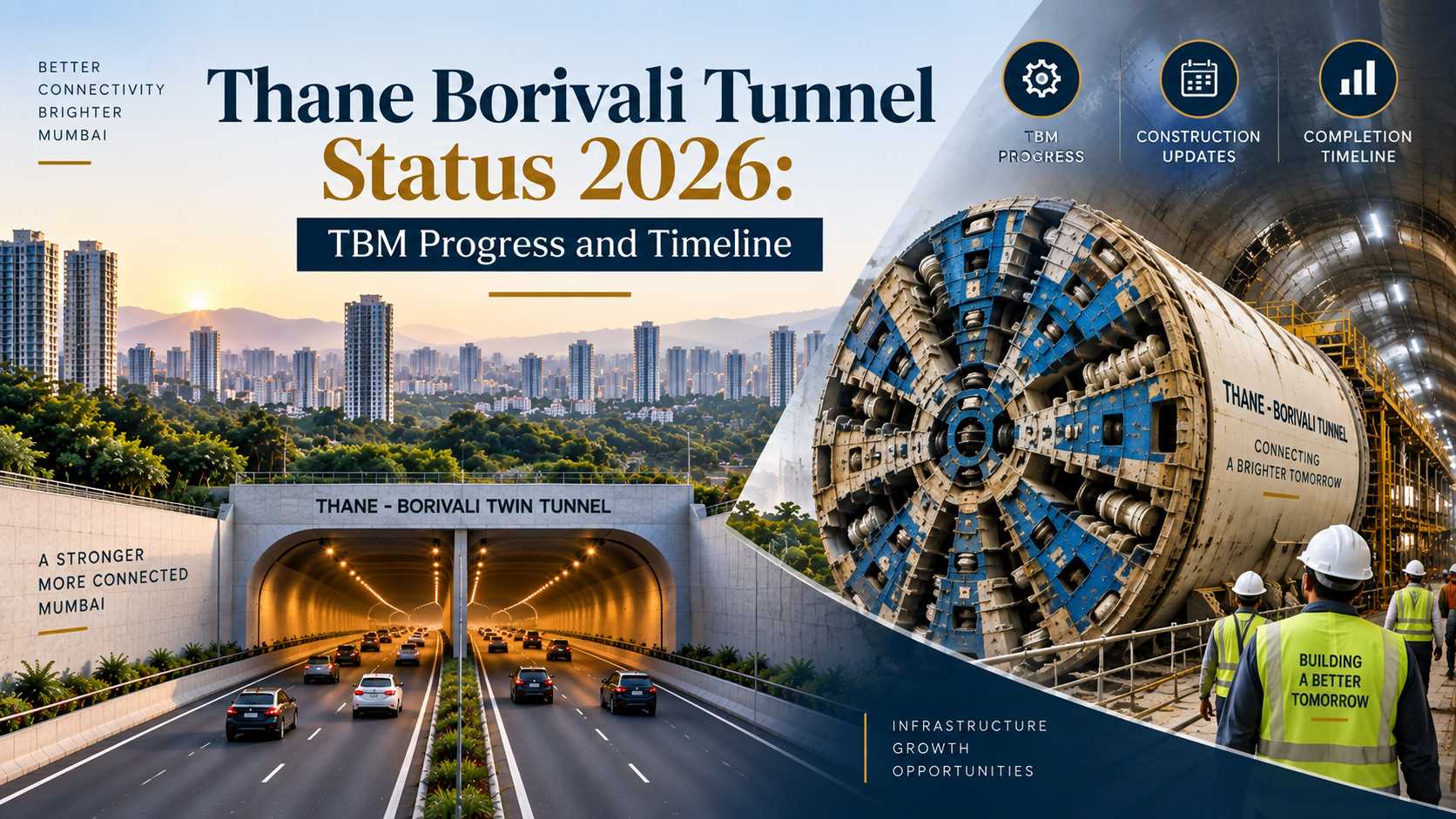
The numbers behind the corridor are substantial: Rs 16,600.40 crore sanctioned by MMRDA, 11.84 km end to end, 10.25 km of twin three-lane tubes bored 20 to 23 metres beneath Sanjay Gandhi National Park, built by Megha Engineering and Infrastructure Limited with four Herrenknecht machines. TBM “Nayak” has been boring since 7 April 2026. Completion is targeted for May 2028.
Our team analysed what that means for Thane commercial property — which sub-markets benefit, what the historical precedent suggests, and how the timeline is likely to play out.
Why Thane Commercial Property Gains More Than Housing
An office building’s value is a function of how many suitable employees can reach it in under an hour. Thane’s constraint has never been space or price — it has been that the western suburbs, where a large share of Mumbai’s white-collar workforce lives, were effectively unreachable. A 60 to 90 minute peak-hour crossing of the national park perimeter rules out a job for most candidates.
Compressing that to roughly 15 minutes changes the hiring maths for every employer on the Thane side. That is a step change in the tenant proposition, and tenant propositions are what office rents are built on.
Residential buyers gain convenience from the tunnel. Commercial landlords gain a larger labour pool, which is the input that actually prices an office lease. That is why the commercial uplift is expected to be the sharper of the two.
The precedent supports it. Across the MMR, metro expansions have historically lifted commercial values in the 15 to 30% range along affected corridors. Market expectations for office space around Ghodbunder Road, Wagle Estate and Majiwada run to 20 to 25% appreciation over a five to seven year window from the tunnel.
Which Thane Sub-Markets Benefit
| Sub-market | Character | Distance to Thane portal | Tunnel effect |
|---|---|---|---|
| Ghodbunder Road corridor | Mixed office, retail, residential | At or near the portal | Strongest, direct access |
| Majiwada | Junction node, retail heavy | 3-5 minutes | Strong, plus EEH access |
| Wagle Estate | Established industrial-to-office conversion belt | 15-20 minutes | Strong on labour catchment, weaker on access |
| Kolshet Road | Emerging mixed use | 10-20 minutes | Moderate to strong |
| Kasarvadavali | Retail and residential led | ~8 km up the arterial | Weak from the tunnel, strong from Metro 4 |
Wagle Estate is the interesting case. It sits further from the portal than Ghodbunder Road but it is Thane’s deepest existing office stock, and its tenants are the ones whose hiring is most constrained today. A location does not need to be adjacent to the portal to benefit from a wider labour pool — it only needs to be somewhere the newly-reachable workforce is willing to commute to.
Which Sectors Move First
Not all commercial demand responds at the same speed. In rough order of how quickly each reacts:
- Co-working and flexible office. Shortest decision cycle, most sensitive to catchment. Operators move ahead of the curve because their own commitment periods are short.
- Retail and F&B. Follows footfall, and footfall follows both residents and office workers. Portal-adjacent retail at Manpada and Majiwada is the obvious beneficiary.
- Corporate back-office and shared services. The core Thane occupier type, and the one most directly constrained by hiring reach today.
- Hospitality. Business hotels gain when a location becomes viable for visitors arriving via the western suburbs and the airport corridor.
- Warehousing and logistics. Gains from the freight-time saving, though the extent depends on the final toll and vehicle-class policy. [VERIFY: not sourced]
The three-phase view
2026-2027 is the investor-positioning phase, when values move on expectation. 2027-2030 is the acceleration phase, as completion nears and occupiers commit. Post-2030 is when Thane can credibly be described as a business district in its own right rather than a satellite of Mumbai’s.
What This Means for Residential Buyers
Most readers of this site are buying homes, not offices, so the relevant question is what a stronger Thane commercial market does to residential values. Three effects:
- Local employment deepens. A home near a growing office cluster commands a rental premium from people who want to walk or drive five minutes to work. This is the most reliable of the three effects.
- The tenant pool widens twice. Once because western-suburb workers can now live in Thane, and again because Thane employers can now hire from the western suburbs. Both directions add rental demand.
- Retail and social infrastructure improve. Office density brings restaurants, gyms, clinics and childcare, which is what actually makes a locality liveable rather than merely affordable.
Thane’s residential yields already run 5 to 6% gross against 3 to 3.5% in Borivali. A deeper local employment base is exactly the condition under which that spread holds rather than compressing. For the residential picture in detail, see our note on how the twin tunnel changes Ghodbunder Road prices.
The Honest Caveats
Three things could blunt the commercial thesis, and none of them get mentioned in the promotional coverage.
First, the tunnel has no intermediate exits and lands on Ghodbunder Road, an arterial that is already saturated. A commercial cluster that pushes more vehicles onto it at 9.30 am may find that the last two kilometres of the journey eat a meaningful share of the fifteen minutes saved.
Second, tolling policy is unpublished. A daily commuter charge changes the calculus for staff more than it does for freight, and a high one could slow the labour-catchment effect that the whole thesis rests on.
Third, Mumbai’s office market is not supply-constrained. BKC, Powai, Andheri and Navi Mumbai all compete for the same occupiers. Thane’s advantage is cost, and the tunnel improves its access — but it does not make Thane the only sensible choice for anyone.
Thane in the Godrej Portfolio
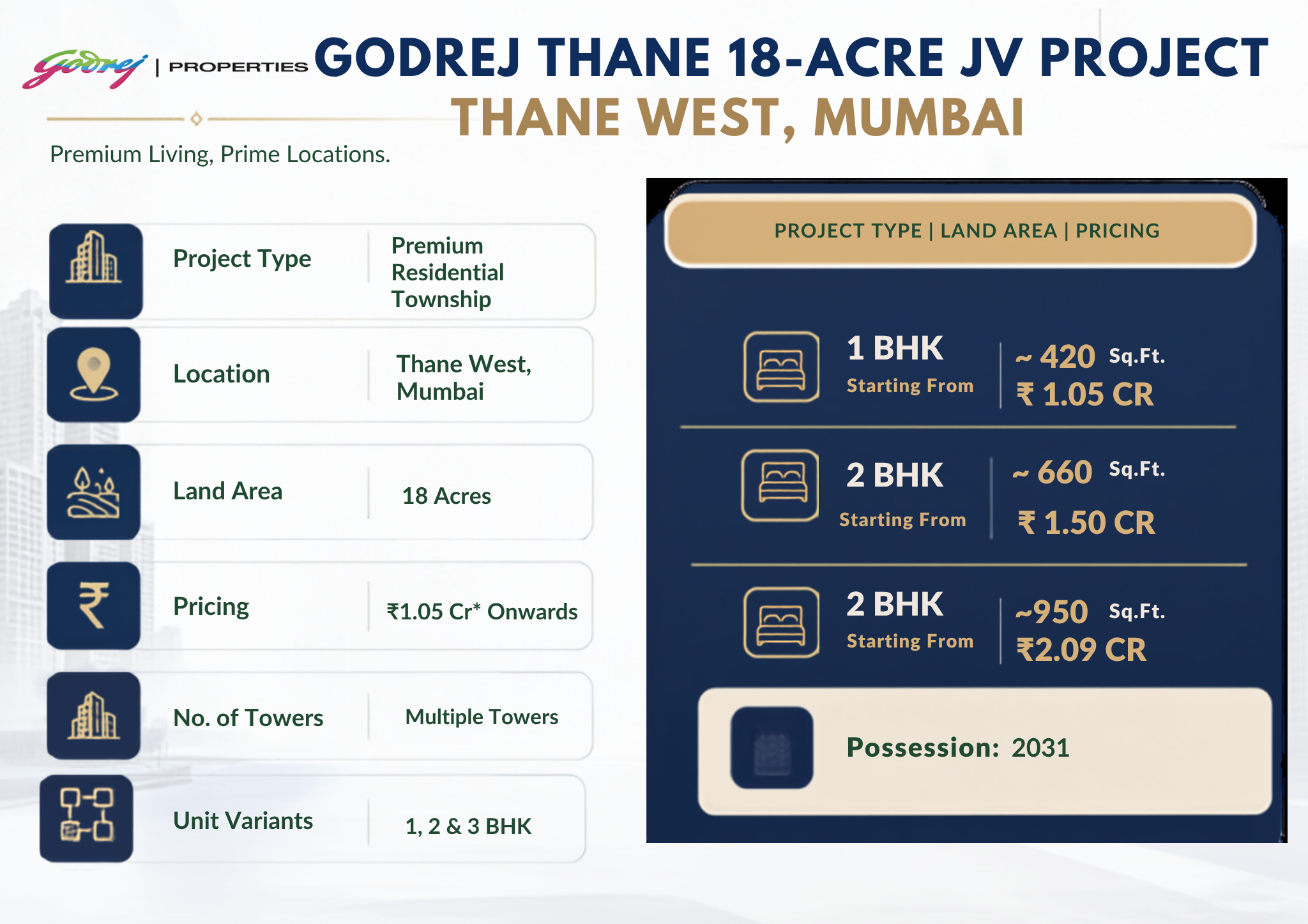
Godrej Properties Limited, the third-party developer whose Mumbai Metropolitan Region portfolio we cover, has read the mixed-use logic directly. Its 18.5-acre township at Manpada on Ghodbunder Road allocates roughly 14 acres to residential and about 4 acres to retail and commercial — a deliberate structure for a location that sits at the tunnel portal and expects footfall to rise.
For buyers who want proximity to the Wagle Estate and Thane station employment side rather than the Ghodbunder side, Godrej Ascend on Kolshet Road from Rs 99 lakh is the better-positioned asset. Godrej Properties Limited publishes its project disclosures at godrejproperties.com.
Frequently Asked Questions
Q: How much will Thane commercial property appreciate because of the tunnel?
Market expectations point to 20 to 25% appreciation for office space around Ghodbunder Road, Wagle Estate and Majiwada over a five to seven year window. The precedent from MMR metro expansions is a 15 to 30% lift along affected corridors.
Q: Which Thane commercial sub-market benefits most?
Ghodbunder Road and Majiwada gain most on access, being at or within five minutes of the portal. Wagle Estate gains most on labour catchment because it holds Thane’s deepest existing office stock and its occupiers are the most hiring-constrained.
Q: When will the commercial effect show up in rents?
Values typically move on expectation first and rents on occupancy later. Expect positioning through 2026-2027, acceleration as completion nears from 2027 to 2030, and the fullest rental effect after the corridor is actually operating.
Q: Does the tunnel make Thane a genuine business district?
It removes the binding constraint, which is hiring reach. Whether Thane converts that into a business district depends on supply quality, Ghodbunder Road’s own congestion and competition from Powai, Andheri and Navi Mumbai for the same occupiers.
Q: Will warehousing and logistics benefit?
In principle yes, through freight-time savings on the Thane-to-western-suburbs leg. The magnitude depends on the final toll and vehicle-class policy, which MMRDA has not published.
Q: Should a residential buyer care about the commercial story?
Yes. Local office growth deepens the tenant pool and lifts rental demand, which is what sustains Thane’s 5-6% gross yields against 3-3.5% in Borivali. It also brings the retail and social infrastructure that makes a locality liveable.
Q: What is the biggest risk to the commercial thesis?
Ghodbunder Road’s existing congestion. The tunnel solves the east-west crossing but delivers traffic onto a saturated arterial. If the last two kilometres stay slow, part of the fifteen-minute saving is lost at the Thane end.
Our Verdict
The commercial case for the Thane Borivali tunnel is stronger than the residential one, because it changes an input that actually prices office space — the size of the reachable workforce. Ghodbunder Road, Majiwada and Wagle Estate are the sub-markets to watch, and the 20 to 25% five-to-seven-year expectation looks reasonable rather than promotional.
For homebuyers, the practical takeaway is simpler: a deeper local job market is what turns a commuter suburb into a place people choose to live. Buy within reach of both the portal and the employment clusters, and you own the two things that will still matter in 2035. Read our Thane West living guide, then book a site visit with our team.