
Quick Answer
Yes, if you are an end-user buying to live in with a five-year-plus horizon. The repo rate has been steady at 5.25% since April 2026, unsold Rs 2-5 crore inventory rose 43% giving buyers real negotiating power, and prices are growing a manageable 4-7%. Short-horizon speculators should wait.
Whether it is a good time to buy property in Mumbai in 2026 depends almost entirely on which question you are actually asking. If the question is “will prices be lower in twelve months”, the honest answer is probably not, but they will not be dramatically higher either. If the question is “can I negotiate a better deal today than I could have in early 2025”, the answer is yes, and by a clearer margin than most buyers realise.
The market context is unusual. Mumbai city registered 80,221 property transactions in the first half of 2026 — a 13-year high, up 6% year-on-year — generating Rs 6,968 crore in stamp duty. August alone delivered an estimated 12,503 registrations. Volume like that normally comes with pricing power for sellers. It has not. MMR capital values are growing just 4-7% annualised, because supply in the segments most people are buying has run ahead of demand.
That combination — heavy transaction volume, weak price growth, rising inventory — is historically one of the better environments for an end-user with a long horizon, and one of the worse ones for a buyer hoping to flip in eighteen months. Our team has been saying exactly that on client calls all year.
The Four Conditions That Make 2026 Favourable to Buy Property in Mumbai
Four things line up in the buyer’s favour right now, and it is worth being precise about each.
Rates have stopped moving. The RBI cut the repo rate by a cumulative 125 basis points through 2025 and has held it at 5.25% since April 2026. Mumbai home loans currently price between roughly 7.10% and 8.6% depending on profile and lender. The value here is not cheap money — it is predictability. A borrower signing a 20-year commitment can model an EMI without guessing where the reset lands.
Inventory has swung toward the buyer in the mid-premium band. Unsold stock in the Rs 2-5 crore category rose 43% to 65,671 units in H1 2026. If your budget sits in that range, you are shopping in the single most oversupplied segment of the Indian residential market. That is leverage.
Infrastructure risk has largely converted into infrastructure fact. The Navi Mumbai International Airport went commercial on 25 December 2025. The Atal Setu is carrying traffic, cutting the Sewri-Nhava Sheva run from over an hour to 20-25 minutes. Metro Lines 2A, 7 and 9 are operational. You are no longer paying a premium for a promise.
Price growth is moderate enough to give you time. At 4-7% a year, a six-month delay to do proper diligence costs you 2-3.5% — meaningful, but not catastrophic. In a 20%-a-year market, careful buyers get priced out while they are being careful.
What It Actually Costs: EMI and Income Reality Check
Before the strategy, the arithmetic. This table assumes an 80% loan at 8.5% over 20 years, a 20% down payment, and 7.5% in stamp duty, registration, GST and legal costs on top. The income column assumes your EMI should not exceed half your net monthly take-home.
| Property Price | Down Payment | Loan Amount | EMI (20 yr @ 8.5%) | Net Monthly Income Needed | Cash Needed Upfront |
|---|---|---|---|---|---|
| Rs 1.00 crore | Rs 20 lakh | Rs 80 lakh | Rs 69,400 | Rs 1.40 lakh | Rs 27.5 lakh |
| Rs 1.40 crore | Rs 28 lakh | Rs 1.12 crore | Rs 97,200 | Rs 1.95 lakh | Rs 38.5 lakh |
| Rs 2.00 crore | Rs 40 lakh | Rs 1.60 crore | Rs 1,38,900 | Rs 2.80 lakh | Rs 55.0 lakh |
| Rs 3.40 crore | Rs 68 lakh | Rs 2.72 crore | Rs 2,36,100 | Rs 4.75 lakh | Rs 93.5 lakh |
The column most buyers underestimate is the last one. A Rs 2 crore flat is a Rs 55 lakh cash decision before you have bought a single light fixture. Stamp duty in Mumbai is 6% for men and 5% for women buyers, registration is capped at Rs 30,000, and under-construction purchases attract GST on top.
Should You Buy Now or Wait? By Buyer Type
There is no universal verdict, so here is ours broken down by who is asking.
| Buyer Type | Horizon | Our Verdict | Reasoning |
|---|---|---|---|
| First-time end-user | 7+ years | Buy | Stable rates, negotiating leverage, rent saved compounds |
| Upgrader (2 BHK to 3 BHK) | 5+ years | Buy | You sell and buy in the same market; the Rs 2-5 cr discount favours you |
| Yield investor | 5+ years | Selective buy | Only Thane, Navi Mumbai or periphery at 4-6% gross; suburbs at 3% do not clear the hurdle |
| Capital-growth investor | 7+ years | Selective buy | Transit corridors and premium South Mumbai only; avoid oversupplied mid-premium |
| Short-horizon speculator | Under 3 years | Wait | 4-7% growth cannot absorb 7-8% transaction costs |
| Buyer stretched past 50% EMI-to-income | Any | Wait | Build the corpus first; the market is not running away at 5% |
Our verdict, stated plainly: in a market growing 4-7% with 7-8% round-trip transaction costs, the break-even hold period is roughly four to five years. If you cannot commit to that, renting is the cheaper decision and there is no shame in it.
What Could Go Wrong
We would be doing you a disservice by presenting only the constructive case. These are the risks we flag on every call.
- Possession slippage. Many currently-selling MMR towers quote handover in 2029-30. Check the MahaRERA-registered completion date and the quarterly progress report, not the brochure timeline.
- Buying into a corridor that has not opened. Dombivli fell 4.95% and Bhiwandi 1.54% over the past year. Both were sold on connectivity that is still under construction.
- Yield compression in airport belts. Panvel and Ulwe capital values moved faster than rents. A unit yielding 5% in 2024 may yield 4% now purely because the denominator rose.
- Ready reckoner revisions. Annual RR increases raise stamp duty even when your negotiated price does not move, which is why registrations spike every March.
- Over-leverage on a floating rate. The repo rate is flat now. A 100 basis point rise would add roughly Rs 10,000 a month to a Rs 1.6 crore loan. Stress-test your EMI at 9.5%, not 8.5%.
A 7-Step Buying Sequence for 2026
This is the order our team recommends. Doing these out of sequence is how buyers end up emotionally committed to a flat they cannot comfortably afford.
- Calculate your all-in number first. Property price plus 7.5% transaction costs plus 4-6% interiors. Work backwards from that, not from the ticket price.
- Get pre-approved by two lenders. Sanction letters establish your real ceiling and give you a visible negotiating clock.
- Stress-test the EMI at 9.5%. If it breaks your budget at that rate, reduce the ticket size.
- Choose the micro-market before the project. Decide whether you need liquidity, yield or appreciation, then shortlist two localities.
- Verify on MahaRERA. Registration number, quarterly progress report, declared completion date, and the developer’s last three deliveries against their original commitments.
- Visit twice, once on a weekday morning. Commute reality, water pressure and construction noise do not surface on a Sunday tour.
- Negotiate price before perks. In the Rs 2-5 crore band, a 4-6% price reduction is realistic in 2026. A construction-linked payment plan beats a subvention scheme in almost every case.
If this is your first purchase in Maharashtra, our first-time buyer guide to RERA, home loans and registration walks through the paperwork end to end, and our 1 BHK vs 2 BHK vs 3 BHK guide covers configuration choice.
What This Means Across the Godrej MMR Range
Godrej Properties Limited is a third-party developer, and its MMR inventory happens to map neatly onto the budget bands in the EMI table above — which makes it a useful way to make the numbers concrete.
At the Rs 1 crore level, Godrej Ascend on Kolshet Road, Thane opens around Rs 99 lakh, in a micro-market with 4-5% gross yields and Metro Line 5 arriving. Around Rs 1.2-1.4 crore, Godrej Nest in Kandivali East offers ready-to-move stock with no delivery risk and no GST. At Rs 2.35 crore and above, Godrej Reserve sits in the Rs 2-5 crore band where buyer leverage is currently highest. Beyond that, Godrej Trilogy at Worli from about Rs 13.88 crore and Godrej Bandra Reclamation from about Rs 19.5 crore serve a buyer for whom EMI arithmetic is not the binding constraint. Corporate disclosures are at Godrej Properties Limited.
Frequently Asked Questions
Q: Will property prices in Mumbai drop in 2026 or 2027?
A broad decline is unlikely. Registrations are at a 13-year high and MMR capital values are growing 4-7%. Specific segments can soften — the Rs 2-5 crore band added 43% more unsold units in six months, which is where genuine price negotiation exists today.
Q: Is it better to rent or buy in Mumbai right now?
Gross rental yields of 2-3.5% in the suburbs mean renting is cheaper than owning on a pure cash-flow basis for the first several years. Buying wins once you cross roughly a five-year hold, where appreciation and principal repayment outweigh the 7-8% transaction cost.
Q: How much home loan can I get in Mumbai in 2026?
Most lenders sanction up to 80% of property value, capped by your income. As a rule of thumb, total EMI obligations should stay under 50% of net monthly income. On a Rs 1.4 lakh monthly income that supports roughly an Rs 80 lakh loan at current rates.
Q: Should I wait for interest rates to fall further?
Probably not. The RBI has already cut 125 basis points through 2025 and has held at 5.25% since April 2026. Waiting for another cut risks paying 4-7% more for the same property, which outweighs the EMI saving on a typical loan.
Q: Is under-construction or ready-to-move the better buy in 2026?
Ready-to-move, for most buyers. It removes delivery risk and GST, and with 43% more unsold premium inventory the traditional under-construction discount has narrowed considerably. Under-construction works at genuine pre-launch pricing from a developer with a verifiable handover record.
Q: What is the total cost of buying a flat in Mumbai beyond the price?
Budget 7-8% of agreement value. Stamp duty is 6% in Mumbai and 5% for women buyers, registration is capped at Rs 30,000, GST applies to under-construction units, and legal verification plus society transfer charges add more. Interiors typically add another 4-6%.
Q: Is 2026 a good time to buy in Navi Mumbai specifically?
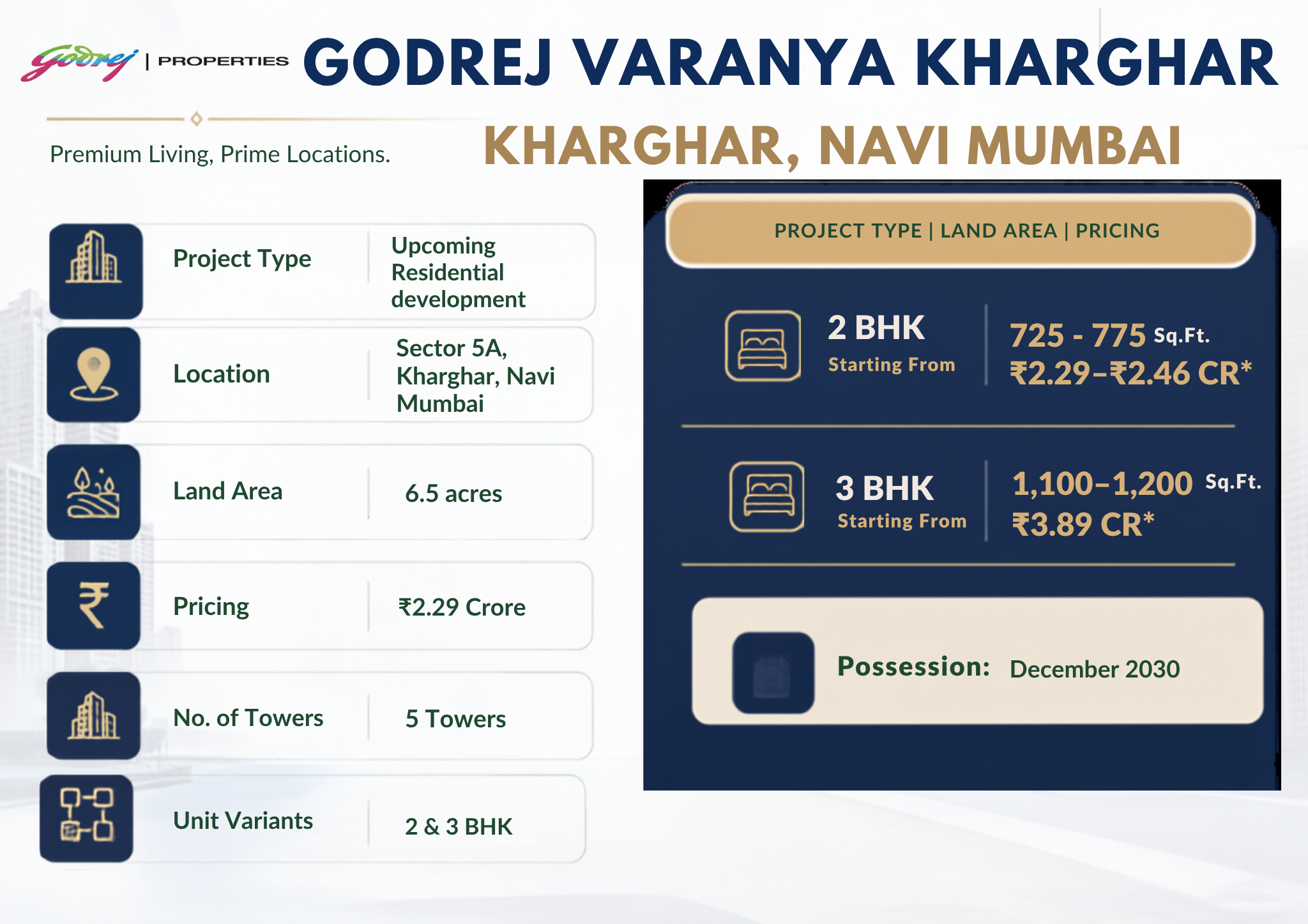
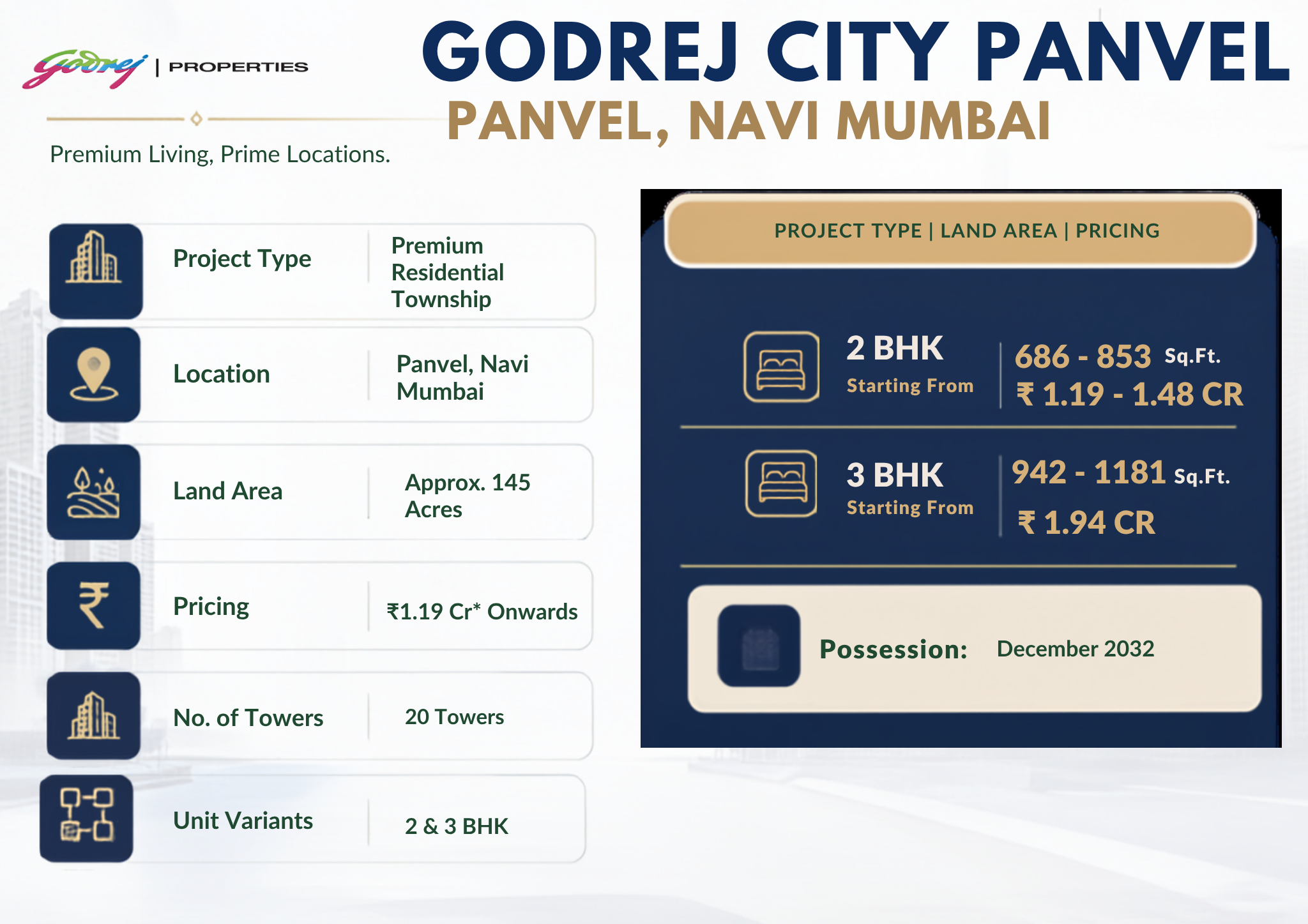
For end-users, yes — Kharghar and Panvel offer entry at Rs 11,000-18,000 and Rs 13,350-15,000 per sq ft with the airport now operational. For investors chasing the airport trade, much of the repricing is done: Panvel values already rose about 74% between FY21 and FY25.
Our Verdict
Is it a good time to buy property in Mumbai in 2026? For an end-user with a five-year horizon and an EMI that fits comfortably inside half their income, yes — this is a better buying window than 2023 or 2024 offered, mostly because oversupply in the mid-premium band has handed negotiating power back to purchasers for the first time in years. For anyone hoping to buy and exit inside three years, the arithmetic simply does not work at 4-7% growth.
The decision that matters is not when, it is what and where. Fix your all-in budget, stress-test the EMI, verify the RERA timeline, and buy in a corridor where the infrastructure is already carrying traffic. Our team can walk you through current pricing and availability across the Godrej MMR portfolio or arrange site visits in the localities that match your budget.