Quick Answer
In the Thane vs Borivali decision after the twin tunnel, Thane wins on entry price (about Rs 14,950 per sq ft against Rs 29,350-32,150 in Borivali East) and on yield (5-6% against 3-3.5%). Borivali wins on address, resale liquidity and existing infrastructure. Once the corridor opens, the 15-minute gap between them makes Thane the better risk-adjusted buy.
The Thane vs Borivali question used to answer itself. They were 60 to 90 minutes apart in peak traffic, on opposite sides of a national park, in different municipal corporations, with different price bands and different buyer profiles. Nobody seriously cross-shopped them.
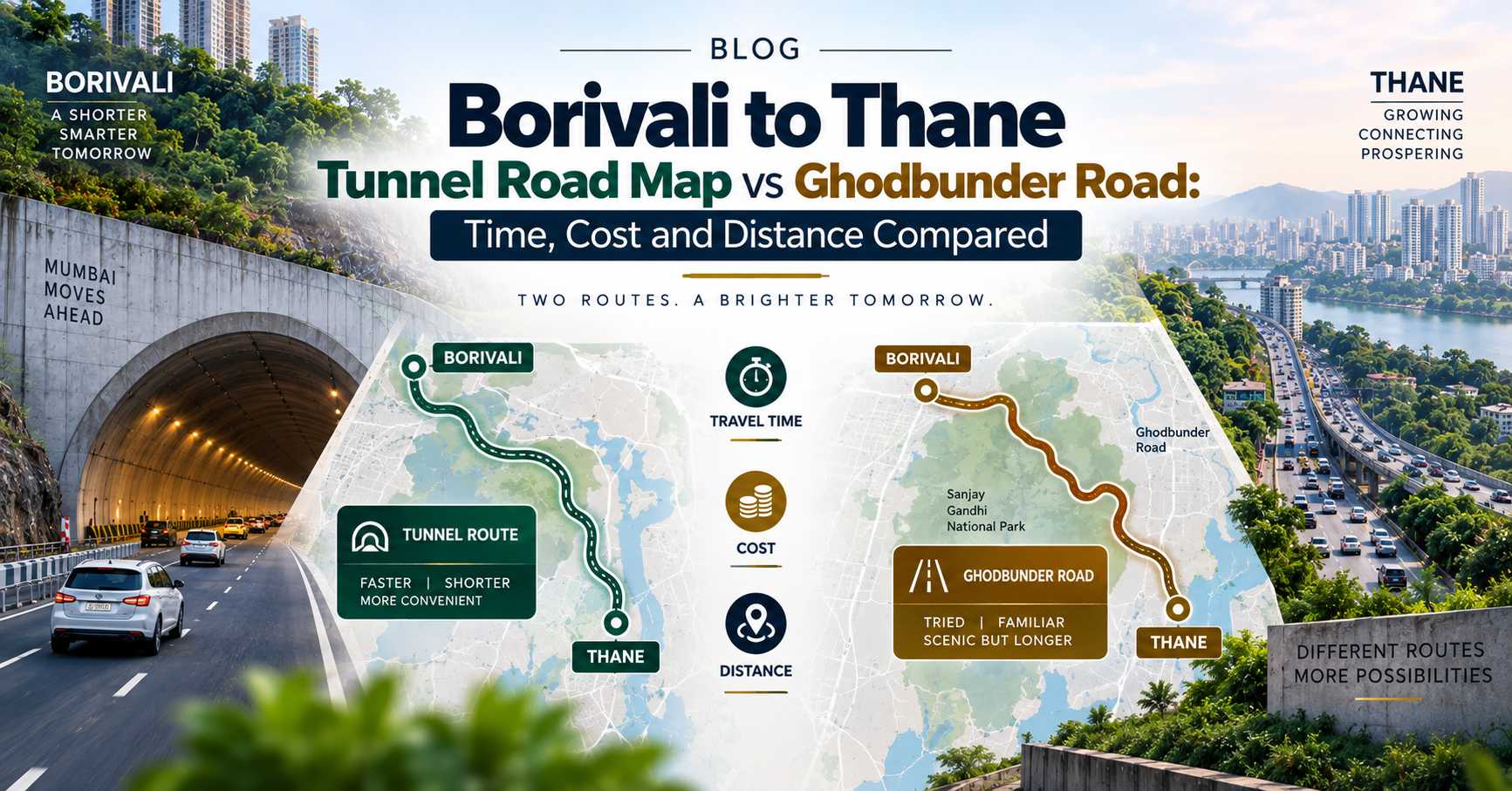
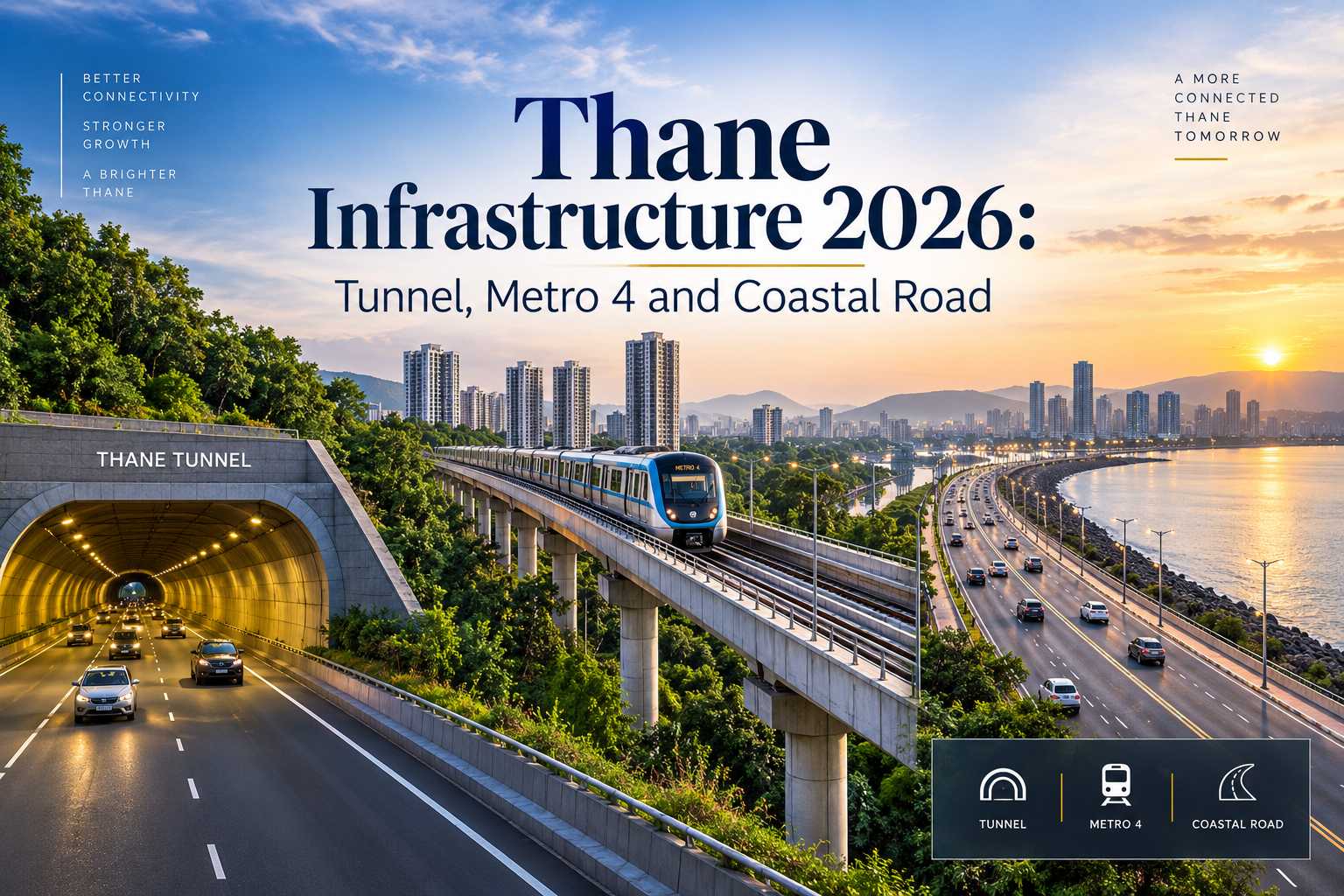
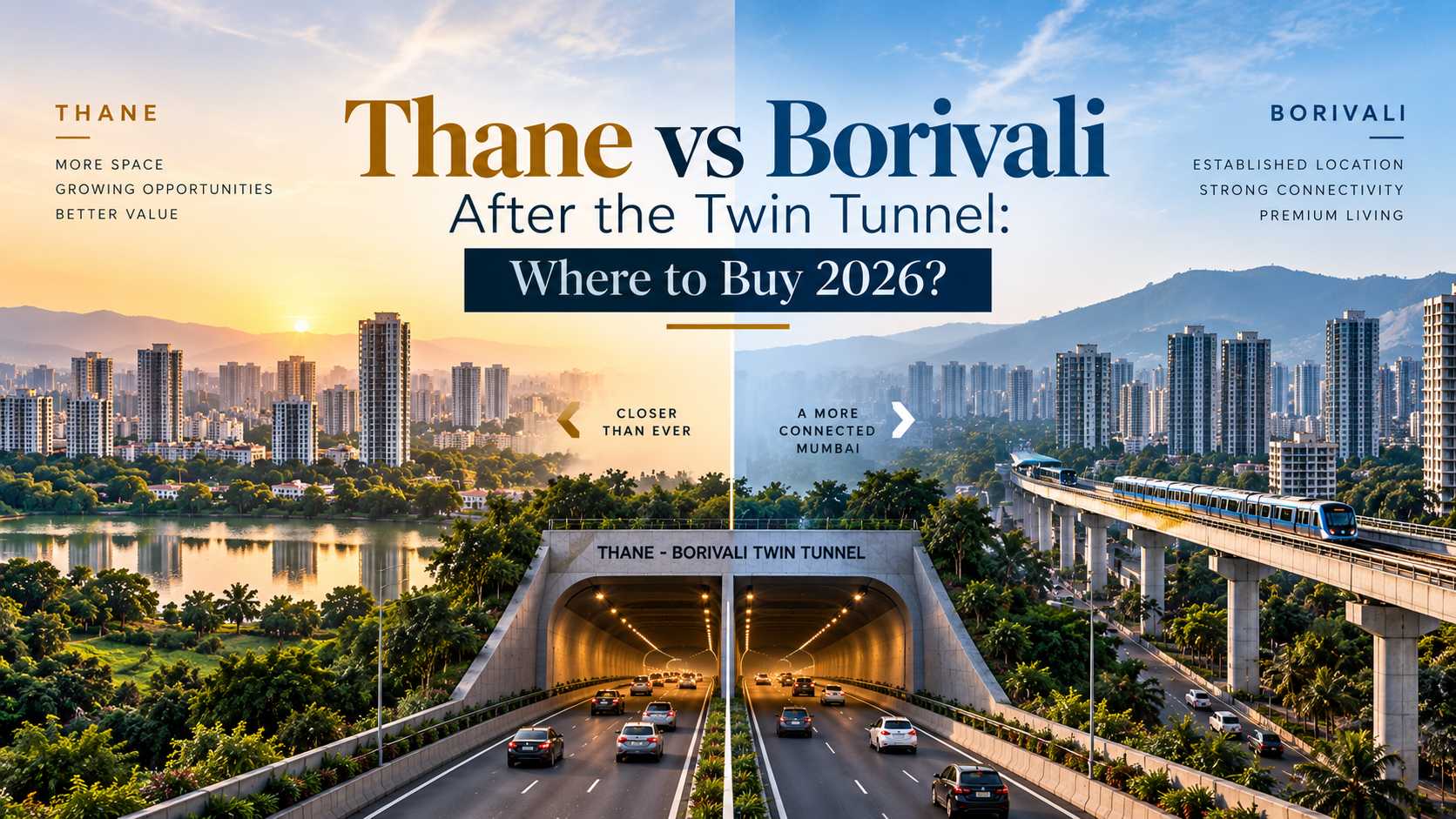
The Thane Borivali twin tunnel breaks that. An 11.84 km MMRDA corridor sanctioned at Rs 16,600.40 crore, with 10.25 km of twin tubes running 20 to 23 metres under Sanjay Gandhi National Park, is designed to compress that journey to roughly 15 minutes. TBM “Nayak” started boring on 7 April 2026 and the target is May 2028. From that day, a household can live on one side and work on the other without the commute being the deciding factor.
So the comparison becomes real. Our team analysed price, yield, infrastructure, supply and downside risk on both sides to work out where a buyer with a free choice should put their money.
Thane vs Borivali: The Numbers Side by Side
| Parameter | Thane West (Ghodbunder belt) | Borivali East | Edge |
|---|---|---|---|
| Average rate per sq ft, 2026 | ~Rs 14,950 (band Rs 9,000-16,000) | Rs 29,350-32,150 | Thane |
| Portal locality rate | Manpada ~Rs 22,500 | Magathane, within the Borivali band | Thane |
| Gross rental yield | 5-6% | 3-3.5% | Thane |
| Price growth, last 12 months | Manpada +4.4% | About +7% | Borivali |
| Price growth, last 5 years | Manpada +31.2% | Steady, lower base effect | Thane |
| Municipal corporation | Thane Municipal Corporation | Greater Mumbai (MCGM) | Borivali |
| Rail access | Central line plus Metro 4 (Wadala-Kasarvadavali) | Western line plus Metro 7 | Borivali |
| New supply available | Large, township scale | Constrained, mostly redevelopment | Depends on goal |
The single most striking line is the price ratio. Borivali East trades at roughly double the Ghodbunder corridor average, and around 1.4 times Manpada — the Thane locality that sits at the portal. The tunnel’s function is to remove the travel-time justification for most of that gap.
The Case for Buying in Thane
Three arguments, in order of strength.
The yield gap funds the purchase. Thane at 5 to 6% gross against Borivali at 3 to 3.5% is not a rounding difference. On a comparable two-bedroom home, the Thane rent covers a materially larger share of the EMI, which changes what a salaried buyer can afford to hold. For an investor, it changes whether the asset is cash-flow neutral or cash-flow negative for a decade.
The re-rating room is on the Thane side. Borivali East’s price already reflects a Mumbai municipal address with established western-line connectivity. Thane’s does not yet reflect a 15-minute link to that address. Market commentary broadly expects 20 to 25% capital growth on tunnel-adjacent Thane stock around completion, with some estimates running to 20-30% for lower-base localities like Balkum over three to five years.
Supply and product quality. Borivali East is mostly redevelopment on constrained plots. Thane West still has genuine township-scale land — 18-acre and larger schemes with open space, retail and amenity provision that simply cannot be built inside Borivali. For families, that is a quality-of-life difference, not just a price one.
The Case for Buying in Borivali
We would be doing you a disservice if we only argued one side. Borivali East has real advantages that a spreadsheet understates:
- The Mumbai address. MCGM jurisdiction, a Mumbai pin code, and everything that follows for school admissions, resale perception and family expectations.
- Resale liquidity. Western suburb stock sells faster and to a deeper buyer pool than outer Thane stock, particularly in a soft market.
- Infrastructure that already exists. Western line, Metro 7, the Western Express Highway and the Coastal Road extension northwards — none of which depend on a project completing in 2028.
- Lower execution risk. Buying a ready or near-ready flat in Borivali removes the construction-delay variable that most Thane township buyers accept.
- It also gains from the tunnel. Borivali residents get 15-minute access to Thane’s employment and retail base, and to the Eastern Express Highway beyond it.
Borivali East rose about 7% in the last twelve months against Manpada’s 4.4%. In the short run, the established market is currently the faster one. The Thane thesis is a 2028-2030 thesis, not a 2027 one.
How to Choose: Five Questions
- Do you need the Mumbai pin code? If school admissions, family expectations or employer allowances hinge on it, that settles the question and no yield argument overturns it.
- Are you buying to live or to let? To let, Thane’s 5-6% yield against 3-3.5% is decisive. To live, weigh the township product against the established neighbourhood.
- What is your holding period? Under five years, Borivali’s liquidity and lower execution risk win. Over ten, Thane’s re-rating room and lower base win.
- Which portal do you actually need? Work in the western suburbs and live in Thane, or the reverse. Whichever side your home sits on, you want to be within ten minutes of that side’s portal.
- Can you absorb a tunnel delay? If the corridor slips to 2029 or 2030, does your Thane purchase still make sense on Metro 4, the existing employment base and social infrastructure? If not, buy Borivali.
Our verdict
For a buyer with a genuinely free choice and a seven-to-ten year horizon, Thane is the better risk-adjusted purchase in 2026. You pay roughly half the per sq ft rate, collect close to double the yield, get township-scale product, and hold the asset that the tunnel re-rates rather than the one it merely serves. Borivali is the right answer for short horizons, pin-code-sensitive buyers, and anyone who cannot carry construction risk.
Godrej Options on Both Sides of the Park
Godrej Properties Limited, a third-party developer with a long delivery record across the Mumbai Metropolitan Region, has inventory on both ends of the corridor, which makes a like-for-like comparison unusually easy.
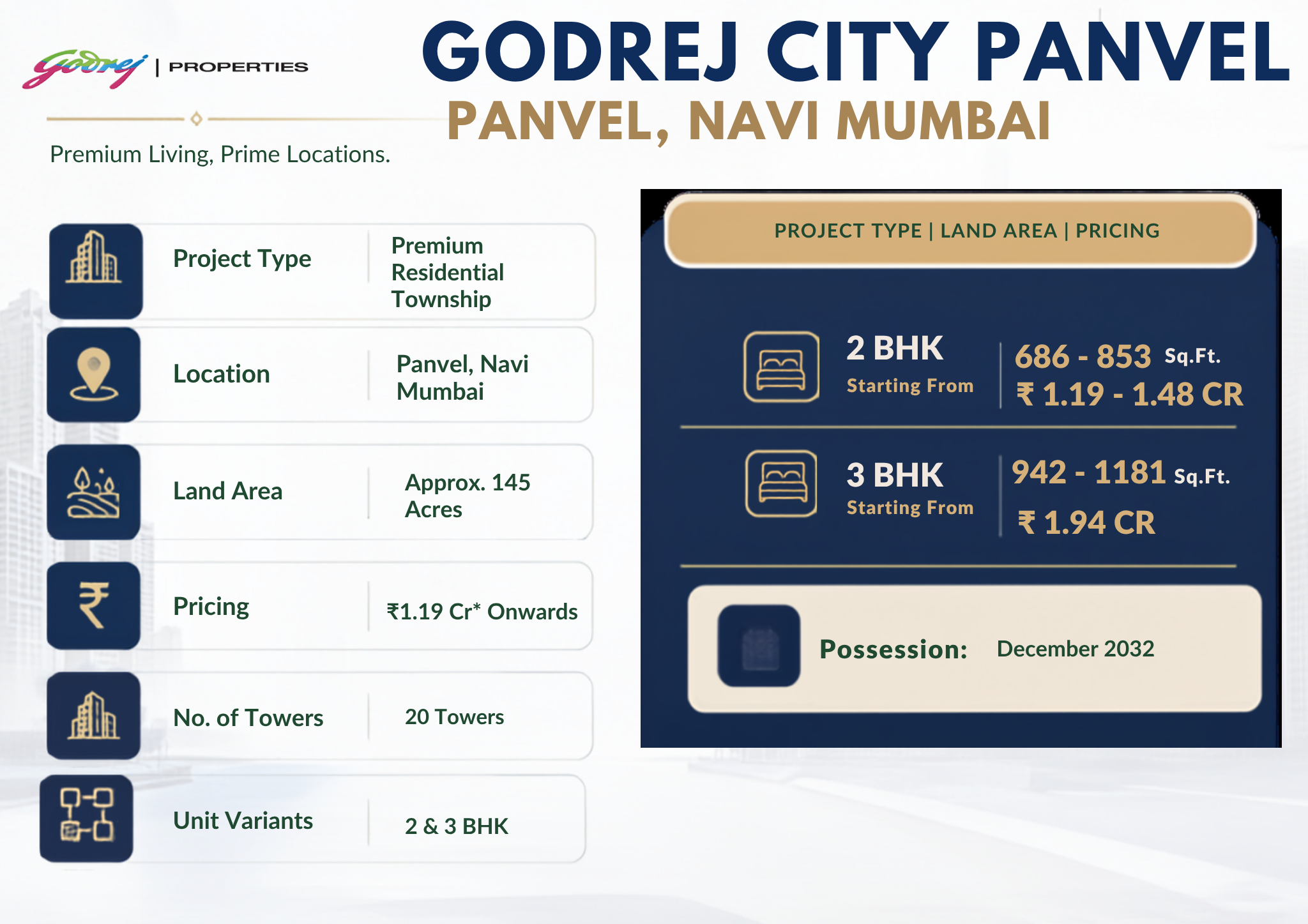
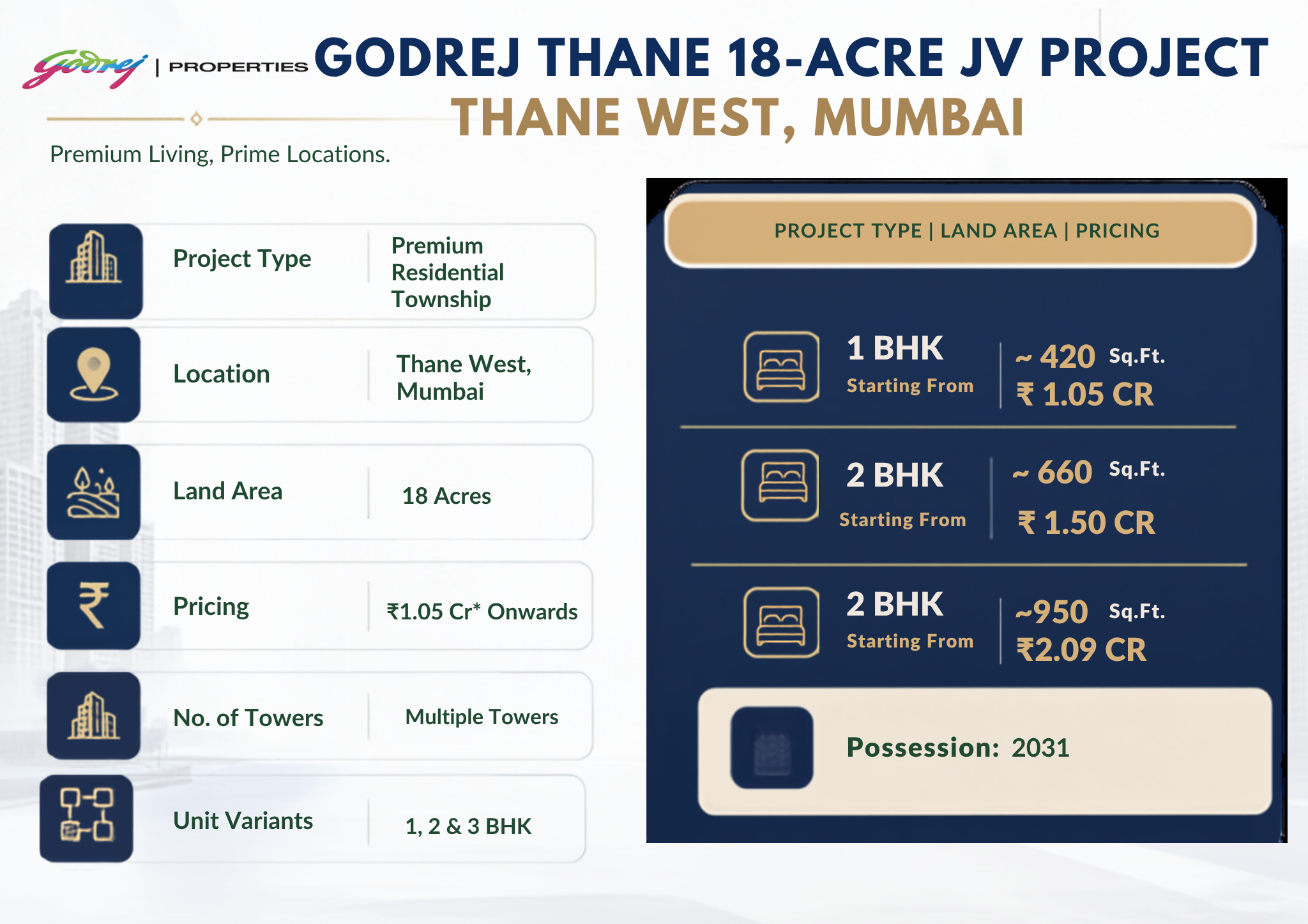
On the Thane side, the 18.5-acre township at Manpada on Ghodbunder Road sits at the Thane portal with a Yeoor Hills outlook, while Godrej Ascend on Kolshet Road from Rs 99 lakh offers a lower entry with better station access. On the Mumbai side, Godrej Reserve in Kandivali East sits a few minutes down the Western Express Highway from the Magathane portal, in the western suburb price band.
Comparing those three against each other is, in miniature, the whole Thane vs Borivali argument. The developer’s RERA and construction disclosures are published at godrejproperties.com, and our own portfolio breakdown is in the Godrej Thane portfolio guide.
Frequently Asked Questions
Q: Thane vs Borivali — which is cheaper in 2026?
Thane, substantially. The Ghodbunder Road corridor averages around Rs 14,950 per sq ft and Manpada at the portal around Rs 22,500, against Rs 29,350 to Rs 32,150 in Borivali East. Borivali trades at roughly double the wider Thane corridor rate.
Q: Will the tunnel close the Thane vs Borivali price gap?
It should narrow it, not close it. A Mumbai municipal address carries a structural premium that travel time alone does not explain. Expect compression rather than convergence, concentrated in the 12 to 18 months around commissioning.
Q: Which side gives better rental returns?
Thane, clearly. Gross yields run 5 to 6% against 3 to 3.5% in Borivali. On a comparable flat, that difference determines whether rent covers most of an EMI or only a third of it.
Q: Which side is appreciating faster right now?
Borivali East, at about 7% over the last twelve months against 4.4% in Manpada. The Thane case is a medium-term one built on the 2028-2030 commissioning window, not on current momentum.
Q: How long will the journey take after the tunnel opens?
Roughly 15 minutes portal to portal, against 60 to 90 minutes on the current surface route in peak traffic. There are no intermediate exits, so the benefit accrues to homes near either portal, not along the alignment.
Q: Is Thane riskier than Borivali as an investment?
Yes, and it is priced for that. Thane carries construction risk, infrastructure-timing risk and a shallower resale pool. Borivali carries a lower yield and a higher entry price. Risk and return are behaving normally here.
Q: Should I buy now or wait for the tunnel to open?
Historically, infrastructure-led gains accrue between announcement and opening rather than after. Waiting until commissioning generally means paying the re-rated price. If the locality works for you today, waiting mainly costs you the upside.
The Bottom Line
The Thane vs Borivali choice is no longer about distance. It is about whether you are buying an established address at a full price with a thin yield, or an emerging one at half the price with a strong yield and a corridor being bored beneath a national park to connect the two.
For most buyers with time on their side, Thane is where we would deploy capital in 2026 — ideally within ten minutes of the Tikuji-ni-Wadi portal. If you want the trade-off mapped against your own budget and horizon, book a site visit and our team will run both sides with you. Our Thane West shortlist under Rs 3 crore is a useful starting point.